
Drywall Contractor & Drywall Repair in Spring, TX | The Woodlands Drywall Co.
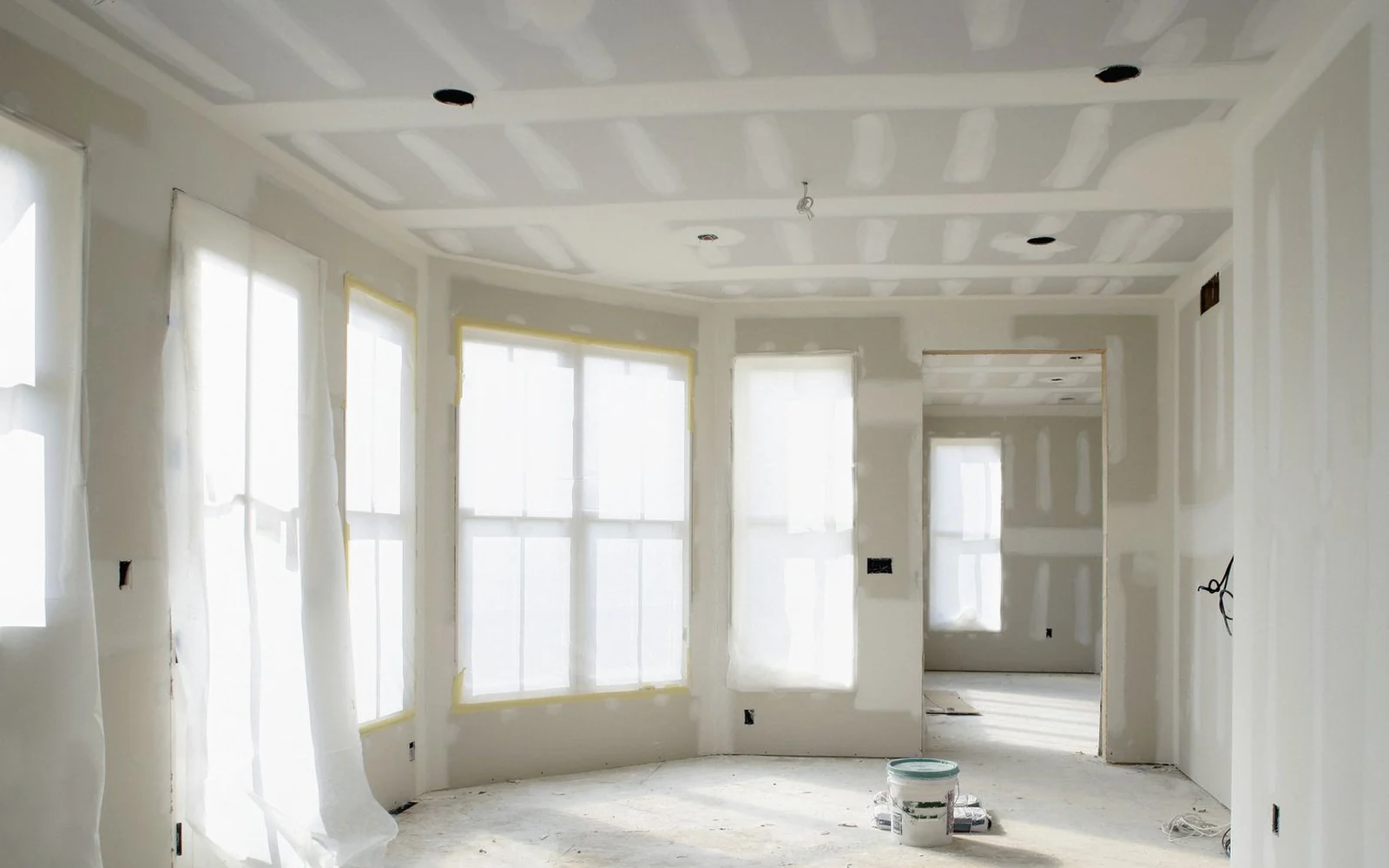
The Woodlands Drywall Co. has worked as a drywall contractor in Spring, Texas for 20 years, serving both homeowners and business owners. Most calls center on three types of work. The first is drywall repair, from a single hole in a hallway to a wall that needs to be removed. The second is water damage drywall repair, where we check the panels with a moisture meter before closing anything up. The third is drywall installation, from one added room to a whole house finished with new gypsum board.
We also repair ceilings, remove popcorn ceilings, and finish and texture new surfaces so they match the surrounding walls. Beyond repairs, we frame and board new construction, build out commercial interiors, and install specialty panel systems. Our sheetrock contractors handle every type of drywall job in Spring, from a single patch to an entire house of new board.
Housing in Spring falls into two eras, with a wave of newer construction following the 2014 corporate campus and a much older core in the original townsite. Whichever era your house belongs to, we take new board to a Level 4 finish and match the texture already on the surface. We feather the joint compound far enough into the surrounding wall that the patch disappears when the low afternoon sun crosses it. That low, sideways light is called raking light, and it exposes a repair that was stopped too soon.
We cover Spring from our base in The Woodlands. Call (346) 248-4075 or send the quote form to arrange a free visit, and we will come out to look at the wall or ceiling you want fixed.
Get A Free Quote
Why Spring Homeowners Call a Woodlands Drywall Contractor
Spring's newer subdivisions and older buildings both appear on our schedule every week, so our drywall professionals handle each with the same care. The drywall contractor who walks through your rooms and prices the work is also on site with the crew that completes it, which keeps every detail consistent from the quote to the finished wall. That continuity is why our drywall experts match a knockdown texture, the flattened spatter pattern sprayed onto most ceilings and walls here, to the exact coarseness of the surrounding surface instead of approximating it.
Your quote from The Woodlands Drywall Co. lists the finish level on a separate line, and two levels cover nearly every room:
- A Level 4 finish is our standard starting point, with seams and fastener heads coated and sanded smooth before painting.
- A Level 5 finish adds a thin skim coat of compound across the entire surface, creating a more even appearance where paint catches light from a lamp or window.
A smoother wall is therefore a priced choice you make rather than something you simply hope for. We are fully insured. Before anything is closed up, a drywall specialist checks the wall with a moisture meter, because a wall that still holds water will open again regardless of what is done to the surface. We also work in Klein, where school-district lines cross both towns and many addresses in one carry the other's name. The on-site visit costs nothing, so send us the details of your wall or ceiling and we will arrange a visit; your itemized written quote follows within 24 hours of it.
Drywall Contractor Services Across Spring, Texas
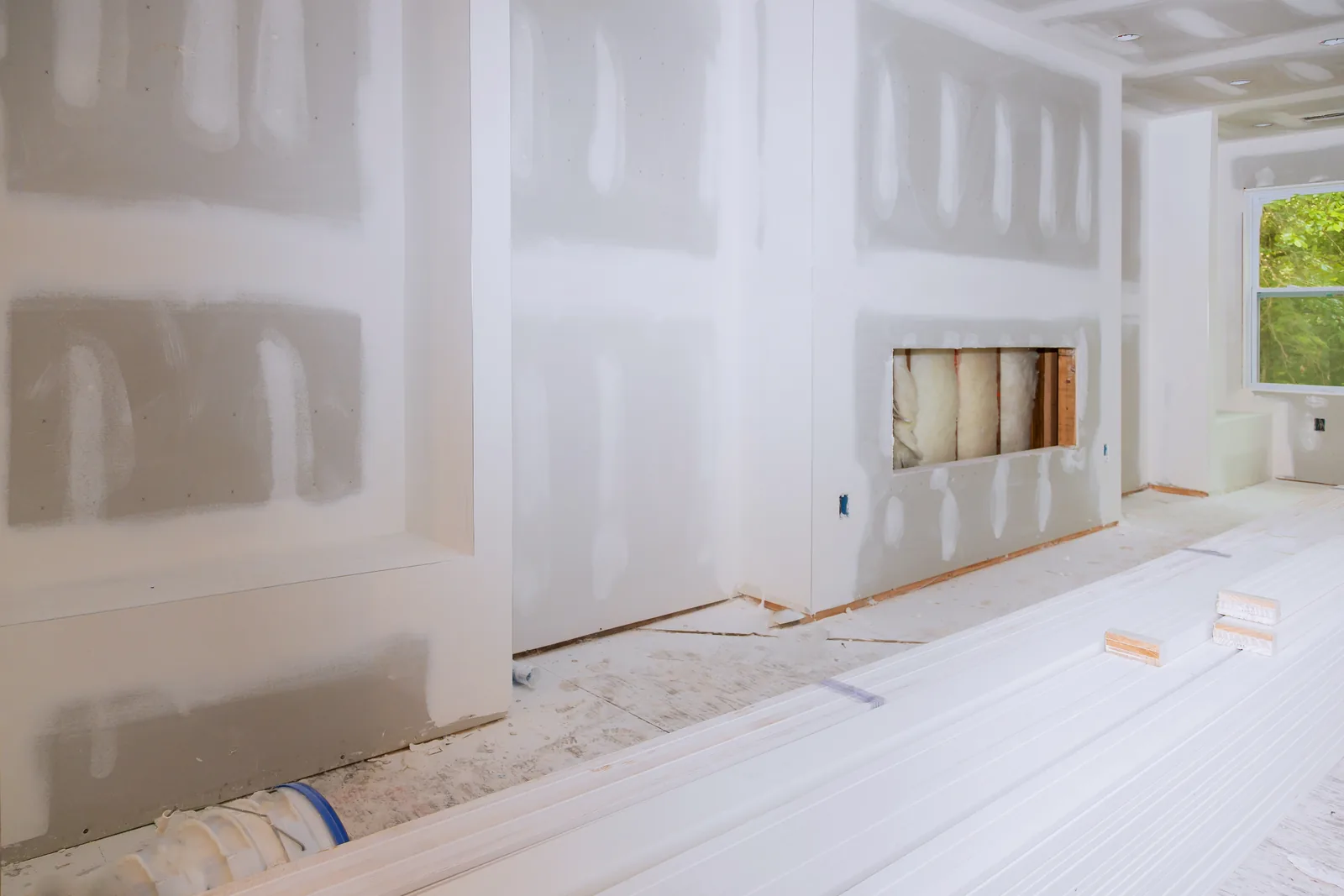
Spring, Texas asks two different things of a drywall crew. Much of the town is newer, and as a young house settles, its framing dries and loads shift, opening first-season settlement seams along the lines where two panels of gypsum board meet. Gypsum board is the paper-faced panel used to form almost every interior wall built today. At the other end of town are walls finished in plaster, a hard coating troweled on in layers long before board became common, and damaged plaster behaves very differently from gypsum board. Our drywall services cover the full range, from a single patched corner to a full house of new board hung by our own sheetrock installers.
-
Drywall Repair
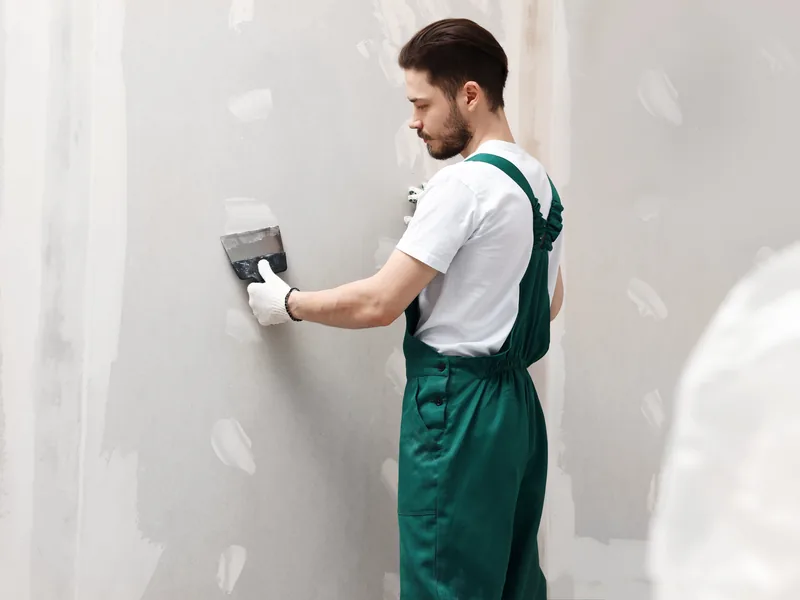
Holes, dings and torn paper are usually confined to board that is otherwise sound, so we cut back only the damaged area and fill it. We then feather the edge of the patch, thinning the compound across several inches until it sits level with the wall, before matching the surrounding texture. When the repair is finished properly, the patch stops drawing your eye in ordinary room light.
-
Water Damage Drywall Repair
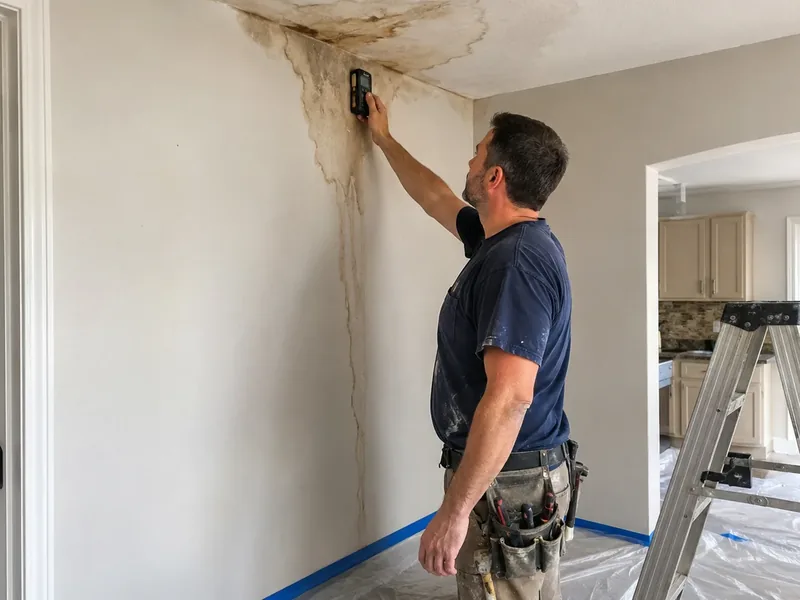
A roof leak or burst water line first shows up as stained ceiling board. We open the damaged area, remove the soaked board and wet insulation behind it, and check the cavity with a moisture meter until it is dry. Only then do we close the wall back up.
-
Drywall Finishing & Texture
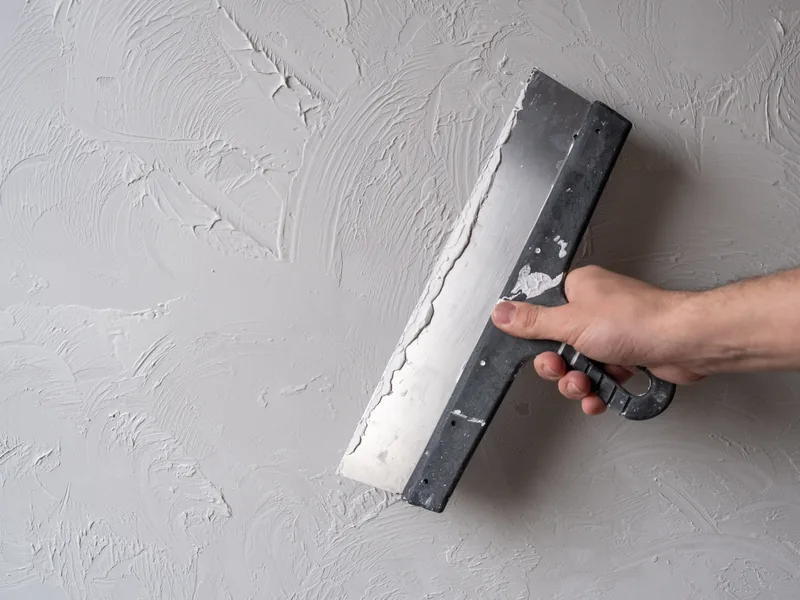
New or repaired board starts with visible seams and fastener heads, so we tape and coat them with paper tape and joint compound worked flat with a taping knife. We then spray the knockdown texture found in most Spring houses, or match whatever pattern the rest of the room already has, so the repaired area blends into the surrounding surface.
-
Drywall Installation
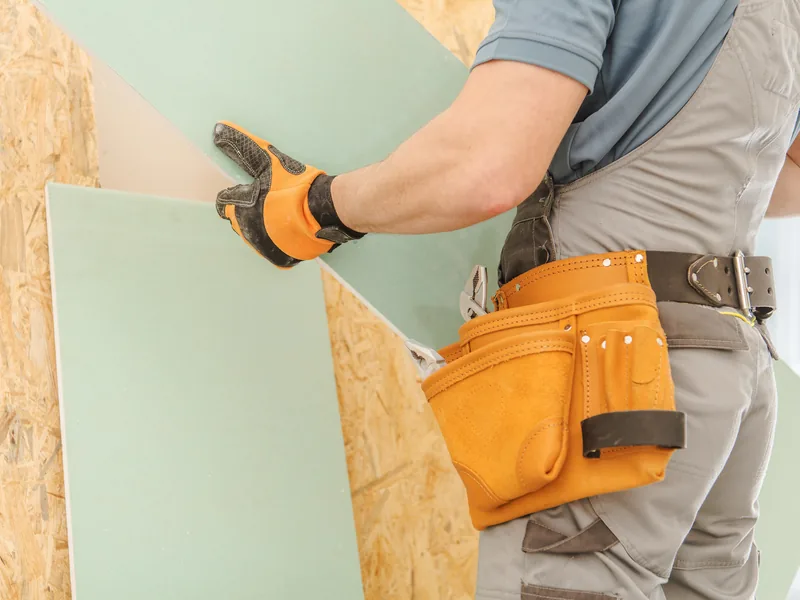
Bare framing in an existing house needs board hung over it, whether you are remodeling, adding a room or finally finishing a space that has stood open for years. We set the panels to the builder's stud spacing, fasten them securely, and finish the room to a paint-ready wall.
-
Ceiling Repair
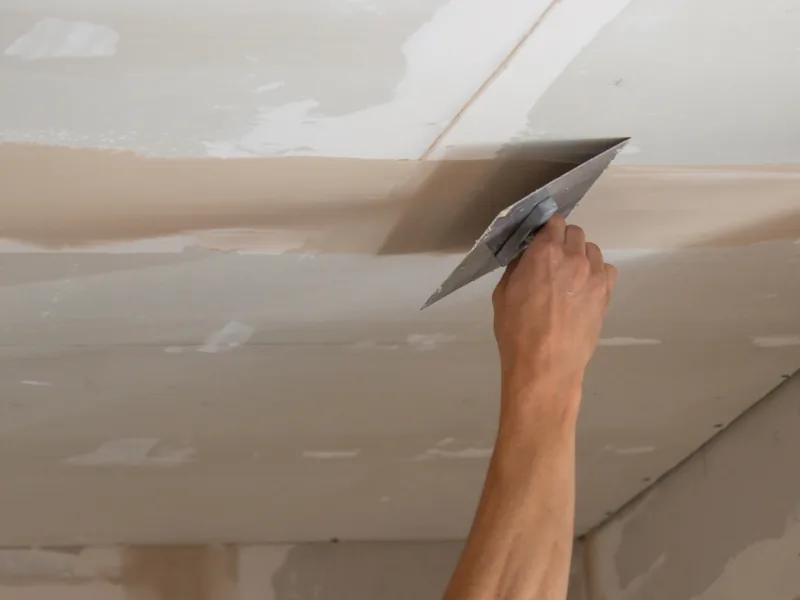
Overhead, the problems are usually a sagging panel, a stain or a seam that has cracked open along its length. We refasten or replace the board and rework the seam, then match the ceiling texture. Ceiling texture is the hardest match on any job, and we keep working it until no seam or patch is visible from the doorway.
-
Popcorn Ceiling Removal
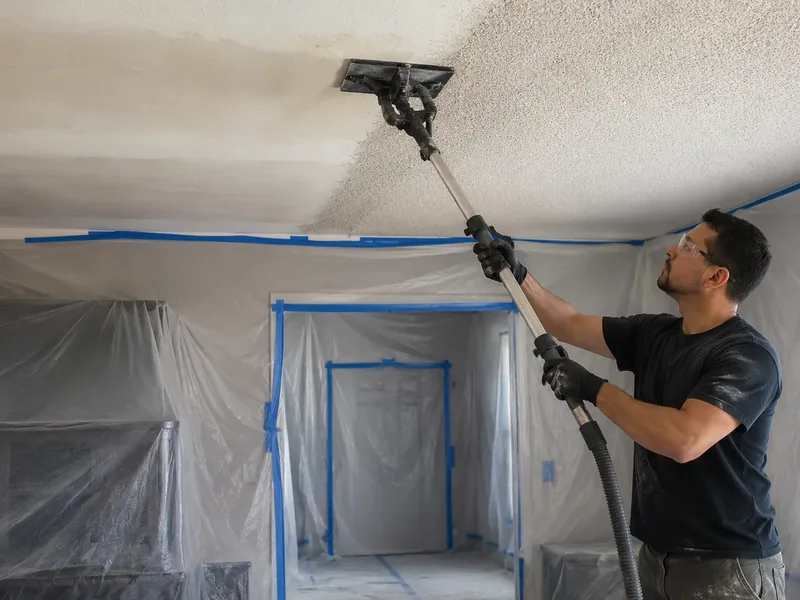
Sprayed acoustic texture, the bumpy white coating found on older ceilings, dates many of the ceilings that still have it, and what the material contains determines how the job is handled, so we establish that before quoting the work. Once the ceiling is clear, we skim and finish the surface smooth, leaving you with a flat ceiling rather than bare scraped board.
-
Plaster Repair
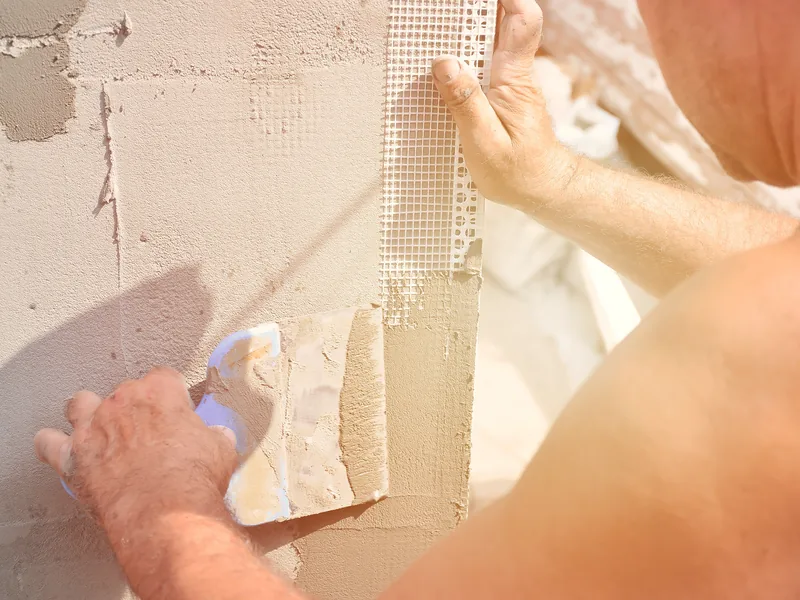
Older walls are not gypsum board. Plaster was pressed onto thin wood strips called lath, and when it fails, it pulls away from the lath rather than breaking through like board. We secure loose areas with plaster washers, wide flat discs that draw the coating back against the lath, then rebuild the damaged plaster instead of simply skimming over it.
-
Commercial Drywall Services
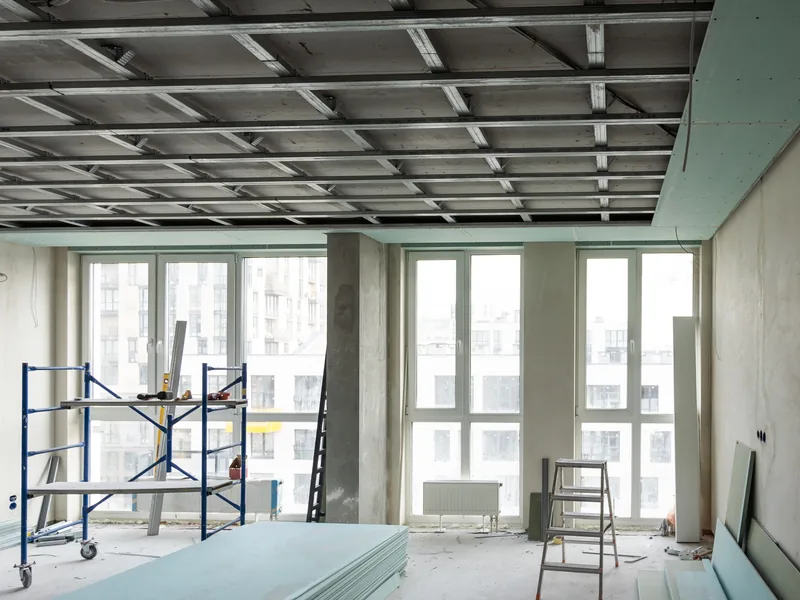
Shops, offices and tenant spaces cannot shut down for a week, so we phase the work and use an after-hours slot where one is available. That lets us finish the interior around the hours your business keeps instead of interrupting them.
-
Metal Stud Framing
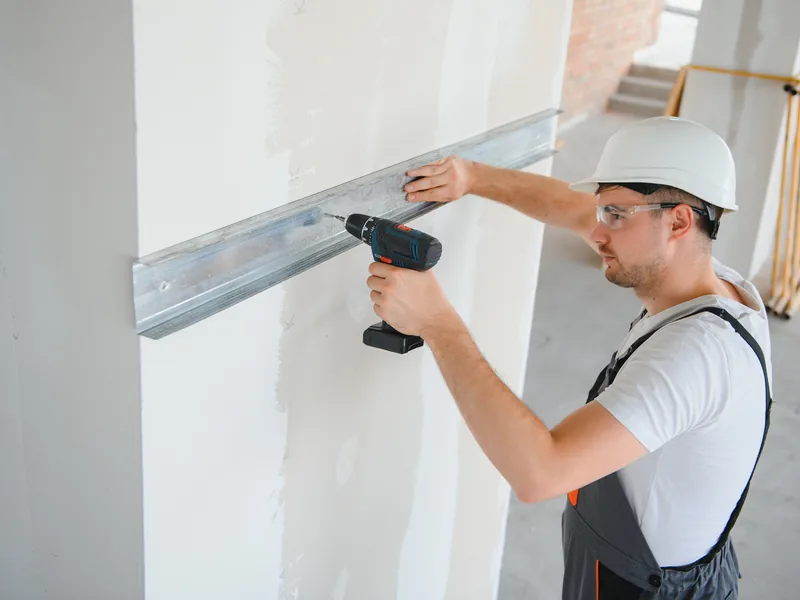
Some interiors are framed with steel rather than wood. We set steel track along the floor and ceiling, stand the studs inside it, and make sure the frame is square before any board is hung. That gives a new partition or changed layout the structure it needs before the drywall goes up.
-
New Construction Drywall
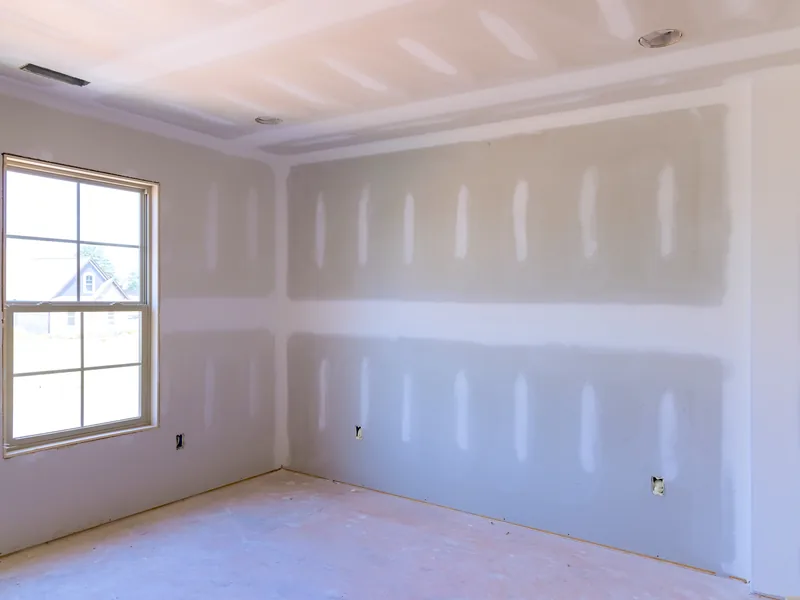
A new build needs every wall and ceiling boarded as part of one coordinated job. We handle the whole-house scope, plan the panel layout so seams fall where they finish best, and bring each surface to the finish level specified in the plans.
-
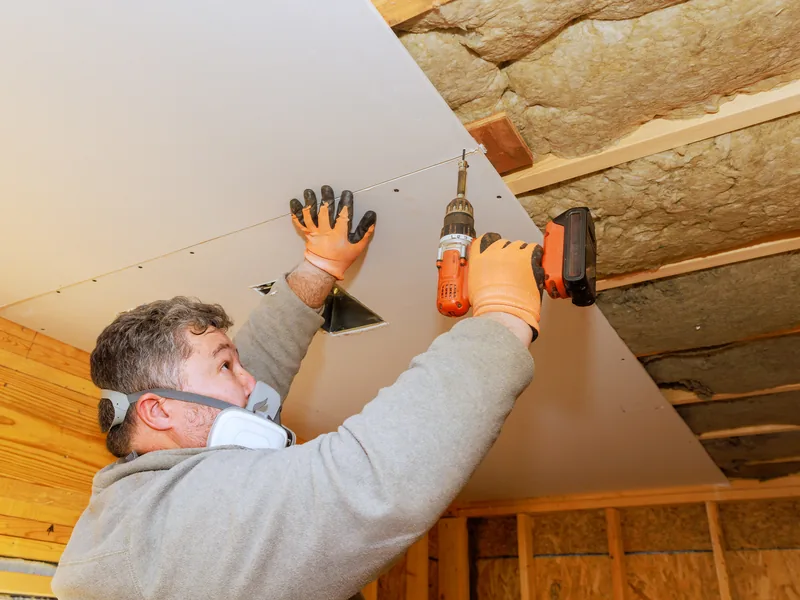
Ceiling Drywall Installation
Ceilings that have been rebuilt, raised or opened up need fresh board overhead. We lift the panels into place with a rolling overhead panel lift, fasten them to the pattern required by the framing, and leave the board hanging flat rather than sagging between the joists.
-
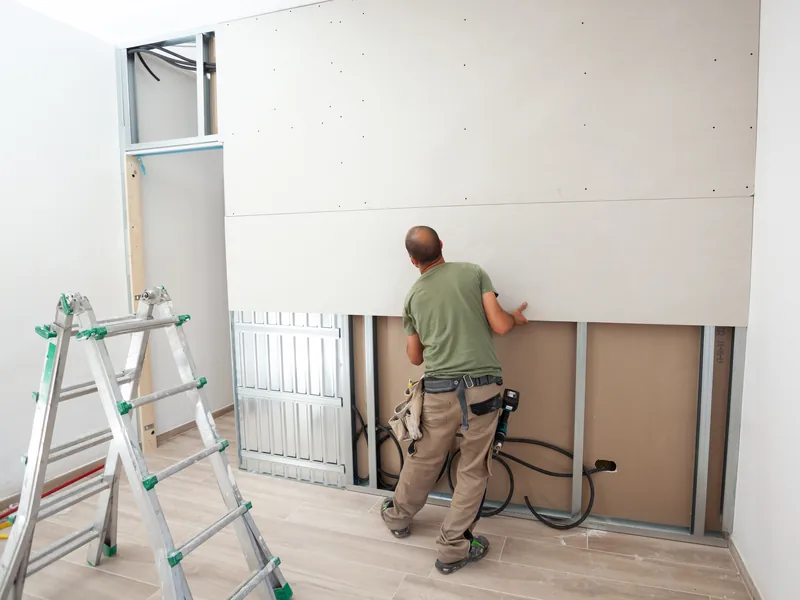
Partition Wall Installation
Dividing an existing room means building a wall where none existed before. We frame and board it, form any new doorway opening, and finish the junctions where it meets the existing walls and ceiling so the new wall looks like part of the original room.
-
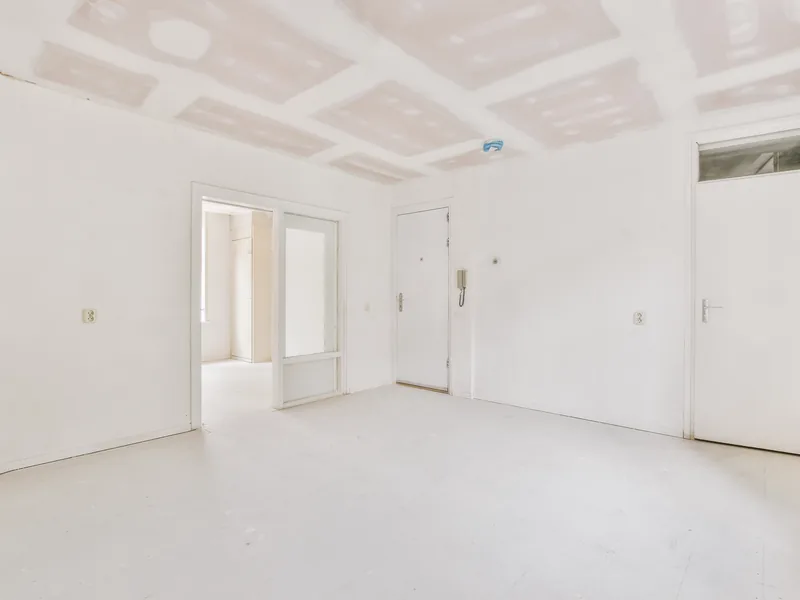
Drywall Priming & Painting
Fresh board absorbs paint unevenly because the paper face and dried compound take it in at different rates. We seal the surface with PVA primer, a water-based sealer that evens out how much paint the wall absorbs, as standard on every finished surface. Finish paint is a separate line item you choose, priced on its own rather than folded into the drywall work.
-
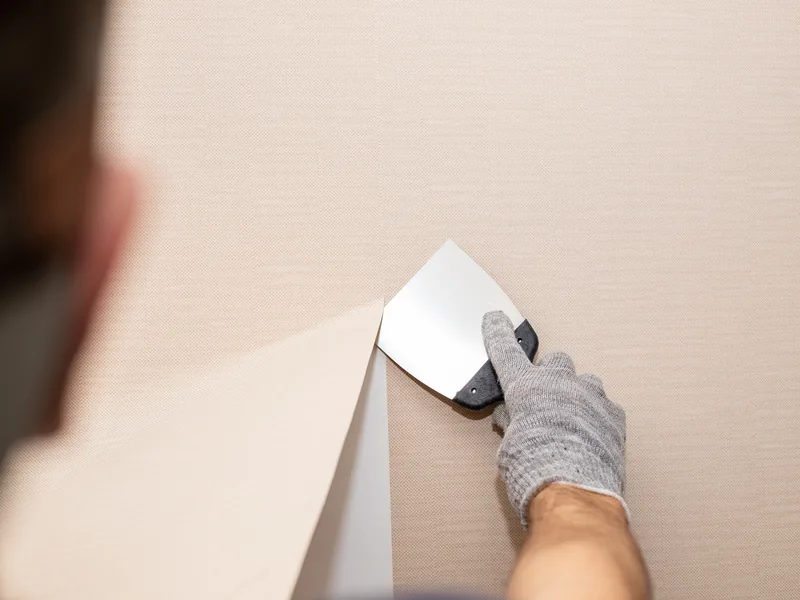
Wallpaper Removal
Paper and the adhesive beneath it come off with steam, which softens the glue enough to release the covering without tearing the board's paper face. If that face is already damaged, we repair the board first so you are left with a sound wall ready for finishing.
-
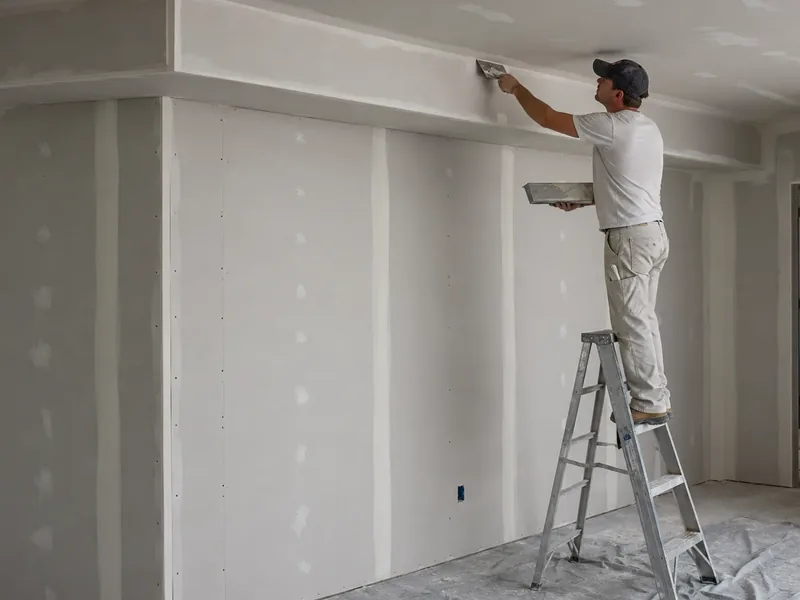
Drywall Soffits & Bulkheads
The boxed framing above kitchen cabinets or around a hidden duct is made up mostly of outside corners, and every flaw along those corners shows in a straight line at eye level. We frame these boxes straight and install metal corner bead along each edge, a light strip that gives the corner a hard, true line to finish against.
-
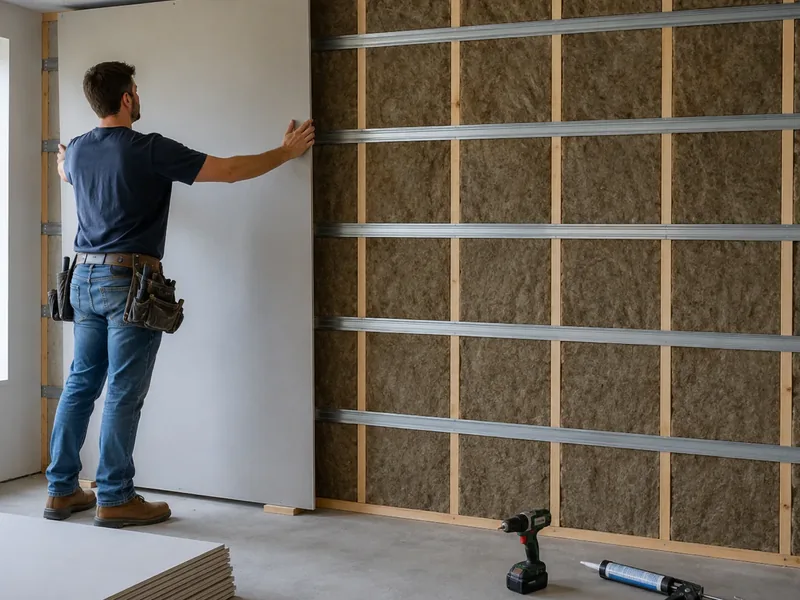
Soundproof Drywall Systems
Quiet between rooms comes from the entire wall assembly rather than one thick panel. We build the wall as a complete system, decoupling the framing so sound cannot travel directly through the studs and adding sound-damping panels. We quote that full build-up as one assembly because no single thicker panel delivers the same result on its own.
The 2014 Build Wave, and the Walls It Left Behind
A corporate campus opened on Spring's side of Interstate 45 in 2014, and years of homebuilding followed. Those houses have now been through their first seasons, and the movement shows in the walls. Most were finished to a Level 4 finish, which is the standard a builder normally pays for. Residential drywall contractors see the same small marks appear in these homes again and again, and as a drywall repair company, we spend much of our week fixing them.
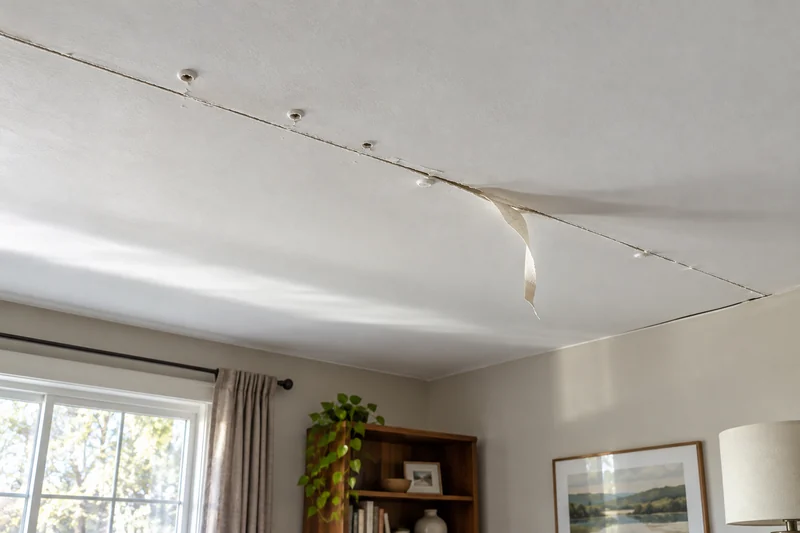
Seams That Open in the First Season
Framing lumber, the wood skeleton behind your walls, arrives on site holding moisture and releases it through the first full heating and cooling season. As the wood dries, it shrinks and the house settles with it, so the board fastened to that framing moves too.
A nail pop is the small bump or crater left when a fastener head pushes back through the surface. A first-season settlement seam is a taped joint that opens into a hairline crack along its length, most often at a butt joint, where the square-cut ends of two boards meet without a tapered edge to hold the joint compound. A wall taped before that first season is over gets another chance to open. We look at the wall, tell you which marks have stopped moving, and let you know when waiting a few months is the better choice.
When a Crack Is Not Ours to Call
Not every crack is a drywall repair. If a crack is wide, keeps returning in the same place after being filled, or has edges that no longer sit flush with one another, it needs an evaluation by another qualified professional before we cover it. Filling a crack like that only hides the surface while leaving whatever keeps opening it unchanged, so the crack returns through the new finish. When we find one, we tell you and leave the drywall repair alone until someone qualified has looked at it. The location and direction of a crack tell us where to investigate, but they do not tell us what is causing it, and we will not pretend otherwise.
Free Quote FormWhere We Work Around Spring
A Spring address extends well beyond the old townsite into developments several miles away that still carry the Spring name. Wherever your property sits, the same crew comes out and the same drywall services are available to you.
Old Town Spring: Plaster and Older Wall Surfaces
Old Town Spring is the original townsite, covering roughly a quarter of a square mile around the meeting of Spring-Cypress Road and Hardy Road. Much of the shopping district is made up of restored houses rather than buildings originally constructed as shops, so walls here are more likely to predate gypsum board than anywhere else in Spring. We repair those older plaster surfaces where the wall is not board at all, then work as wallboard contractors on any later sections of the same building that were built with gypsum board.
Springwoods Village: Finishing a Whole House of New Board
Springwoods Village is the master-planned development beside Interstate 45 that grew around the corporate campus opened in 2014, and it carries a Spring address like the rest of the area. With houses and interiors there still being built and fitted out, the decision is not how to repair a wall but how far to take the finish in each room. Our sheetrock installers bring every room to the working baseline, then take only the rooms you choose up to a Level 5 finish, so you pay for the smoother surface where it will be seen rather than throughout the entire house.
Old Town Spring's Early-1900s Commercial Walls
Trade in Old Town Spring takes place in shops rather than living rooms, so the person calling us there is usually an owner or tenant with stock on the floor and a door that opens at a set hour. The commercial core dates to the early 1900s, and its oldest surviving building went up in 1902. Merchants formed an association there in 1980, and by 1989 the district had more than eighty specialty shops. Much of that trade operates inside restored houses converted to commercial use, which is why so much of Old Town Spring still looks residential from the sidewalk.
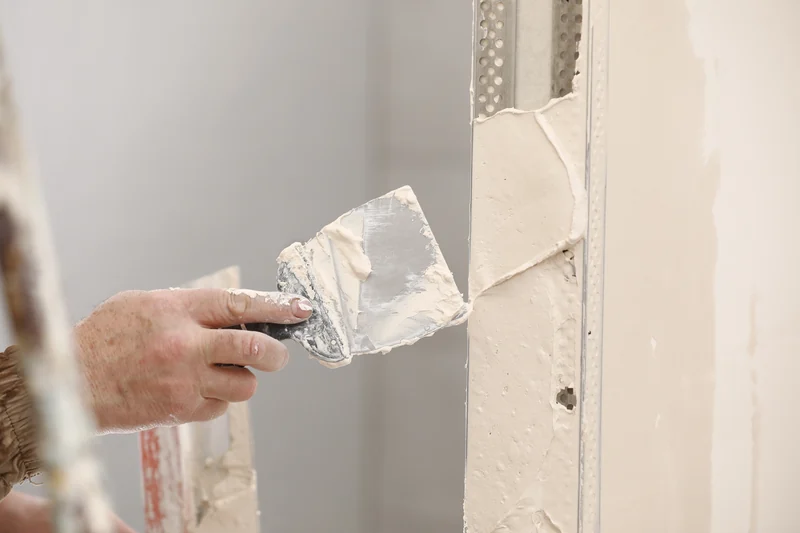
Two things follow when you hire a drywall contractor in the district. Older wall surfaces need a different repair approach from newer board, and a business that has to keep its doors open cannot shut down simply to make the work more convenient.
What an Older Surface Changes About the Repair
An older wall surface and modern gypsum board fail differently, and they are put right differently as well. Where an older surface is still firmly attached to the structure behind it, we secure the loose areas and rebuild the face over them, preserving what is already there. Modern board is repaired the opposite way, with the damaged section cut back to a sound edge and a new piece fitted in. These are two different jobs, and they run to different lengths of time and different prices, which is why wallboard contractors should identify the surface in front of them before quoting the work.
Working Around a Shop's Trading Hours
Your opening hours, not the wall, determine how the job is scheduled. We divide the work into stages that each leave the tenant space usable, so nothing remains open through a trading day, and we place the noisy and dusty stages outside your busiest hours. Dust containment seals the work area off from the rest of the floor, keeping sanding dust away from stock, shelving and customers. Call us at (346) 248-4075 and we will walk the space with you, so you know exactly what the work will require from your trading week before you decide anything.
Free Quote FormRelocation Timelines and Getting a Wall Finished Before Move-In
A significant share of the drywall services we schedule in Spring has to meet a date set by someone else, because families and companies keep arriving here on a signed lease or closing rather than an open calendar. A fixed move-in date changes the order of the work and the materials we use, but it does not change how long a coat of compound needs to dry before the next one goes over it. The earlier you give us that date, the more of the schedule we can build around it.
Why Compound Sets the Calendar
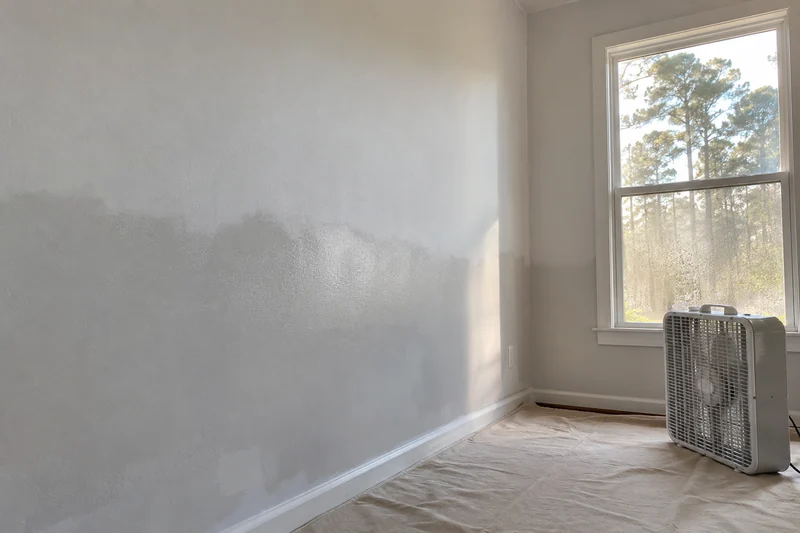
Every coat of joint compound has to harden before the next one goes on, so we build that drying time into the schedule before the job starts rather than trying to absorb it at the end. Drying-type joint compound hardens by releasing its water into the surrounding air. Along this part of the Gulf Coast, the air already carries moisture for much of the year, so a coat can remain soft well beyond the time a schedule might otherwise allow.
Setting-type joint compound hardens through a chemical reaction instead, so damp air delays it far less, and we use it when a fixed date leaves little room in the schedule. A running air conditioner also removes moisture from the room, which is why we ask you to keep the cooling on once the coats begin.
What a Fixed Date Can and Cannot Change
Your move-in date determines which rooms we finish first and which compound we use on those walls, but it does not shorten the cure time between coats; that time belongs to the compound, not the schedule. We need the date at the estimate rather than after the work has started, along with access to the rooms on the days each coat goes on. With both in place, we plan the sequence backward from your move-in date instead of forward from our calendar.
If the date is too tight for the entire job, we will tell you at the estimate and split the work instead. We finish the rooms you need to live in first, then return for the rest, rather than rushing coats and leaving a finish that shows it later.
Free Quote FormDrywall Questions From Spring Owners
Why did seams open in our Spring house a year after we moved in?
Yes, that is normal, and it comes from the house settling in rather than a problem with the finish. Framing lumber goes into a new house carrying moisture, then continues releasing it long after the walls are closed. That drying continues through the first winter of heating and the first summer of cooling, with the wood shrinking slightly through each season. A seam taped before that cycle is complete therefore has another chance to move, and a nail pop can push back through the wall for the same reason. A repair made after the first year is a repair made once.
What finish level did our builder actually pay for?
On a production house, it is almost always a Level 4 finish. Whether a Level 5 upgrade is worth buying depends not on how well the wall was built, but on how the room will be lit and painted.
Raking light throws a shadow across every ripple, while gloss paint adds a sheen that makes the same imperfections stand out. Under either condition, a Level 5 finish earns its cost; under ordinary lighting with flat paint, it does not. The choice depends on the room, not on the quality of the workmanship.
Can you patch a wall in an Old Town Spring shop building?
Yes, and we do it regularly. Before we quote the work, we establish exactly what wall surface is in front of us. As a drywall repair company working in Old Town Spring buildings, we make that determination on site rather than relying on a description over the phone, so the price you receive reflects what we actually found instead of what we assumed. Shop work is also quoted around your opening hours, because the stages that create dust and noise need to happen when the floor is clear.
Can you finish before our move-in date?
Usually, if we have the date early enough. Give us your move-in date at the estimate, while the sequence is still being planned, and keep those rooms clear while the work is underway. With the date in hand from the start, we build the schedule backward from it, choosing the order of the rooms and the compound that fits the time available. If you tell us later, we have to fit your move-in date around a sequence that is already set.
How long does it take to drywall a 12x12 room?
A 12x12 room takes 3 to 5 days on our schedule, including drying time between finish coats. That is our working timeframe rather than an industry rule, and three things affect it. Humid weather keeps moisture in the joint compound longer, so every coat waits longer for the one after it. A smoother finish level requires more coats than a standard finish, with drying time between each one. If the room is still in use, we also work around furniture and stop each day at a point that leaves the space livable, spreading the same work across more days.
Do you charge to estimate a whole-house job?
No. The free on-site estimate stays free whatever the size of the job, including a whole house. What changes with a larger scope is the estimate itself, which we itemize room by room instead of giving you one price for the entire house. You can see exactly what each room costs, and if you decide to defer one, you know what that choice saves before any work begins. That matters most on a whole-house project, where doing everything at once or splitting the work into two stages is usually a decision about money rather than about the walls.
Which parts of Spring do you cover?
All of it, including addresses that carry the Spring name without sitting in the old townsite. People ask because a Spring address is harder to place than most, with mail addressed to Spring reaching well beyond the original town around Old Town Spring and into newer developments such as Springwoods Village. Owners in those outer areas are often unsure whether a Spring contractor includes them, but we do, and nothing about how we quote or schedule the work changes based on which part of Spring you are in.
Get a Free Drywall Estimate in Spring
A price for drywall work starts with someone standing in front of the wall. Photographs and measurements given over the phone leave too much unseen, so a drywall contractor from The Woodlands Drywall Co. comes to the room itself and looks at the damage, the ceiling above it and the surrounding surfaces. You then receive a written price for the work that follows, and the free on-site estimate costs you nothing whether or not you hire us. Call (346) 248-4075 or send the job through our quote form, and we will arrange a time to come out to your Spring address.