

The Woodlands Drywall Co.: Drywall Repair & Installation Contractor in The Woodlands, Texas - Residential & Commercial
The Woodlands Drywall Co. is a drywall repair & installation contractor that has served The Woodlands, Texas, for 20 years. When something is damaged, we handle drywall repair, water damage drywall repair, and ceilings. When you are building or changing a space, we take on drywall installation, drywall for new construction, commercial drywall, and metal stud framing. When the surface itself needs updating, we do popcorn ceiling removal, finishing, and texture. We are fully insured, provide free on-site estimates, and offer financing on larger jobs.
When we install drywall in your home or business, our crews follow ASTM C840, the industry standard that governs how gypsum panels are hung and fastened. We finish to GA-214 levels, up to Level 5, the smoothest grade for walls that take harsh light or gloss paint. On garage ceilings beneath living space, we set 5/8-inch Type X, the thicker fire-rated board building codes call for there. Because the Gulf humidity is hard on drywall, we specify moisture- and mold-resistant board in damp rooms. We also keep panels from sitting in a hot garage and soaking up moisture before they go up.
When your drywall needs repair, we match knockdown and orange peel, the sprayed textures on most Texas walls, so the repaired area blends into the finish that surrounds it. Every truck also carries a pin-type moisture meter, and no stained wall gets closed until the framing behind it reads dry.
Our residential and commercial work covers homes, offices, and tenant spaces in The Woodlands, Shenandoah, Magnolia, and the surrounding Montgomery and Harris county communities. On every job, the goal is drywall done right the first time by a crew that is easy to reach and easy to work with.
Get A Free Quote
Why Choose The Woodlands Drywall Co. for Drywall Repair & Installation
- 20 years of experience: The Woodlands Drywall Co. has spent 20 years in occupied homes and commercial interiors across the Woodlands area, on ceiling damage, remodels, and new construction.
- Fully insured: We carry full insurance for both residential and commercial projects.
- Free itemized estimates: We inspect your project on site at no charge and send a written estimate within 24 hours that lists labor, materials, finish level, and optional work separately.
- The same estimator: The person who prices your project also runs the crew, so the work performed stays tied to the written scope.
- Texture matching: We match sprayed and hand-applied finishes and check every patch under raking light before sign-off.
- Dust control: On occupied jobs, vacuum-assisted sanding captures dust at the tool, and the scope includes cleanup.
Call (346) 248-4075 for a free on-site estimate, or send your project details through the quote form.
Drywall Repair & Restoration for Homes and Businesses
When a wall or ceiling is damaged, the repair is not a side job for us; it is half of what we do. We provide drywall repair and sheetrock repair for homes, offices, and other business interiors. Drywall is made from gypsum panels with a mineral core wrapped in paper. Sheetrock is a brand of drywall, but the name is often used for drywall in general, so drywall repair and sheetrock repair are one service.
Common Drywall Problems We Solve
Homeowners and businesses around The Woodlands call us every week about the same visible problems. You can recognize that something is wrong without knowing the cause, and an on-site look can show how far the damage goes.
- Holes and impact damage include doorknob dents, furniture hits, and broken corners.
- Cracks and separated seams include hairlines, corner cracks, and open joints.
- Nail pops occur when fastener heads push through the paint.
- Sagging or damaged ceilings can have bowed panels, loose sheetrock, and low spots.
- Water-stained drywall often has brown rings and marks after a leak.
- Mismatched or telegraphing texture occurs when old patches show through the finish.
- Visible old repairs can leave raised edges and patch outlines showing through paint.
- Remodeling openings include anchor holes and cutouts from removed fixtures.
Everyday Patches and Small Repairs
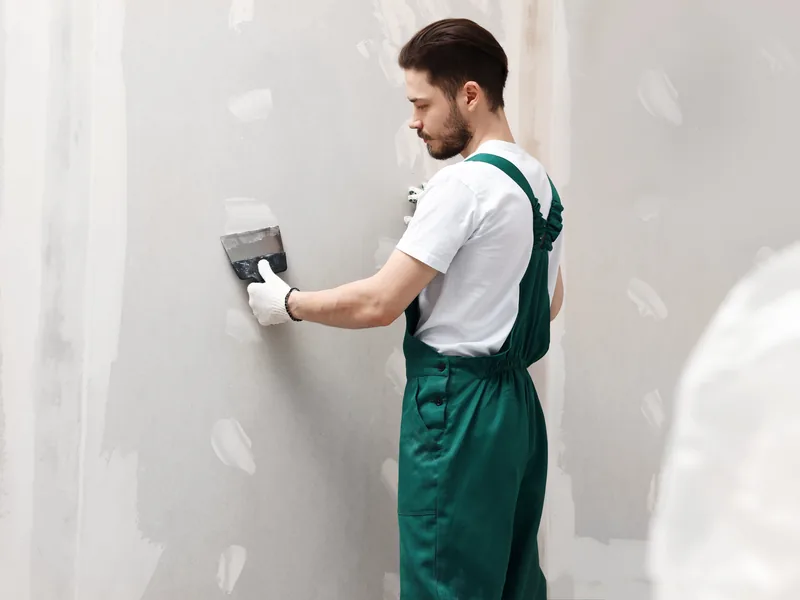
Most calls are small, including one damaged wall, a stained ceiling corner, or a doorknob hole. A single patch is usually a one-visit job, and we give it a firm appointment instead of leaving a small call in limbo. When repairs span several areas, the work can take one or two working days on site, with the schedule set after we see the affected area. A repair mix that hardens by chemical reaction instead of slow air-drying makes a one-visit patch possible. The trade calls it setting-type compound, or hot mud.
Larger Restoration Projects
Several rooms damaged by a leak, a whole level of dated texture, or a remodel that stalled with the walls open can turn a repair into larger restoration work. You get a room-by-room list of which surfaces are included and the order the rooms will be closed up in. We stage the work one area at a time, which keeps the rest of the house usable while the job runs.
Repairs That Disappear Into the Wall
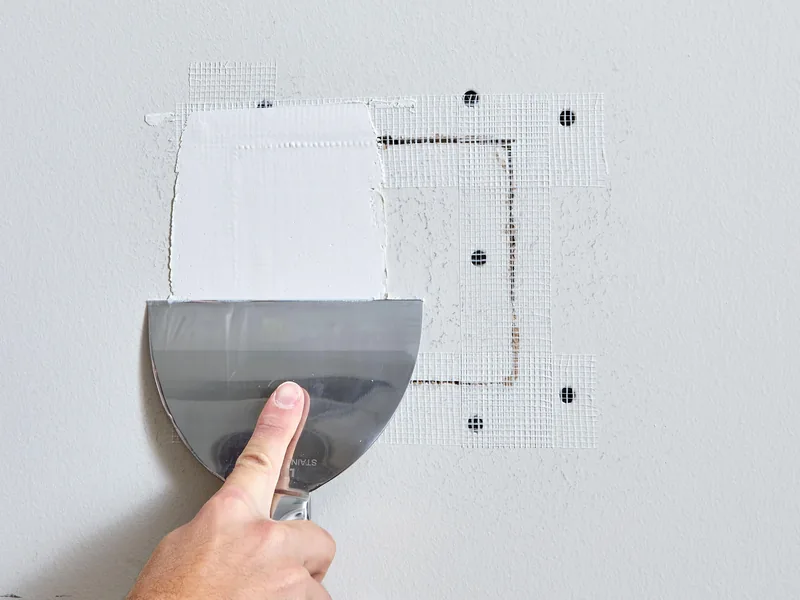
A good repair leaves no visible patch. If a previous patch bulges above the surrounding wall, we rebuild it flush instead of skimming over it again with another thin coat of compound. When an outside corner is damaged, we install new metal corner bead, the rigid edge strip under the finish, so the corner comes back straight and crisp.
Drywall Installation for New Builds, Additions, and Remodels
A new room, addition, or build-out needs properly placed and fastened panels before the interior can be finished. New walls and ceilings make up the installation side of our work. We handle sheetrock installation and drywall hanging for residential and commercial interiors, including complete rooms, additions, and build-outs. We match the sheetrock to its setting and organize the work around the project schedule.
Where New Board Goes In
Homeowners call us when an addition, garage conversion, enclosed patio, or remodel needs finished walls and ceilings. When a new layout divides a large room, creates an office, or adds storage, we also install the partition wall framing and board. For builders, our new construction drywall includes whole-house hanging with builder schedule coordination, so the work fits the planned inspection and finish dates. Business owners use the same installation service for offices, retail units, and tenant spaces.
Hung to the Standard, Matched to the Room
Flat seams and panels that stay tight to the framing depend on correct fastening. We follow the specified panel system, the manufacturer's instructions, and the applicable standard. On a typical job, that means placing screws about every 12 inches on ceilings and 16 inches on walls, with each head set without tearing the face paper.
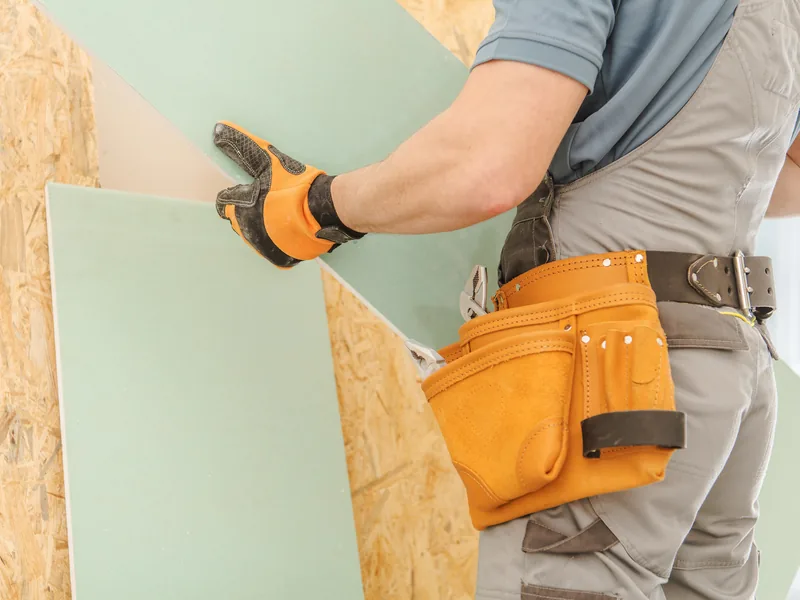
When you are planning the work, a typical 12x12 room takes 3 to 5 days, including drying time between finish stages. We also coordinate installation with other trades during the inspection phase, placing the work after the required electrical, plumbing, and insulation checks are complete. Board deliveries follow the same sequence, so each sheet goes from the truck to the wall while it is still dry.
Commercial Drywall Services in Montgomery and Harris Counties
When a commercial repair or tenant build-out has to fit access rules, inspections, and turnover dates, the job plan matters as much as a consistent finish. We schedule each phase around those requirements so the drywall work fits the larger project calendar.
Property Types We Serve
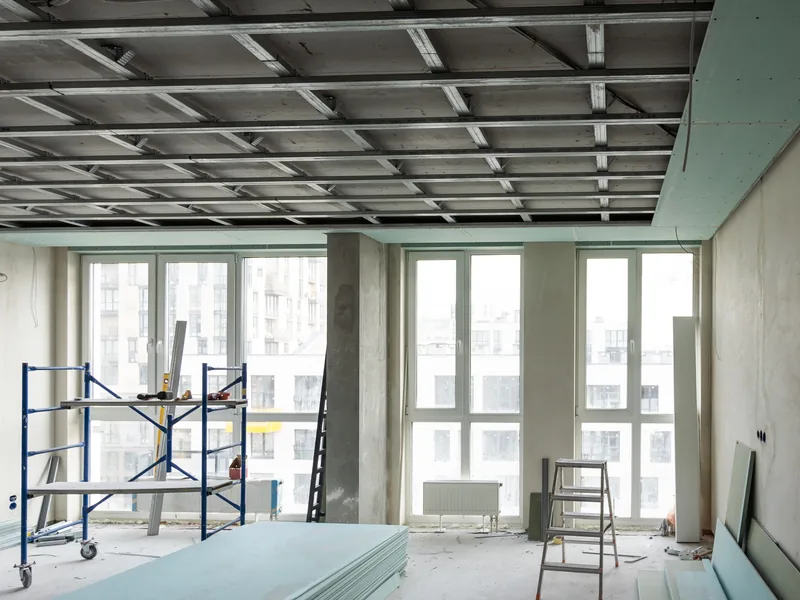
Under strong commercial lighting, office walls often call for a full-skim smooth finish (Level 5). We serve offices, retail spaces, and restaurants throughout Town Center, Research Forest, and the I-45 corridor. For retail and restaurant work, we account for display walls, service areas, soffits, and the frequent layout changes that come with new tenants.
In medical and healthcare facilities, the board and assembly specifications need to suit surfaces that will receive cleanable coatings. Schools and educational buildings often require code-driven fire and sound assemblies, along with inspection-ready documentation. For multifamily properties, tenant build-outs, and property management portfolios, we use the same work list for every unit, so repairs and turnovers stay consistent across multiple units.
Built Around Your Schedule and Your Tenants
Keeping an office, store, or other occupied property open during normal operations often requires the drywall schedule to work around the people using the space. After-hours and weekend scheduling makes that possible, and we book crews to your construction calendar, tenant notices, and business hours. During the work, plastic barriers and the vacuum-assisted sanding we run on every occupied job keep the work area separated from customers, staff, and tenants.
When you oversee several units or properties, clear cost tracking and consistent scheduling keep every address from becoming a separate administrative job. Property managers receive per-unit invoicing that assigns labor and material costs to the correct address or apartment. We can repeat the same approved work list across several properties in a portfolio, and one contact handles the scheduling, so you are not re-explaining the work at every address. For build-outs, our team coordinates permits and inspections with the general contractor or facility manager.
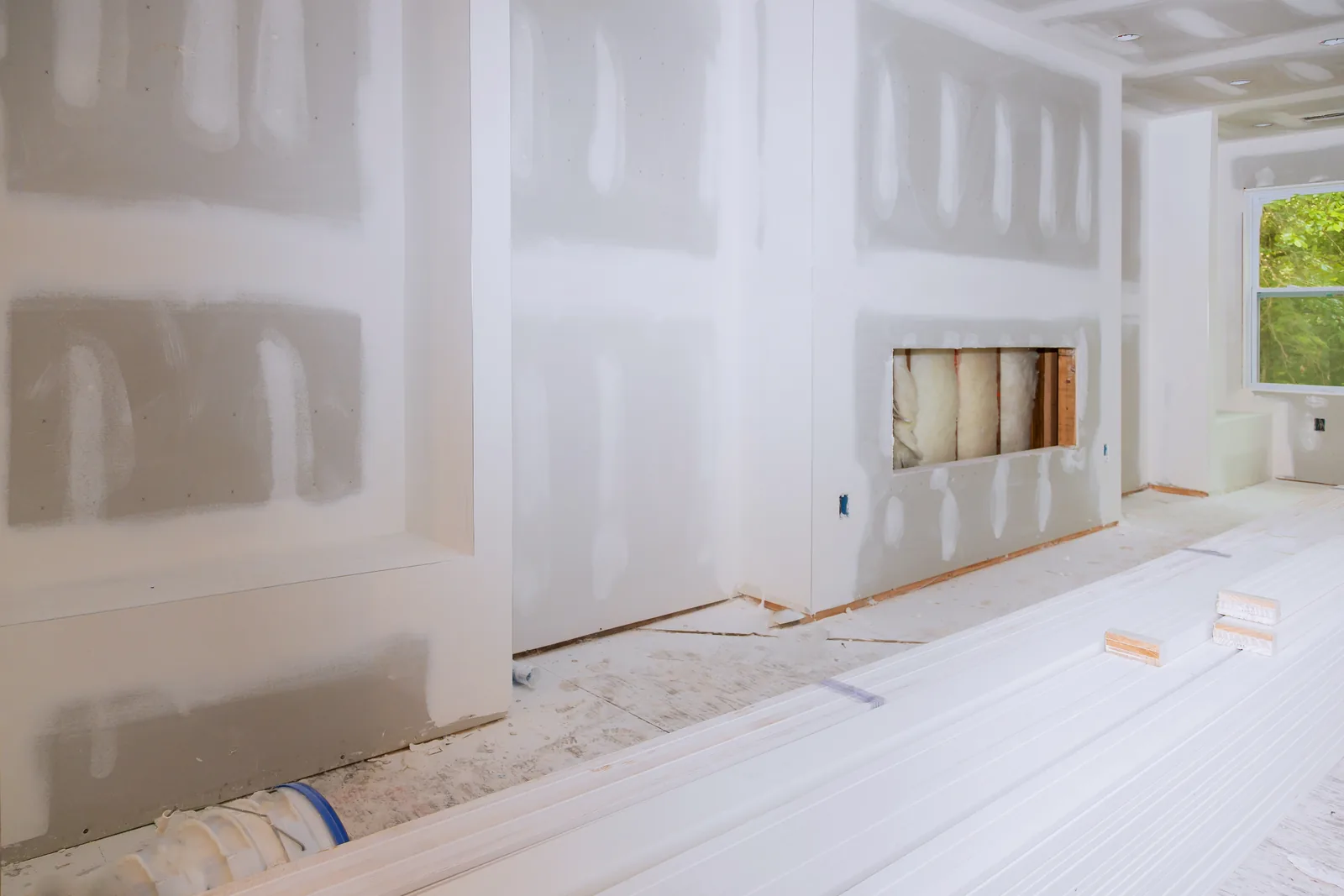
More Drywall Services for the Greater Woodlands Area
-
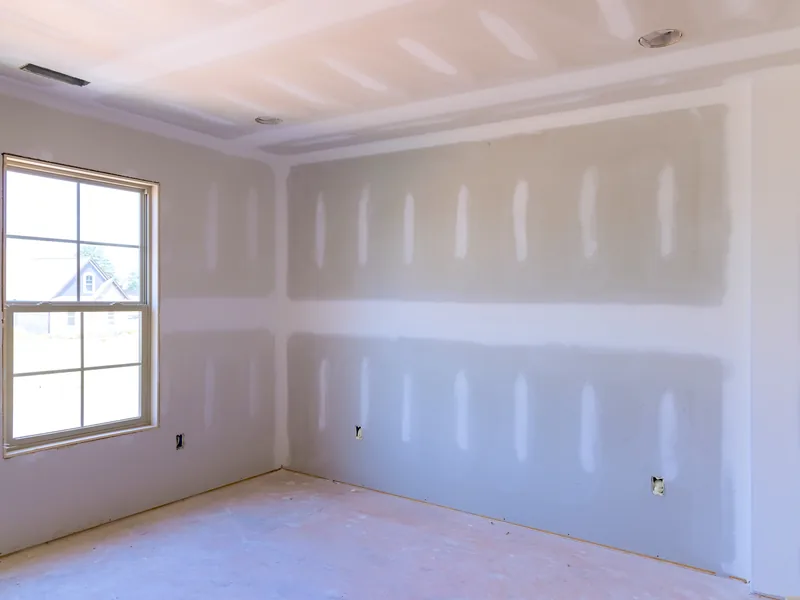
New Construction Drywall
When new construction drywall covers an entire structure, the builder needs every room completed without the drywall work falling behind the larger schedule. A mechanical drywall lift, the crank-operated stand that raises a full sheet overhead, sets the ceiling panels, while staggered seams keep joints from lining up across the framing. The board takeoff, our count of the sheets the job needs, includes 10% to 12% extra for cuts and breakage so hanging never stops short of material. Board goes up after the rough-in inspections, which provide sign-offs on the wiring and plumbing inside the walls, and before the paint crew arrives. The result is a builder-ready interior with every room completed to its specified finish level.
-
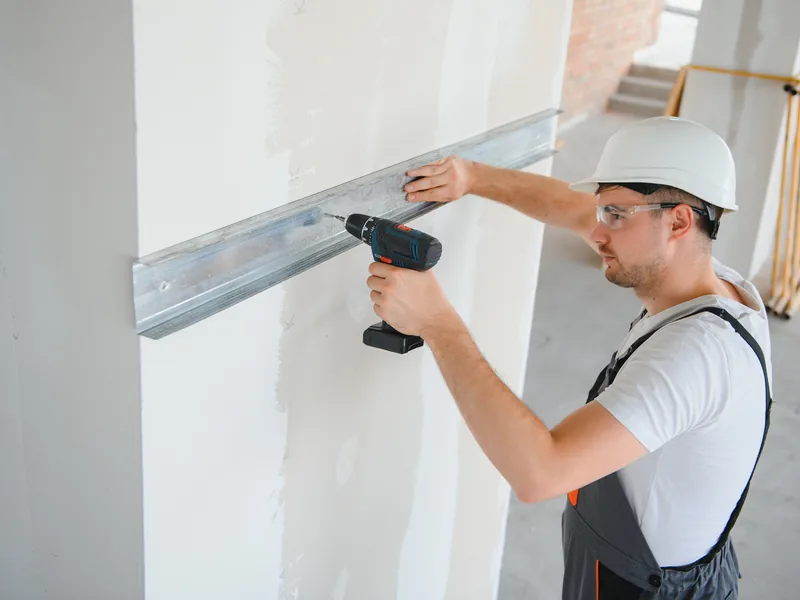
Metal Stud Framing
Walls need straight framing underneath them if the finished surfaces are going to sit flat. Metal stud framing provides that base with light-gauge steel studs set into cold-formed steel tracks, the channels fastened to the floor and ceiling that hold every stud in line. We mark the layout with a laser level and check that each stud is dead vertical before boarding. Commercial interiors use this framing because steel does not burn, while basements and remodels benefit from its straight, consistent dimensions. Stud spacing follows the approved wall design, commonly 16 or 24 inches apart measured center to center. Flat framing lets the board sit cleanly, with no need for shims, the thin packing strips otherwise slipped behind board to flatten a wavy wall.
-
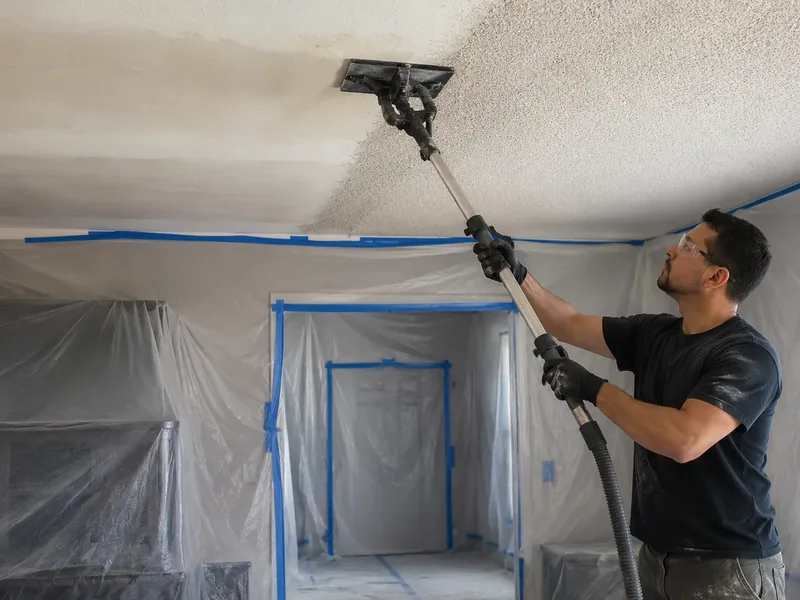
Popcorn Ceiling Removal
A dated popcorn ceiling can make an otherwise updated room still look like one of the Grogan's Mill-era homes from the 1970s where this acoustic texture is common. We require asbestos pre-testing on ceilings installed before 1990, ahead of any scraping; if the test comes back positive, a licensed abatement contractor handles that material before we return. Once the ceiling is cleared, containment barriers isolate the room while we remove the old texture and skim the surface for refinishing. Most single-home projects fit within a 2-to-4-day project window. You can choose a smooth ceiling or replace the popcorn with a current knockdown or orange peel finish that matches the rest of the house.
-
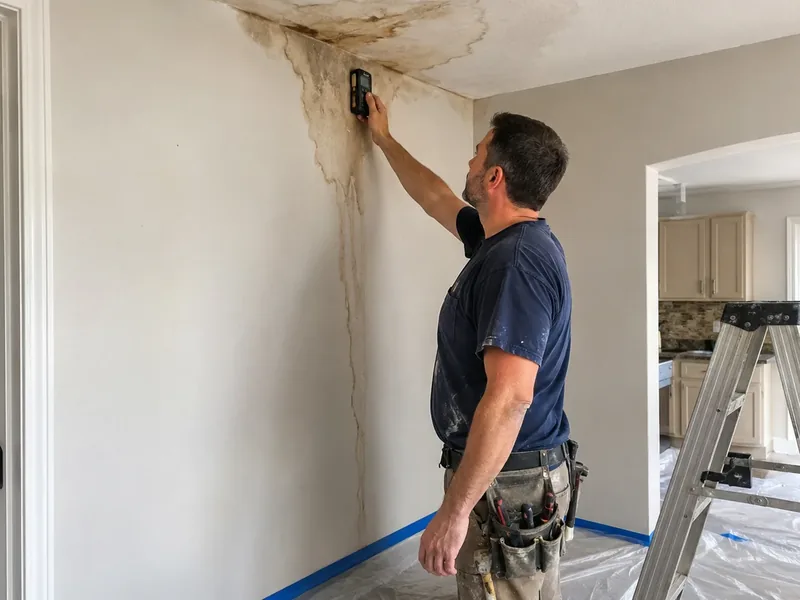
Water Damage Drywall Repair
Your wall or ceiling is ready for water damage drywall repair only after the plumber, roofer, or HVAC contractor has stopped the leak. We probe the exposed framing with a moisture meter and rebuild the surface only once the readings come back dry. Damaged panels are cut back to solid, undamaged material, and mold-resistant replacement board is installed where the room conditions call for it. If we uncover established mold growth, we stop, document it, and refer you to a licensed mold professional before the rebuild continues. Adjuster-ready photo documentation records the affected area, while a cost breakdown supports the insurance review.
-
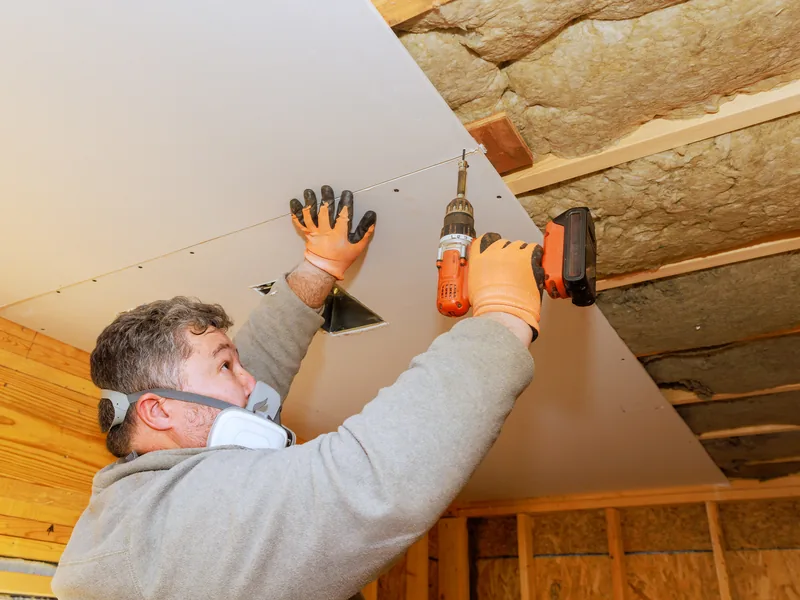
Ceiling Drywall Installation
A new ceiling needs panels that stay flat overhead and equipment that holds them securely during installation. For drywall ceiling installation, we specify 5/8-inch ceiling board where the joist spacing and assembly design call for added sag resistance. The drywall lift holds each panel flat against the joists during fastening, which protects the panel edges. We hang ceilings first and walls second so each wall panel tucks under the ceiling edge and closes the joint at the top of the room. This service fits additions, remodels, garages, and individual rooms where an old ceiling has been fully removed.
-
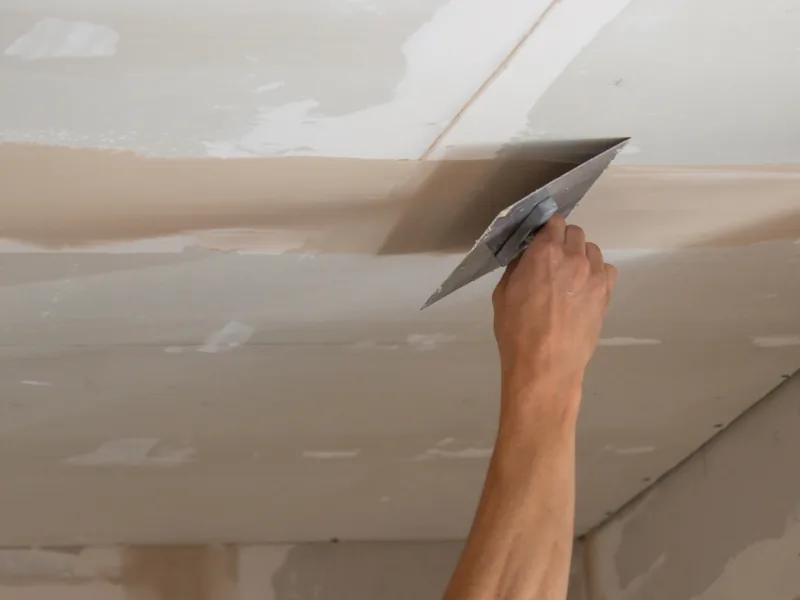
Ceiling Repair
Loose panels, stains, cracks, or visible sagging can leave your ceiling looking damaged even when most of the surface remains in place. Ceiling repair restores those affected areas without replacing the entire surface. We work from scaffolding, a stable standing platform used instead of a ladder, so our hands and tools remain steady across the repair area. We refasten loose board to the joists, replace damaged sections, and blend the repair into the surrounding texture. Before closing the surface, we also check the source of stains or movement so the finished ceiling looks uniform again.
-
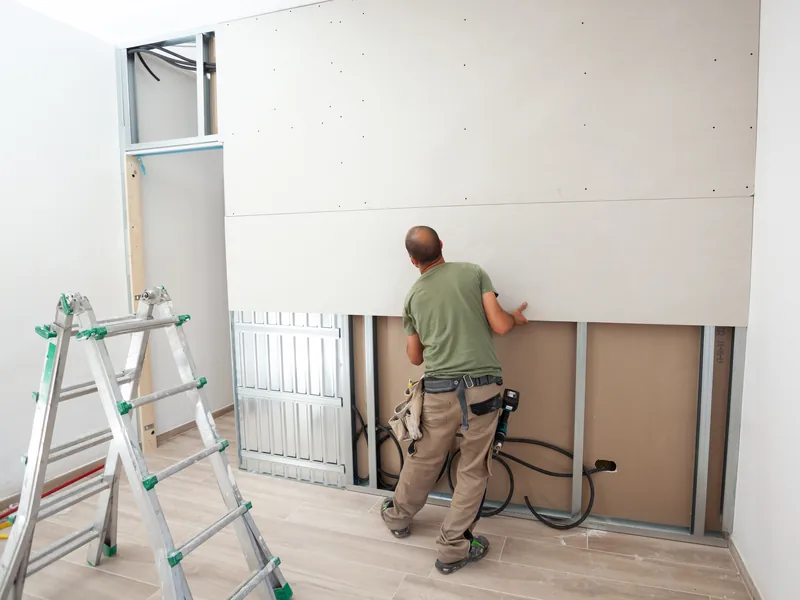
Partition Wall Installation
A home office, closet, bedroom division, or commercial suite separator can reshape the floor plan without requiring a completely new interior. Partition wall installation handles framing, boarding, and finishing as one job. We snap the layout to the approved plan, frame each door opening with a header, the framing that stiffens and squares the opening, and board the new structure. Sound-rated insulation inside the wall cavity is an option that cuts voice and television noise between rooms. The way baseboard and trim wrap into the new wall, the wall's thickness, and the adjacent texture guide the final details so the partition looks original to the building.
-
Plaster Repair
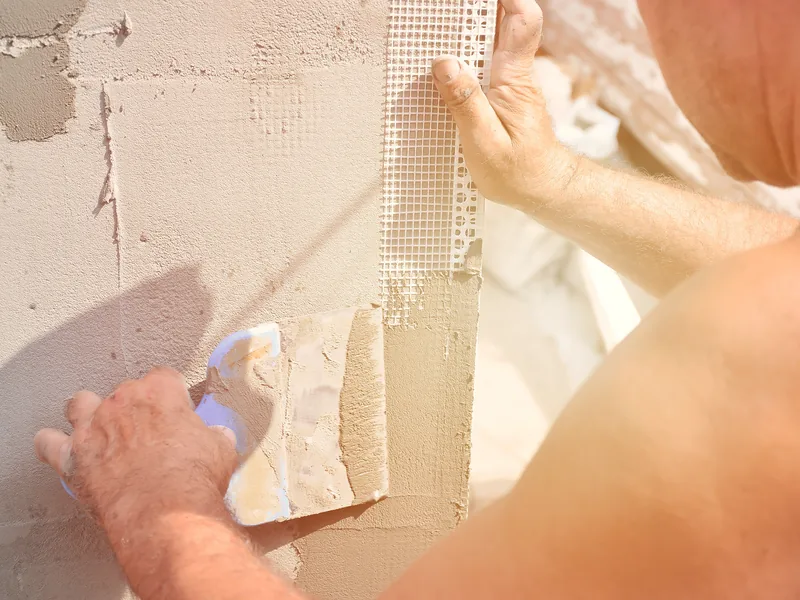
Cracks, loose coats, and separated sections in your older walls often involve plaster systems that behave differently from modern gypsum board. Older walls use three-coat plaster over lath, the thin wood strips nailed across the framing. When the plaster went on wet, it squeezed between the strips and hardened into keys, the hooks that grip the wall from behind. Broken keys allow sections to separate from their backing. We stabilize the plaster that is still firmly attached and restore the missing surface without flattening the character of the surrounding wall. Plaster-to-drywall transition blending also keeps partially remodeled rooms from showing an obvious change where the two materials meet.
-
Wall Insulation Before Drywall
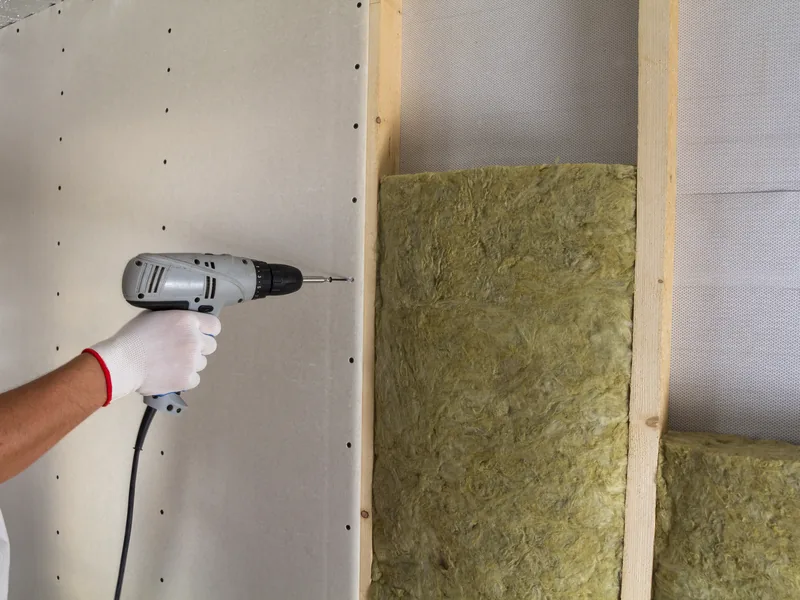
An open wall cavity gives you the least expensive opportunity to add insulation because the material can go in before new sheetrock closes the wall. Batts are precut insulation blankets rated by how well they resist heat flow, and a higher R number insulates better. A typical 2x4 wall takes R-13 to R-15, though the right product depends on the assembly and the project requirements. Sound-rated batts do the same job for noise between bedrooms, offices, or media rooms. We insulate before the board goes up, while every cavity is still open, so coverage is complete around wires and boxes. Properly fitted batts help rooms hold conditioned air during a Texas summer and keep everyday sound from carrying through the house.
-
Drywall Priming & Painting
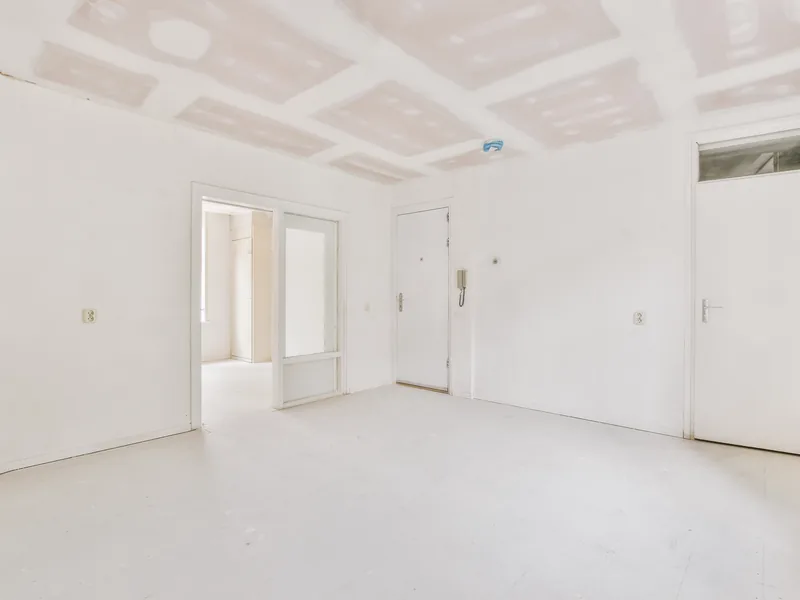
A color coat can look uneven when fresh joint compound and drywall facing absorb the coating at different rates. Once the joint compound has dried fully, we apply the specified drywall primer, usually PVA, a sealer made for new drywall that gives the color coat an even base. Full drying typically takes about a day after the final coat, though the compound type, coat thickness, temperature, humidity, and ventilation all move that window. Priming is included on every repair and installation. Finish painting is optional and appears in the estimate as its own line item, so you can have our crew take the wall to color or hand a properly primed surface to your painter.
-
Wallpaper Removal
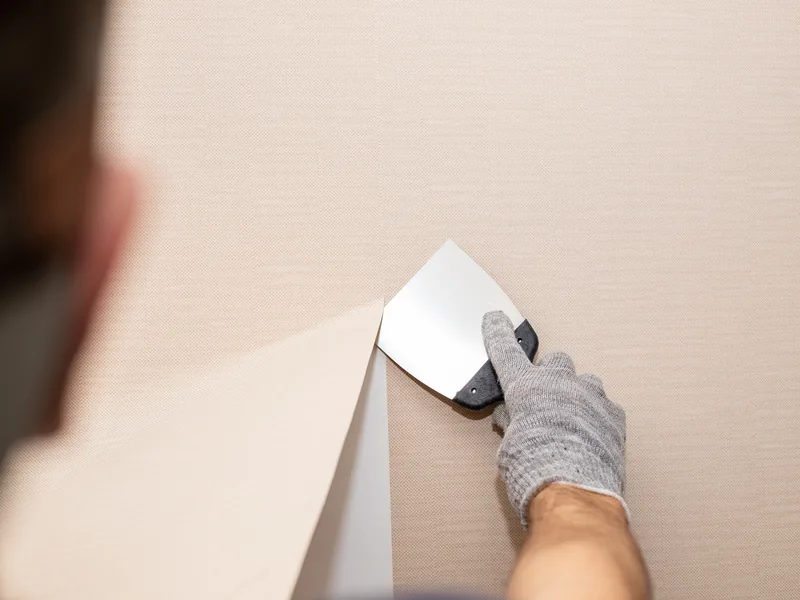
Getting old wallpaper off cleanly means removing the paper without leaving the drywall face badly damaged. We choose scoring and steam release or a suitable removal solution based on the covering and adhesive. After the paper comes down, an adhesive washdown clears residue that could interfere with the next coating. We keep excess moisture away from the exposed gypsum core, then flatten torn facing, seams, and gouges with a skim coat. Once the surface is stable, you can choose a smooth finish or a texture matched to the surrounding walls.
-
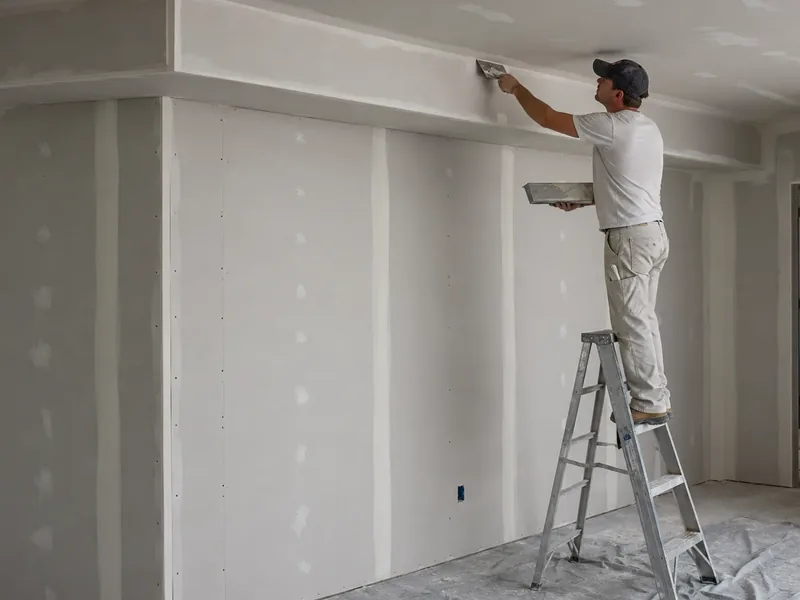
Drywall Soffits & Bulkheads
Drywall soffits give you a finished way to conceal overhead ductwork, pipes, and other utilities while keeping the room's lines orderly. We frame around those components without blocking required access points. Cabinet bulkheads can also close the space above upper cabinets or define a kitchen transition. Once the framing is complete, board wraps the structure, and metal corner bead forms crisp outside edges at the designed angle, including square 90-degree corners. The finished box hides the equipment behind clean, straight lines that fit the room.
Advanced Drywall Solutions
The way you use a room can call for more than ordinary wallboard can provide. Specialty drywall systems cover those conditions.
-
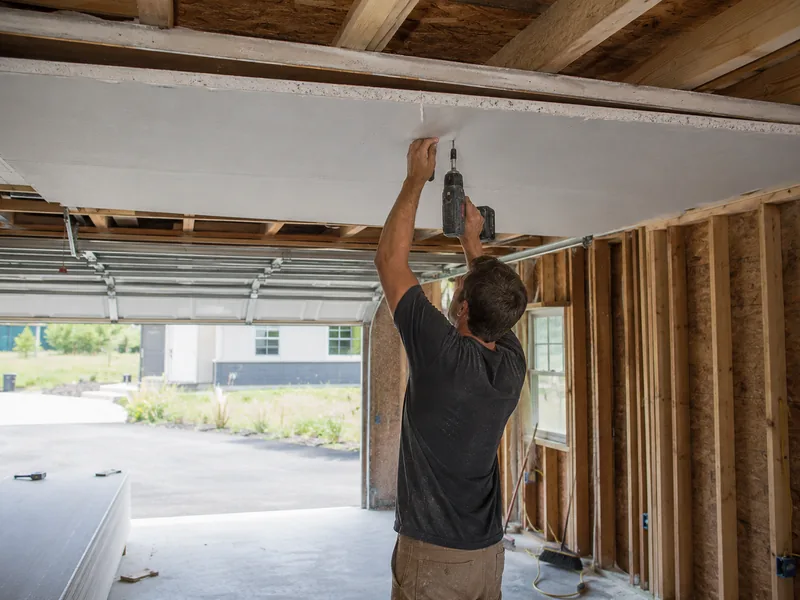
Fire-Rated Drywall
Garage separation walls, walls between adjoining units, and commercial corridors often require fire-rated drywall to provide the protection the code calls for. The rating applies to the assembled wall or ceiling, rather than to one sheet by itself. We specify 5/8-inch Type X board as part of the complete tested assembly, with the board, fasteners, and joint treatment all following the listed system.
-
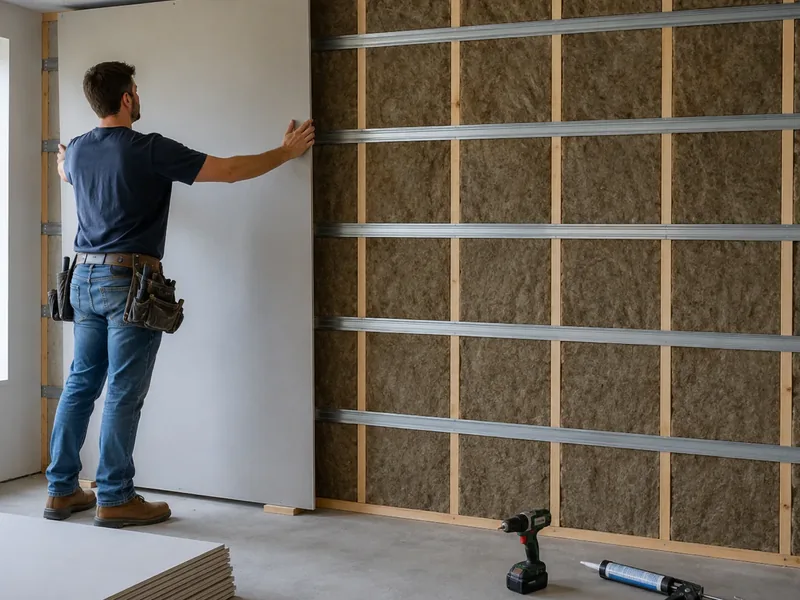
Soundproof Drywall Systems
Noise carrying into bedrooms, home offices, media rooms, and shared commercial spaces can make those rooms harder to use. For soundproof drywall systems, we use sound-damping panels such as QuietRock, built as a sandwich, two gypsum faces with a vibration-damping layer between them, along with resilient isolation clips that decouple the board from the framing so vibration has no direct path through. The amount of sound a wall stops is measured by its Sound Transmission Class (STC). A wall built this way can reach STC 50 or better, compared with the mid-30s for a standard wall.
-
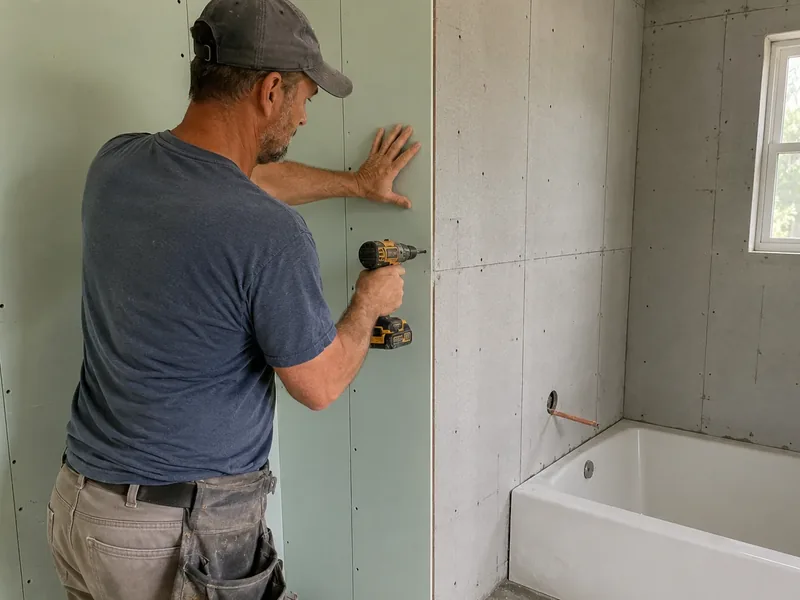
Moisture & Mold-Resistant Drywall
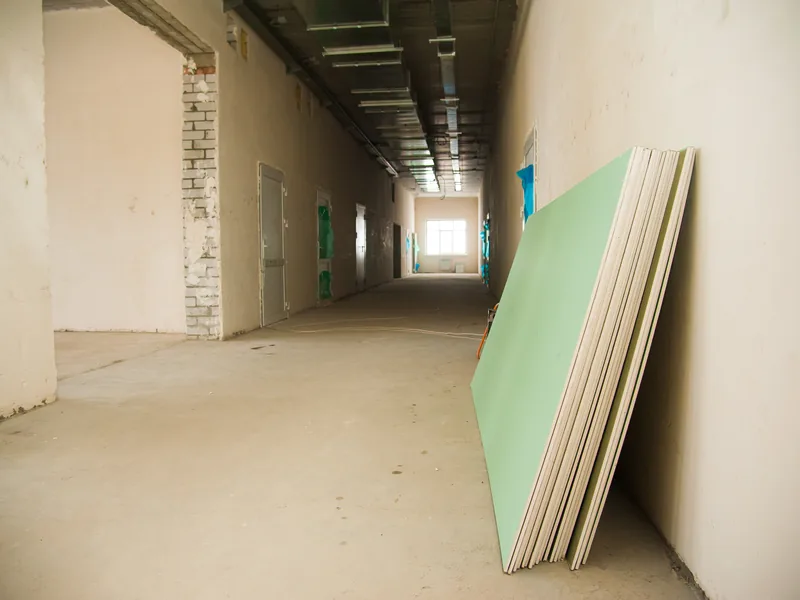
Steam and damp air can expose the walls in bathrooms, kitchens, laundry rooms, and garages to more moisture than ordinary board is meant to handle. Moisture resistant drywall gives those rooms a panel selected for humid conditions. Green board is the older moisture-resistant panel, named for its green paper face, which is treated to resist damp better than ordinary paper. Newer panels add a mold-resistant gypsum core, and some replace the paper face with fiberglass so there is less paper for surface growth to feed on. Humid-subtropical moisture exposure around The Woodlands makes board selection especially important in rooms that hold steam or damp air. We also use these panels when wet-room repairs expose standard board. No drywall goes up inside the shower or tub surround itself. Those walls receive an approved tile backer, a water-resistant panel such as cement board that is made to sit under tile.
-
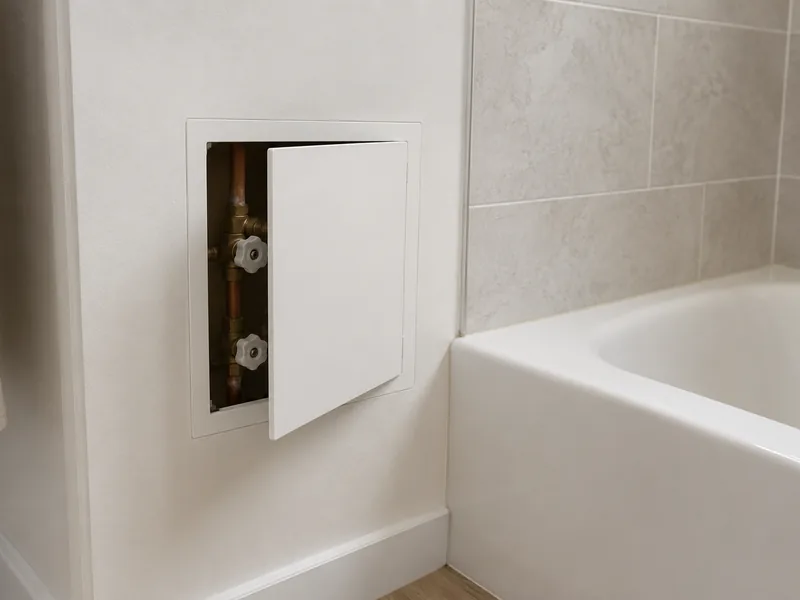
Access Panels & Utility Openings
Plumbing valves, electrical junctions, HVAC connections, and tub controls need to remain reachable without leaving a rough opening in your finished wall. A drywall access panel provides that access. We create framed utility openings and fit flush paintable access panels that blend with the finished wall. We size the opening so a technician has enough room to inspect or replace the equipment without cutting fresh drywall. When an earlier service call has left an uneven cut, we can retrofit a panel and restore the surrounding surface while preserving practical access for future maintenance.
-
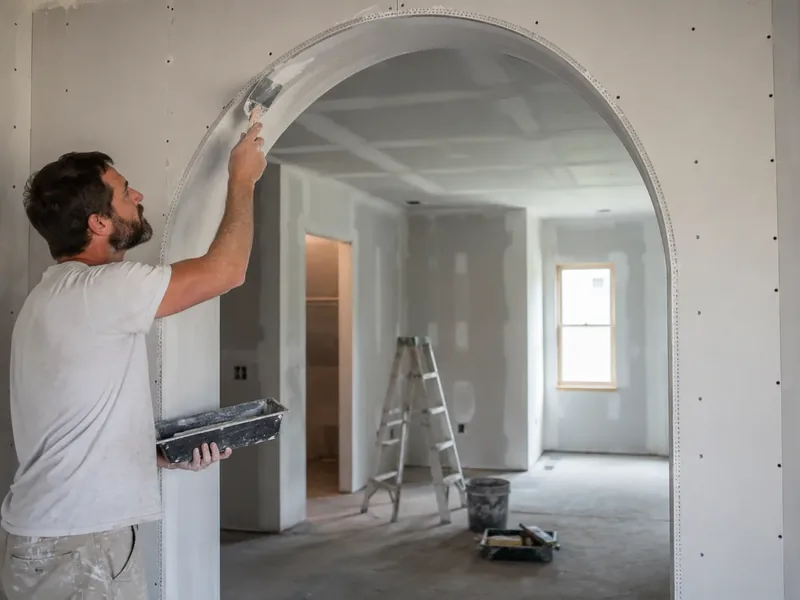
Custom Drywall & Architectural Features
Arched openings, wall niches, feature walls, curved partitions, and detailed ceilings can give your room more architectural shape. We form each drywall arch or drywall niche with layered supports and flexible (bendable) drywall board suited to the intended curve. Radius wall framing creates a stable base for smooth bends, while tray and coffered ceilings add depth overhead through recessed and paneled shapes. During the estimate, we sketch each feature and price it on its own line, so you see each design and its cost before construction begins.
Drywall Materials & Installation Standards
You should know which drywall materials belong in each room, and why. Before we load the truck, material planning starts with a per-room board specification that identifies the required drywall materials by location and holds every job to the same published standards.
Board Types and Where Each Belongs
Walls and ceilings need panels suited to the spaces they close in, so the board list is written room by room. We use 1/2-inch board for most interior walls. Ceilings step up to 5/8-inch or sag-resistant panels where the joist spacing calls for it, holding flat where a lighter sheet would sag. When the plans call for a listed fire-resistance assembly, Type X versions belong in that assembly. We specify the board for each space in writing and show any specialty-material costs clearly.
Damp rooms outside direct-splash zones need moisture-resistant board, while sound-damping panels help limit noise around bedrooms, offices, and media walls. The gypsum board itself should also come from a known source. Our name-brand gypsum board comes from established manufacturers, including USG, National Gypsum, and CertainTeed, rather than an unverified bargain pallet.
The Standards Behind the Work
You should be able to check the hanging, finish level, and fire performance against named published standards. ASTM C840 is the application standard our hanging can be checked against. GA-214, the Gypsum Association's standard for finish levels, sets levels 0 through 5 and gives contractors, owners, and painters a shared scale for describing the completed surface. We cite fire performance by the tested fire assembly and applicable code listing.
When estimates name their standards, competing bids are easier to compare. A written quote can identify the panel type, thickness, finish level, and any required assembly listing. You can then review the bids line by line instead of guessing what each contractor meant by a "finished wall."
Free Quote FormFinishing & Texture Applications
When part of a wall is repaired or remodeled, the new finish needs to work with the surface that remains. Finished walls across The Woodlands have a distinct surface character, and Texas homes hold a whole vocabulary of drywall texture, from hand-worked patterns to Level 5 smooth walls. New work calls for texture matching when the existing finish stays, while retexturing gives an entire wall or ceiling a consistent new appearance. We also take finish-only jobs, including taping and floating, the tape-and-coat work that turns hung board into a smooth wall, for sheetrock another crew hung or bringing an existing wall up a finish level.
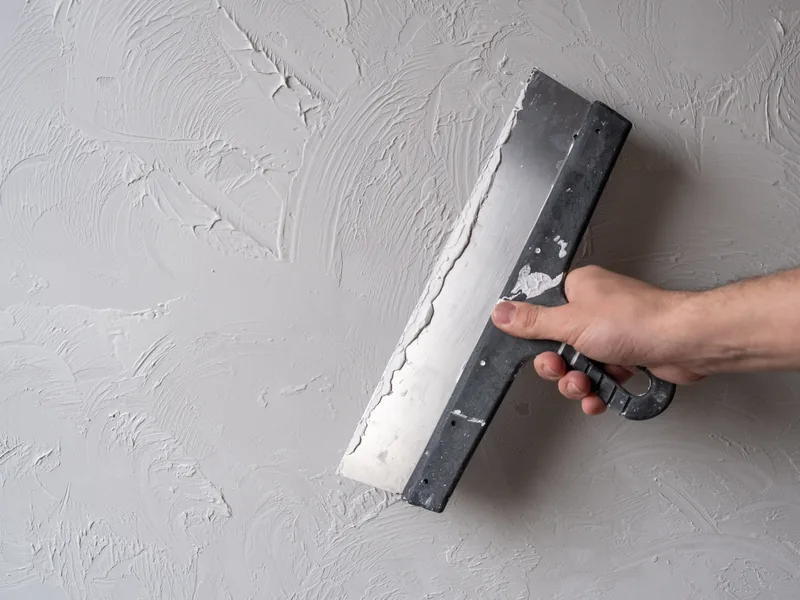
Textures Common on Texas Homes
The existing pattern helps determine what a repaired area needs to match. Knockdown texture has broad, flattened islands and is common in newer subdivisions, while orange peel texture has a finer, pebbled look with less visual depth. Skip trowel texture creates sweeping, irregular marks associated with Mediterranean-style interiors. Older village homes from the 1970s-80s often feature hand-troweled textures that vary more from one room to another, while newer builds tend to use sprayed finishes.
Large windows, wall-washing fixtures, and other strong light hitting the wall from the side can reveal small variations across a finished surface. Modern remodels often shift toward a lighter knockdown or smooth surface, and Level 5 smooth walls, with compound skimmed over the entire surface rather than just the seams, provide the most uniform appearance under those lighting conditions.
Matching, Blending, and Retexturing
A repaired area should follow the scale and shape of the finish around it. Texture matching starts with a sample patch that recreates the existing pattern before work begins on the visible wall. We compare the sample's scale, spacing, and profile with the surrounding finish, then use raking-light verification, a lamp aimed low across the wall, to expose ridges and edges that ordinary room lighting can hide.
Wallpaper removal, popcorn removal, or years of scattered patches can leave a wall or ceiling without one consistent finish. Whole-surface retexturing gives the entire surface a uniform appearance. During a remodel, it can also replace a dated pattern with knockdown or a smooth finish. Before sign-off, we check the completed surface from normal viewing positions.
Our Drywall Process, From First Call to Walkthrough
Whether you need a single-wall repair or a full addition, you should know what happens next and when. The Woodlands Drywall Co. follows the same five-step customer workflow for both, so you receive a written line-item estimate, a clear schedule, and a final walkthrough before invoicing.
-
Inspection and Written Estimate
Before you commit to the work, the estimate should reflect the actual damage or installation plans. We look at the project in person, free of charge, and write the estimate from what we see.
-
Surface Protection and Preparation
Drywall work should not leave dust and debris throughout your home or business. Before bringing out tools, we cover floors and furniture. For repairs and installations in occupied homes or open businesses, our crew also seals the work area from the surrounding rooms.
-
Repair or Installation
A clear start date helps you plan around the work. We begin on the scheduled day, and installations follow the milestones and dates listed in your approved schedule.
-
Taping, Finishing and Texture Matching
Drying time affects when each finish coat can go on, so it is already built into the schedule. We deliver the quoted finish level and match the surrounding wall or ceiling texture before you approve the work.
-
Cleanup and Final Walkthrough
Sanding and cleanup should not leave you with dust or project debris to handle afterward. We capture sanding dust at the source rather than sweeping it back into the room, and we haul away project debris. During the final walkthrough, we walk the space with you, write down anything you want corrected, and resolve those punch-list items before sending the invoice.
What Drywall Work Costs in The Woodlands
Before you compare estimates, you should be able to see what you are paying for and how the price was calculated. Drywall repair cost and drywall installation cost use different pricing models. We price repairs by the job and installations by the square foot. Line-item estimating separates the work into clear stages, so you can see where the money goes. Project photos can support an initial range, while an on-site inspection confirms access, damage, measurements, and the firm price.
Repair Pricing
For a typical single-room repair, the expected price ranges from $200 to $1,200. The spread is wide because a small patch and a rebuilt ceiling are different jobs. Each estimate assigns costs to board replacement, finishing, and texture work, so the breakdown shows you which stage affects the total.
The damage you see is only part of what determines the repair price. Repair pricing also reflects the number and size of damaged areas, overhead labor, and the difficulty of matching the existing surface. Water damage can widen the scope if damp or weakened material extends beyond the visible stain. When you combine several repairs into one visit, setup costs can be lower because the crew protects the room and mobilizes equipment once.
Installation Pricing
If you are budgeting for new drywall, the finish level and amount of surface area make a substantial difference. Drywall hung, taped, and finished to Level 4, the standard finish under ordinary paint, typically costs $1.50 to $3.50 per square foot. Level 5 smooth walls generally run $3.00 to $4.50 per square foot because the finish requires more labor and material. A 12x12 bedroom with its ceiling included can land between roughly $800 and $1,850, while walls-only scopes run less, depending on board specification and finish.
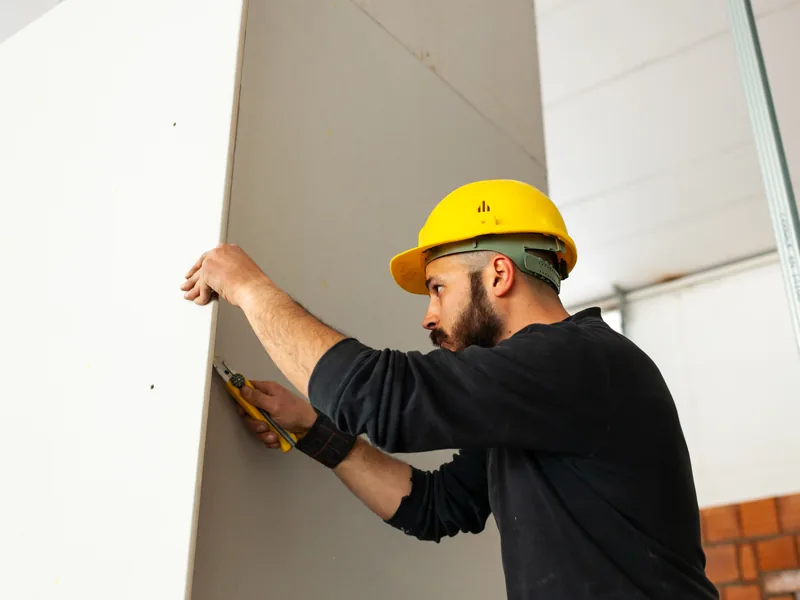
Rooms that are taller, harder to reach, or more detailed can take more labor and affect your total drywall installation cost. Ceiling height, room layout, site access, and architectural details all factor into the price. Moisture-resistant board, fire-rated assembly components, and sound-control board have different material and labor requirements than standard gypsum panels. Larger projects can be divided into defined phases, and financing is available for qualifying work.
Fast-Response Emergency Drywall Repair for Water Damage, Holes & Ceiling Damage
Some drywall damage needs attention sooner rather than later. A large hole, loose ceiling section, water-damaged wall, or opening left after plumbing or electrical work can make a room difficult to use and leave framing or insulation exposed. We offer same-day and next-day drywall repair when openings permit, with scheduling based on the size and urgency of the damage.
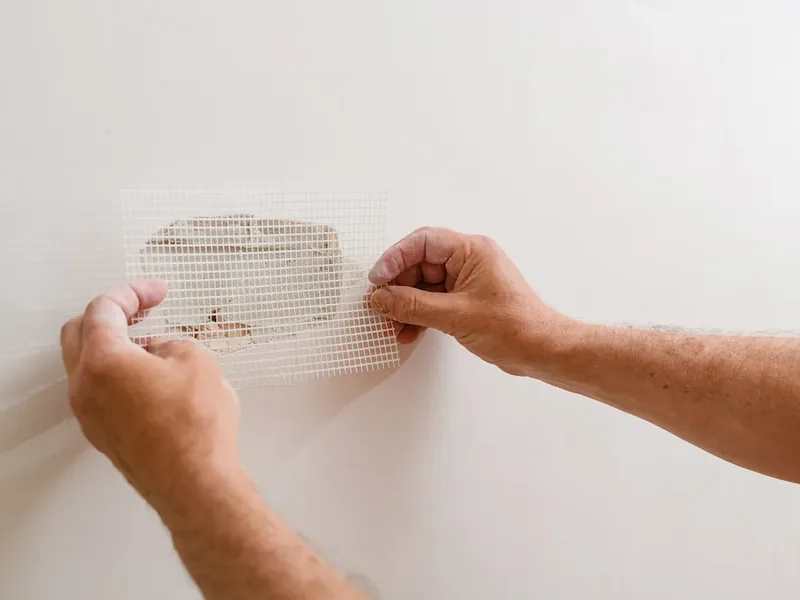
Water Damage & Open Wall Repairs
After a leak, the source of the water needs to be repaired before the drywall is closed back up. We check the affected area, remove damaged material where necessary, and rebuild once the framing is dry. We also repair openings left behind when plumbers, electricians, or HVAC technicians need to cut into a wall or ceiling to reach pipes, wiring, or equipment.
Holes, Impact Damage & Broken Drywall
Furniture impacts, doorknob holes, moving damage, broken corners, and larger accidental openings can often be repaired without replacing the entire wall. We rebuild the damaged section flush with the surrounding surface, then match the existing knockdown, orange peel, or other texture before priming.
Ceiling Damage & Loose Sections
Cracks, sagging panels, broken sections, and loose drywall overhead can require faster attention, particularly when material is hanging down or the room cannot be used normally. We inspect the affected section to determine whether it can be secured and repaired or whether damaged board needs to be removed and replaced.
Same-Day Scheduling & Property Turns
Homeowners, businesses, landlords, and property managers can request expedited scheduling when an opening is available. For rental properties, we can coordinate patching, texture matching, and primer work around move-out and move-in dates so drywall repairs do not delay the next occupancy. Call (346) 248-4075 to ask about the next available opening.

Serving The Woodlands and the Communities Around It
Your home is part of The Woodlands, a master-planned community of villages set beneath a forest canopy about 28 miles north of Houston. Its neighborhoods span Montgomery and Harris counties, while The Woodlands Waterway connects Town Center destinations such as Market Street, The Woodlands Mall, and the Cynthia Woods Mitchell Pavilion.
A repair or renovation needs to match the finish already on the wall, and local homes span several generations of drywall work. Grogan's Mill opened in 1974, and the housing stock, the mix of homes built here over the decades, has aged through several finish styles since then. A drywall company working across those generations must recognize the original texture before planning the work.
Ceiling stains after roof leaks, damage around windows, and seams or corner cracks can all reflect the area's weather. The humid subtropical climate brings summer highs near 94°F, while Gulf storm season moisture intrusion can leave stains and damage behind. Humidity also affects wet-room board, the moisture-resistant panels in bathrooms and laundry rooms, and contributes to seasonal framing movement. As framing swells and shrinks, seams or corner cracks can reopen, although the direction and location of a crack provide clues rather than a firm diagnosis. Wider, recurring, or displaced cracks can warrant evaluation by another qualified professional.
Older homes and brand-new builds call for different drywall skills, especially in this weather. A local drywall contractor stays busy here year-round, from matching hand-applied texture in the older villages to hanging sheetrock in brand-new builds.
Areas We Serve
Wherever you live in the area, The Woodlands Drywall Co. serves the eight residential villages of The Woodlands along with the surrounding communities in Montgomery and Harris counties.
Villages in The Woodlands
- Alden Bridge
- Cochran's Crossing
- College Park
- Creekside Park
- Grogan's Mill
- Indian Springs
- Panther Creek
- Sterling Ridge
Surrounding Communities
- Shenandoah
- Oak Ridge North
- Woodforest
- Magnolia
- Pinehurst
- Woodloch
- Tamina
- Stagecoach
- Decker Prairie
What Woodlands Homeowners and Businesses Say
-
We had a damaged wall in a room with heavy natural light. The patch and texture blend came out so clean that I could not find the repair the next morning.
Lauren
-
A storm-season roof leak ruined part of our ceiling. The crew confirmed the area was dry before closing it, rebuilt the damaged section, and matched the surrounding finish.
David
-
They tested our dated popcorn ceiling before removal, then scraped and retextured each room. The work took only a few days, and the new surface looks consistent throughout the house.
Karen
-
Our tenant suite needed new walls and a perfectly smooth finish without disrupting business hours. The crew worked after hours and kept the build-out on schedule for opening day.
Marcus
-
I manage several rental units and need paperwork that stays organized. Their per-unit invoices are clear, and weekend repair turns help me prepare apartments between tenants.
Angela
Drywall Questions We Hear in The Woodlands
Do You Handle Small Repairs?
Yes. A single patch is a scheduled job for us, not a favor. Send a photo through the quote form and we can usually give you an initial range before we drive out.
Is Painting Included?
Priming is included: every repair and installation ends with the specified drywall primer. Finish painting is its own optional line on the estimate; keep it, or hand your painter a sealed, ready-to-coat surface.
Can You Work in an Occupied Home or Business?
Yes, most of our work happens in occupied spaces. We seal the work area, run vacuum-equipped sanders, and offer after-hours or weekend slots when a business cannot close.
Is It Cheaper to Repair or Replace Drywall?
Isolated damage usually favors repair. Drywall replacement makes more sense when a panel is soaked, sagging, or damaged across most of its span; an on-site review prices both options separately.
When Should a Crack Be Evaluated Before Drywall Repair?
Have the structure looked at first when a crack is wide, keeps returning after repair, or the surfaces around it sit out of line. Cosmetic cracks from seasonal movement are everyday drywall repair work, and a crack pattern alone does not prove a foundation problem either way.
Do You Remove and Replace Damaged Insulation?
Yes. When water-damaged board comes down, wet insulation behind it comes out too, and new batts go in before the new board closes the wall.
What Has to Happen Before Water-Damaged Drywall Is Closed Up?
Two things: the leak source is repaired, and the framing reads dry on a moisture meter rather than just looking dry. Damp framing sealed behind new board turns a small leak into a bigger problem later, so the rebuild is scheduled only after both checks pass.
Get Your Free Drywall Estimate in The Woodlands
Tell us about the wall that needs repair or the space you plan to build out. We will inspect the site in The Woodlands at no charge and deliver an itemized written quote within 24 hours of the visit.
Call The Woodlands Drywall Co. at (346) 248-4075 or use our quote form to request your free on-site estimate.