
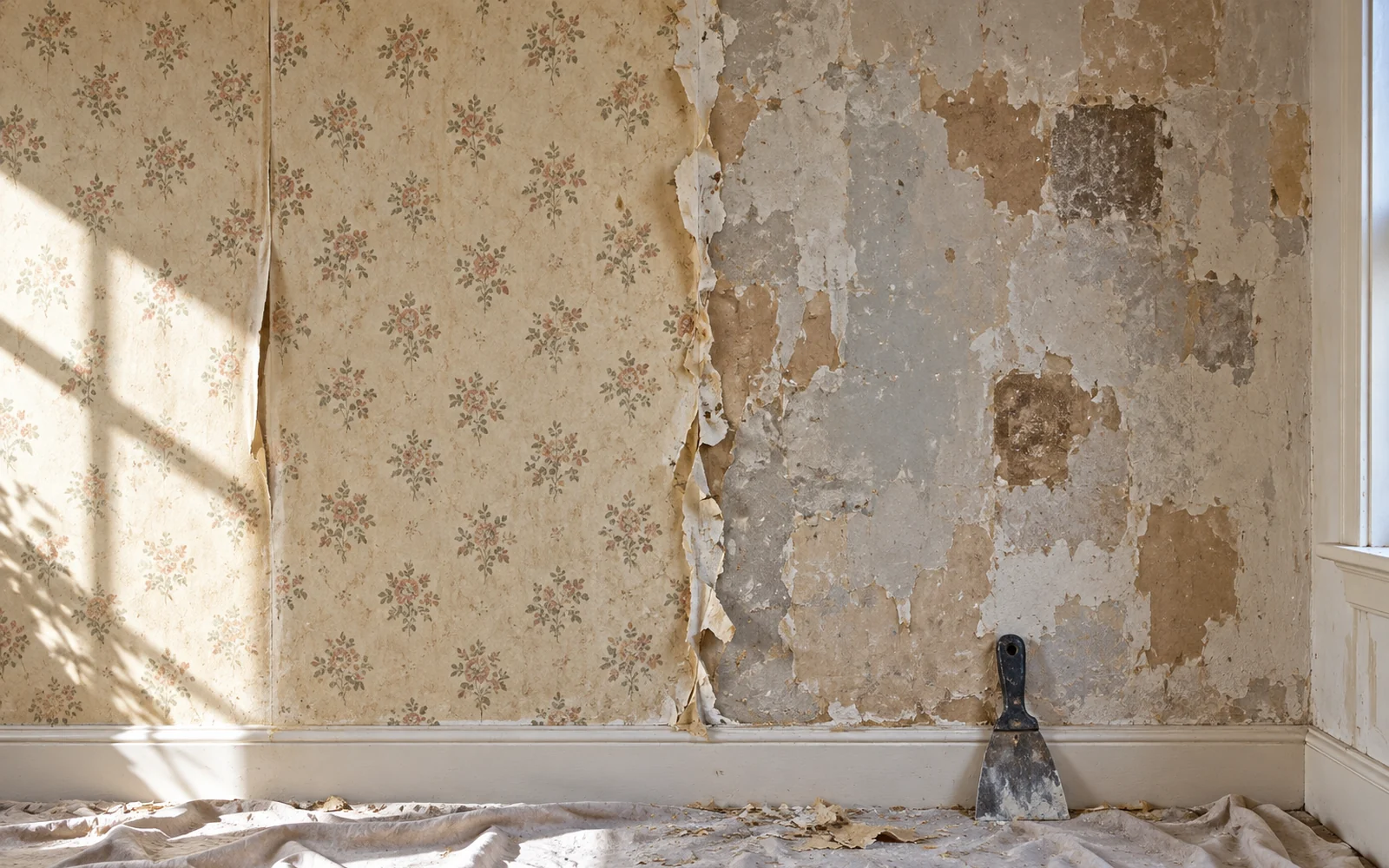
Wallpaper Removal in The Woodlands, TX | The Woodlands Drywall Co.
The Woodlands Drywall Co. has handled wallpaper removal for residential and commercial walls and ceilings in The Woodlands, Texas for 20 years. Getting the paper off is only half of wallpaper stripping; the real work is removing the paste underneath and preparing the wall behind it. We strip the paper, wash away the wallpaper paste and glue, and prepare the surface for paint, including difficult rooms with paper that has been painted over, more than one layer, papered ceilings, and borders.
Almost every wall inside The Woodlands is gypsum board because the town opened in 1974, well after drywall had replaced plaster; plaster over lath is found in the older communities around it. The material on your walls determines how aggressively we can work the surface.
We first check how firmly the paper is bonded, then choose the right approach using a scoring tool, a wallpaper steamer, an enzyme stripper, a pump sprayer and a broad knife. Any adhesive residue is removed with a TSP wash. Our estimates name the finish using GA-214, the industry guide that numbers how smooth a wall is before paint. You receive an itemized written quote within 24 hours of the visit.
Homeowners in Shenandoah, Oak Ridge North, Magnolia and across Montgomery County get a sound, paint-ready wall back, not just one with the wallpaper removed. Call us at (346) 248-4075 or send the quote form, and we will come out to inspect the room and provide a free price.
Get A Free Quote
What Is Under the Paper
The wallpaper on your walls determines how long the room takes and what the job costs, but simply standing in the room reveals almost none of that. A finished wall can look exactly the same whether there is one layer behind the pattern or three, whether the face peels away dry or has to be soaked loose, and whether someone painted over the entire surface years ago.
The surest way to find out is to lift a test patch a few inches wide at an inside corner, or behind a switch plate where the edge is already loose, and see what comes away. That small pull answers three questions at once: how many wallpaper layers are on the wall, how firmly each layer is bonded to the surface beneath it, and whether paint has sealed the face.
Strippable, Peelable, and Paper That Will Not Let Go
Wallpaper stripping begins with how the paper is designed to behave when you pull on it, and there are three basic types. Strippable vinyl wallpaper has a durable face made to come away dry, and lifting one corner will often pull down a full sheet. Peelable wallpaper looks the same until you start pulling: the printed vinyl face releases, but the paper backing remains glued to the wall and still has to be soaked and removed.
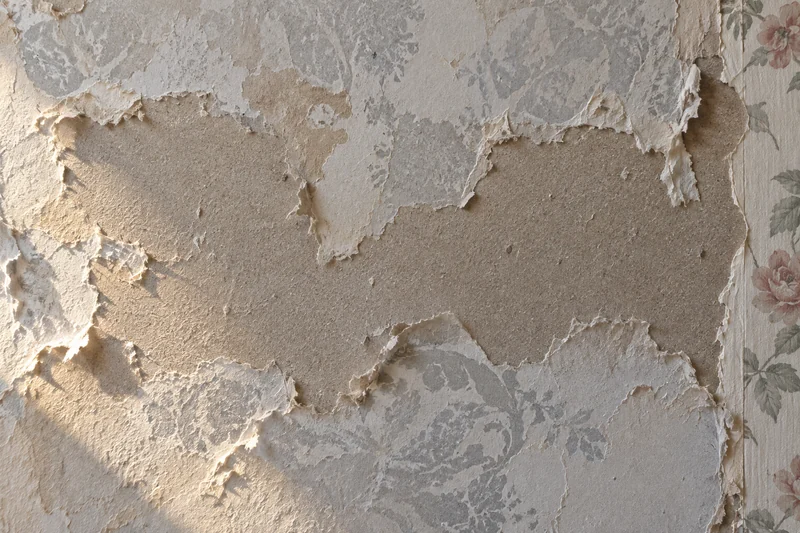
Traditional paper does not peel away and has to be wetted and scraped across the entire room. The difference that affects your price is between strippable and peelable wallpaper, because a peelable wall takes two passes instead of one. Specialty faces fall outside those categories: grasscloth, foil wallcovering and flocked paper are fragile and require a much gentler approach. We try a dry pull first on every wall because it costs nothing, causes the least damage, and sometimes completes the entire job.
When There Is More Than One Layer
For decades, hanging new paper directly over old wallpaper was standard practice, so finding two or three layers on a single wall is common in older homes here. Each layer was installed with its own wallpaper adhesive, and those adhesives respond differently during removal. Wheat paste, the flour-based glue that was once the standard, softens readily in warm water.
Clay-based and acrylic adhesives resist warm water, so they require a stripping solution and more patience. That means one wall can need two different approaches at two different depths. Multiple wallpaper layers cannot be counted through the finished surface; the true count only appears as the work progresses. Your estimate states what the test patch revealed and explains exactly what changes if additional layers come to light once we are into the room.
Paper That Has Been Painted Over
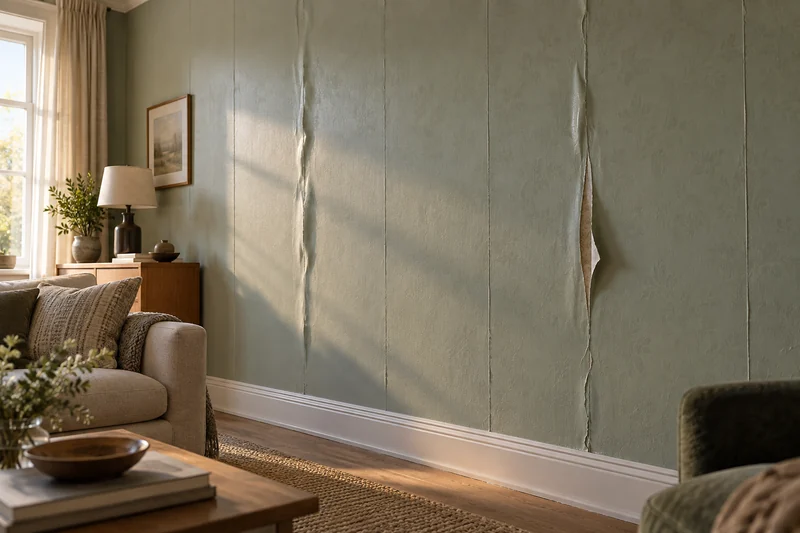
Paint over wallpaper creates a sealed skin that prevents water from reaching the paste underneath. On a painted over wallpaper wall, the surface has to be scored so moisture can get through. You can usually identify the condition before work starts because the seams between the original strips show through as faint vertical ridges that are visible in low light and easy to feel by hand.
Latex bonds tightly to the paper face, so it sometimes comes off in sheets with the wallpaper still attached and sometimes refuses to release at all. Because the wall behind has been covered twice over, old damage has remained hidden for years and more of it usually appears once we reach the bare wall. This is the slowest condition on any wallpaper job, and your quote identifies it from the start so it is not discovered later.
Free Quote FormWallpaper Removal on Drywall, Plaster, and Textured Walls
The wallpaper determines how difficult it is to remove, but the wall underneath determines how much repair comes afterward, and that second half is where most of the surprise in a wallpaper removal bill comes from. Three kinds of wall show up behind paper across the area we cover. In the villages themselves, it is gypsum board very nearly every time, while plaster laid over thin wood strips is more common in the surrounding towns. Either surface may also have had a sprayed or troweled texture applied before the wallpaper went over it.
Each surface handles water differently, and each one fails in its own way once it has absorbed too much. That is why we identify the wall and test a small area before any soaking begins. If the board underneath needs repair, that work is listed and priced on its own line rather than being folded into the wallpaper stripping.
Drywall, and the Face Paper That Tears
Gypsum board has a soft mineral core pressed between two sheets of heavy paper. The outer sheet is the face paper, and it becomes the finished surface that paint, joint compound or wallpaper paste bonds to afterward. New board is meant to be primed or coated with wall size, a thin sealer that gives the paste something to grip besides the paper itself.
When wallpaper was hung directly on bare, unsealed board, the paste bonded to the face paper itself, so removing wallpaper from drywall pulls that face off in strips along with the pattern. The damage is easy to recognize because the exposed core appears dull gray or brown against the white face paper still surrounding it.
That bare core absorbs water readily, so joint compound applied directly over it bubbles and lifts as it dries. We seal every torn area before any compound is applied. Repairing and refinishing torn drywall is a separate service with its own price, so you see the cost clearly instead of having it buried in the wallpaper stripping price.
Plaster, Lath, and Walls That Were Papered Over Cracks
In the older communities around The Woodlands, and only rarely inside it, walls are built from plaster spread over closely spaced wood strips called lath. Plaster stands up to wetting far better than gypsum board and rarely tears. The real risk is behind the surface: wet plaster was pushed between the lath strips and hardened there, forming keys that hold the wall in place, and if water reaches a weakened key, part of the plaster can come loose.
Paper was often hung over plaster precisely because it was already cracked, so stripping brings that cracking back into view. Hairline settlement cracking is ordinary on plaster of this age, and we fill it as part of preparing the wall for paint. Wider, recurring, or displaced cracks can warrant evaluation by another qualified professional. A crack's line and direction tell us something about how to prepare the surface; we do not read a foundation, framing or structural movement out of a crack pattern. Plaster repair beyond ordinary prep is its own service.
Texture, Papered Ceilings, and Borders
Paper hung over knockdown or orange peel texture leaves paste in every low spot of the pattern, so washing the wall afterward has an even greater effect on the finished paint than it does on a flat surface. Scraping also marks the raised texture, and that damage cannot always be avoided. Retexturing to match the surrounding walls is quoted separately.
On a papered ceiling, gravity works against the removal because stripping solution runs back down instead of staying where it was applied, so everything below has to be covered before we begin. A wallpaper border is the narrow strip installed along the ceiling line or at chair-rail height, only a few inches deep, and it usually carries the most stubborn adhesive in the room. Any adhesive left behind creates a ridge that has to be flattened before paint goes on.
Stripping Wallpaper Without Wrecking the Wall
Most wall damage during wallpaper removal comes from the tools, not the paper itself. Nearly all of it traces back to three choices, and a person makes every one of them: how deeply the surface is scored, how long the stripping solution sits before scraping begins, and the angle at which the blade is held while scraping.
Scoring, and How Much Is Too Much
A scoring tool is a small hand tool with toothed wheels that perforate the printed face of the paper, leaving a field of pinholes that lets the stripping solution reach the paste behind it. It is needed wherever water cannot pass through on its own, such as a vinyl face that will not peel or a coat of paint. The entire technique comes down to pressure.
The wheels are designed to ride across the paper, and pressing too hard drives them through it and into the board, turning a stripping job into a patch repair. We use light overlapping passes and change direction instead of bearing down in one pass. Score marks that show through fresh paint were cut too deeply, while a wall left unscored when scoring was needed can soak for hours without the solution reaching the paste.
Soaking, Dwell Time, and Working in Sections
Wallpaper stripping begins by wetting the wall with warm water and a wetting agent, an additive that keeps the water from beading up so it can soak in, applied with a pump sprayer or roller. Dwell time is the waiting period that follows, measured in minutes rather than seconds while the solution softens the paste.
On a stubborn wall, we reapply the solution two or three times instead of forcing the scraper harder. We soak the wall in sections a few feet wide so nothing dries before the blade reaches it, keeping the surface damp rather than letting water stream down behind the baseboard and create another problem. A properly soaked wall releases the wallpaper; a rushed one releases the drywall face paper instead.
The Scraper, the Angle, and the Corner That Gouges
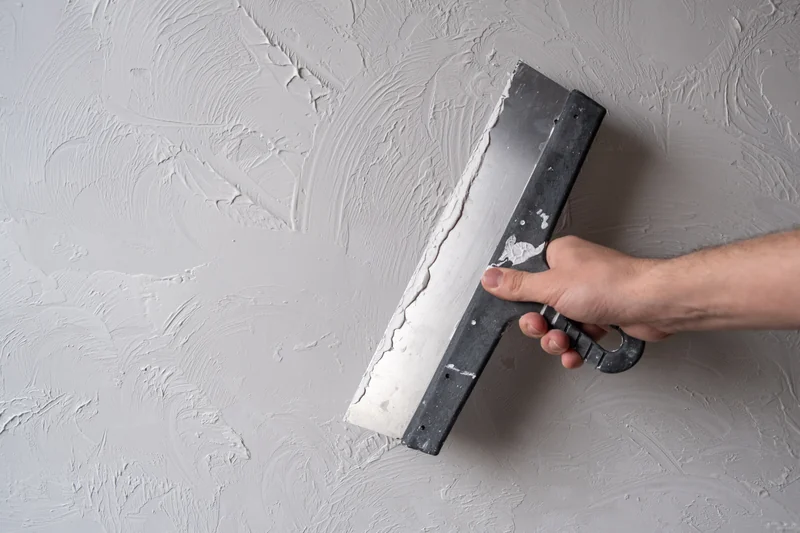
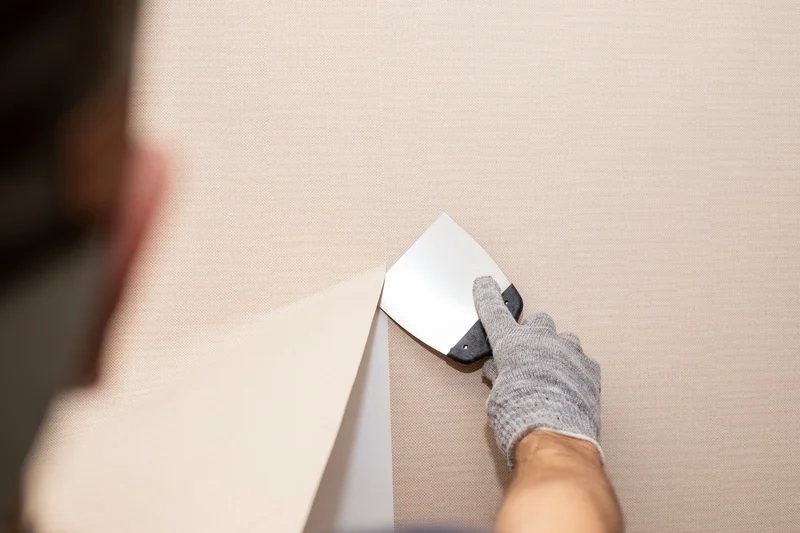
The scraper is a broad knife, a wide flexible blade four to six inches across, held nearly flat against the wall. A sharp square corner digs into the surface and leaves a curved gouge with every stroke, so we round those corners or turn the blade until only the flat edge rides along the wall. Holding the blade at a steeper angle drives force into the board instead of across it. Inside corners, the areas around outlets and the line behind your trim require smaller blades and more time, and a stiff blade made for hardened adhesive cannot do the flexible blade's job on wallpaper.
Steam, Solvent and Dry Wallpaper Stripping
Wallpaper comes off a wall in three ways. A dry pull uses no water at all, steam is the second method, and a chemical stripper, either solvent based or enzyme based, is the third. No single approach suits every room, and much of the skill lies in matching the removal method to the wall behind the paper. Whichever method releases your wallpaper, the wash afterward determines the surface your new paint will sit on.
When Steam Is the Right Tool, and When It Is Not
A wallpaper steamer boils water and sends hot vapor through a flat plate held against the paper. Heat and moisture work together to soften old paste far faster than water alone, making steam especially effective on thick paper and several layers at once. The plate has to keep moving because leaving it in one spot can soak the wall through, and too much steam over a taped drywall seam softens the joint compound underneath. On weak plaster, it can loosen an area that was already failing.
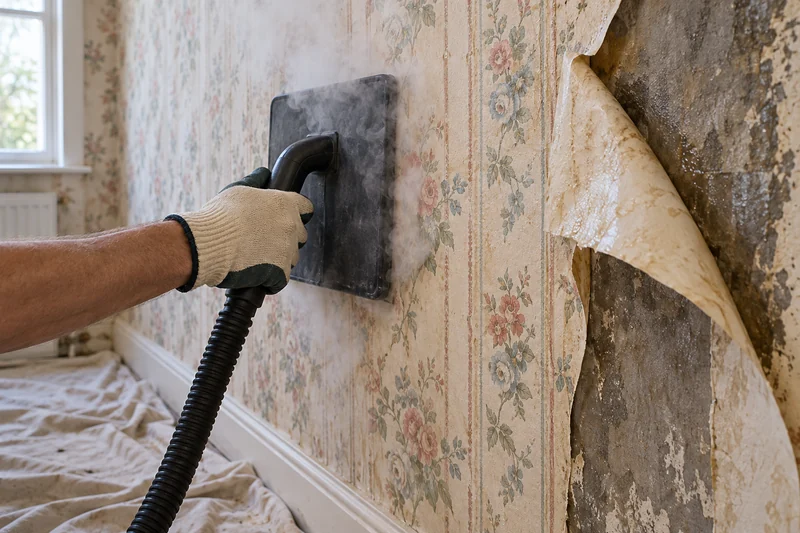
We use steam on tough paper over sound walls and choose another method for delicate or damaged surfaces. Steam also adds a great deal of moisture to a closed room, so the walls take longer to dry.
Enzyme and Solvent Strippers
An enzyme or solvent stripper is mixed with warm water and rolled or sprayed onto the paper. A chemical stripper breaks down the adhesive instead of simply wetting it, so wallpaper glue removal happens without driving heat into the board. It works more slowly than steam and requires a longer wait before scraping, and that extra dwell time is what makes it gentler on the surface. On weak plaster, delicate faces and walls that are already damaged, that tradeoff is worthwhile. Gel-bodied versions cling to ceilings and tall runs instead of running off. Whichever product is used, the room needs moving air and covered floors.
Washing the Paste Off, and the Test That Proves It
Stripped wallpaper leaves a thin film of adhesive residue on the wall. While wet, it is invisible; once dry, it appears as a glossy, streaky sheen when light hits the wall at a low angle. Water-based paint softens that film again, and bubbling or streaking in fresh paint over a stripped wall usually traces back to residue that was left behind. We handle wallpaper paste removal with a TSP wash, using the strong alkaline cleaner to cut old glue that water will not remove, or one of the phosphate-free substitutes that replaced it in household products. Because TSP is caustic, we use gloves and eye protection and keep the windows open while working with it.
We sponge it on with warm water and then rinse the wall with clean water, because leftover cleaner interferes with primer just as surely as paste residue does. The final check is a wet test: run a damp sponge over the dry wall. If the surface feels slick or tacky, it is washed again; if it feels matte and gripping, the glue removal is finished.
Free Quote FormWhy Choose The Woodlands Drywall Co. for Wallpaper Removal
Drywall is our trade, not painting, and wallpaper removal almost always ends in repair, so the same crew takes the paper off and hands the room back primed and ready for paint. We are fully insured for residential and commercial work, and we have been finishing walls here for 20 years. You do not hire a second contractor for the damage the paper was hiding.
These are the parts of the job you will see both on your wall and itemized on your paperwork:
- Our texture matching keeps repaired areas from showing when light rakes across the finished wall.
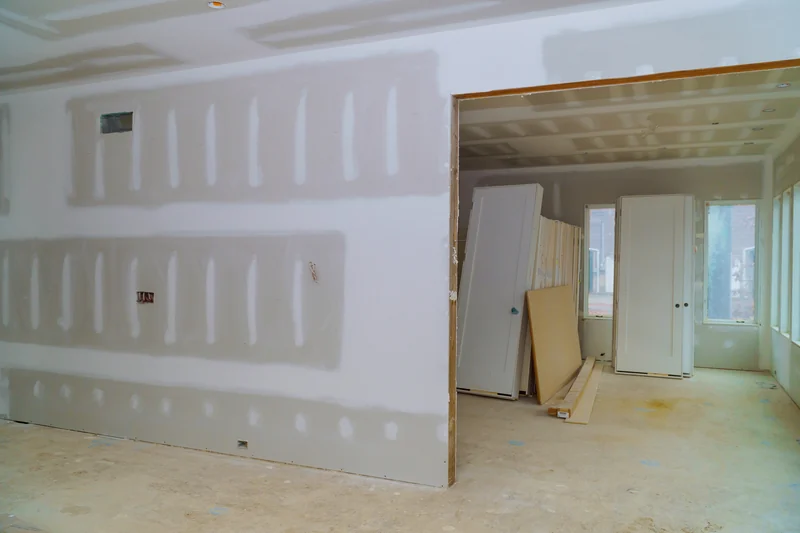
- Your written estimate identifies the finish level by its GA-214 designation. Level 4 is the working baseline. Level 5 adds a thin coat of compound across the entire wall, not just the patched areas, and it is the finish you want under satin or semi-gloss paint, or on a wall that catches light along its length, because both reveal texture changes that flat paint hides. Either way, you know which finish you are choosing and what you are paying for.
- The person who walks through your room with you also runs the crew that performs the work.
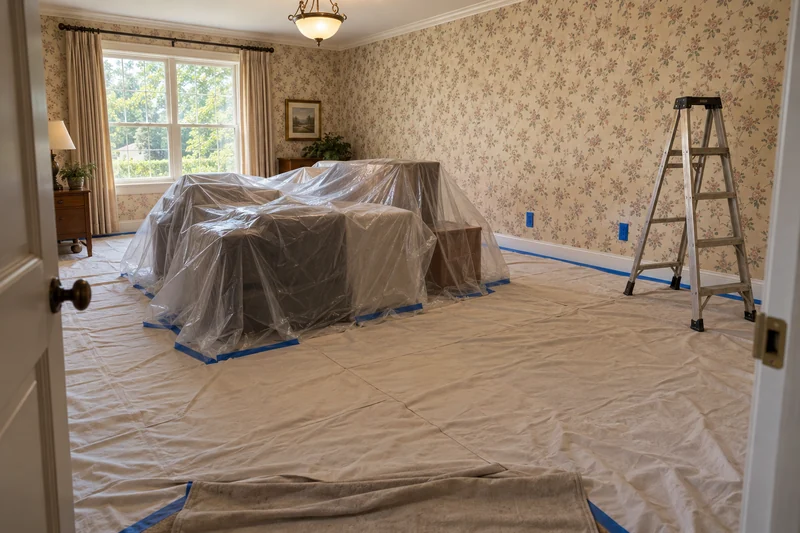
- We hang plastic barriers and cover the floors because water is being used in a room you are still living in.
- Drying time before primer is included in the schedule we give you.
On-site estimates are free, and financing is available for qualifying work. Call (346) 248-4075 or send us the quote form to arrange your visit.
What Wallpaper Removal Costs
Your wallpaper removal cost depends on what is on the walls and what lies beneath them, not on room size alone. Two bedrooms with the same layout can differ by a full day of work if one has a single layer that pulls away dry and the other has three layers. We do not publish a square-foot rate because one printed price would be inaccurate for most of the houses we inspect. We measure the room by square feet of wall surface, not floor area, so a tall room costs more than a wide room with the same footprint.
What Makes One Room Cost More Than Another
You can identify most of the cost factors before we arrive. More wallpaper layers add time, and layers that release in different ways add even more. Painted-over wallpaper has to be scored, which adds work to every wall. Torn face paper becomes a separate repair, and the amount of damage is discovered during removal rather than predicted in advance; sound plaster usually adds nothing to the cost.
Height and access are priced after the wall area, because a two-story entry or stairwell adds ladder and scaffold time. Ceilings cost more than walls of the same size, while borders and adhesive left behind from an earlier removal add labor as well. Kitchen and bath walls are washed twice. The finish level affects the final price too, with a wall finished to GA-214 Level 4 costing less than one that receives a Level 5 skim beneath sheen paint.
Hourly Work Versus a Written Quote
An hourly price leaves the final cost open because no one standing in your room can count what is hidden behind the pattern, tell how firmly it was bonded or know what the last person left behind. A company that bills by the hour simply starts the work and charges for however long the removal takes.
That arrangement leaves the uncertainty with you, so you do not know the final cost of the room until the work is finished. A written quote puts that risk back on us, which is why we pull a test patch and see how the paper releases before setting the price. Your quote states what is included and, alongside it, the conditions that would change the price. You receive the estimate within 24 hours of the visit.
What Is Quoted Separately
Your quote separates the wallpaper removal itself from any wall prep the job reveals. The base line includes removal, the paste wash and filling hairline marks. Drywall repair for damage uncovered after the paper comes off is listed separately. A skim coat is another line, and skim coating after wallpaper removal is priced by the wall it covers.
Retexturing to match the finish on your other walls is listed as a third separate item. A sealing primer over torn face paper is included as part of making the wall sound. Finish painting is optional, priced separately, and never assumed in the total. The Woodlands Drywall Co. handles all of this work in house, so it reaches you as itemized line pricing on one document. To book the on-site estimate, call (346) 248-4075 or fill in the quote form.
Free Quote FormWallpaper Removal: Strip, Repair, Skim, Prime
We handle this job in four stages, and you will see the wall at the end of each one. The middle two stages leave it looking worse than when we started, which means the process is working as intended. Each stage depends on the one before it, so the order stays the same.
-
Walk the Room and Pull a Test Patch
We walk the room, pull a test patch, and send you a written quote.
Your estimate visit starts with a walk through the room and a small test patch lifted in a spot that a sofa or mirror will cover. That patch shows us the type of paper on your walls, how many layers sit beneath it, and how firmly each one is bonded, which gives us the information needed to set the price. You then receive an itemized written quote that states exactly what is included and what conditions would change the price.
-
Cover the Room and Take the Paper Off
We protect the room and remove the wallpaper.
Before anything on your wall gets wet, a crew from The Woodlands Drywall Co. moves the furniture to the middle of the room or out of it, covers the floors and baseboards with drop cloths and plastic sheeting, and shuts off power to the outlets and switches on the papered walls. Water runs down a wall and reaches whatever is below it, so this protection keeps it off your floors and away from your wiring. We strip one room at a time and tell you before work begins how long that room will be out of use.
-
Clean the Wall and Repair What Turns Up
We wash the wall, show you what the paper was hiding, and complete the needed repairs.
Once the wallpaper is off, we wash away the old adhesive and rinse the wall clean, because that wash directly affects how the finished paint looks. It also reveals whatever the paper was hiding. We show you any damage before covering it again, and if a problem falls outside drywall work, we identify it and refer it to the right professional. We then complete the drywall repair and leave the wall to dry according to the schedule we gave you.
-
Skim Where It Is Needed, Then Prime
We skim the areas that need it, then prime the entire wall.
Wall prep after wallpaper removal finishes with a skim coat wherever the surface is uneven enough to show through paint, brought to the finish level named in your quote rather than one chosen on the day. A sealing primer then goes over the entire wall, giving the paint one consistent surface instead of a patchwork of old and new areas. What you receive is a paint-ready wall, which is where the quoted scope ends; finish painting is priced separately.
Booking the on-site estimate starts all four stages, so call us at (346) 248-4075 or tell us about the room through the online request form.
Should You Strip the Wallpaper or Paint Over It?
Painting over wallpaper leaves the paper in place and seals it beneath a coat of paint, while stripping removes it and gives you back a bare wall. Both choices make sense, and the real difference is how long you plan to keep the room. A wall you expect to live with for the next ten years calls for a different decision than one you plan to hand over to a buyer in six months.
When Painting Over Wallpaper Is Defensible
Wallpaper that is still sound can be painted. Judging whether paper is sound enough to keep means checking that it is firmly bonded across the entire surface, the edges are not lifting, and the seams lie flat. Even then, preparation still takes work: we open every seam, fill it with joint compound and float it smooth before painting, and any section that has lifted is removed regardless of what happens to the rest.
If you paint over wallpaper, the primer is what determines whether the work holds up. A water-based primer soaks through the paper, softens the old paste underneath and causes the paper to lift in bubbles. An oil-based primer-sealer or shellac primer seals the face without wetting it, so one of those is the only suitable route. Painting over the paper is the sensible spend when you are selling soon or already planning to gut the room.
Why Painted-Over Paper Comes Back
Wallpaper left beneath a coat of paint does not fail in one place and stop. One seam lets go, the seams beside it follow, and those failures appear one at a time over several years instead of all at once. Each seam failure becomes its own repair, and every repair now has to be made on a finished, painted wall, so cutting out and filling the bubbling area costs more than repairing the same square foot before the paint went on.
Old Paste, Humidity, and What Paper Hides in a Woodlands Home
Wallpaper removal is interior work, so we handle it year-round here regardless of the weather outside. What this climate changes is how long the stripped wall takes to dry and what the wallpaper turns out to have been hiding.
Why a Stripped Wall Takes Longer to Dry Here
The Woodlands has a humid subtropical climate, with summer highs near 94 degrees and winter lows near 40 degrees. Wallpaper removal leaves the wall wet, and that moisture has to leave the surface before primer goes on because priming a damp wall traps water underneath. In a closed-up house, high indoor humidity slows that drying process.
Running your air conditioning is what makes the biggest difference because the cooling system removes moisture from the indoor air as it runs, while the month on the calendar matters far less. That means summer is not the obstacle you might expect. We build drying time into your schedule from the start instead of leaving you to discover it at the end of the job.
What Turns Up Behind the Paper
The adhesive beneath the wallpaper helps date when it was hung. Wheat paste points to older work, while acrylic adhesive indicates a more recent installation. Wallpaper can also hide old repairs, popped nail heads and water staining. A solid vinyl wallcovering is a Class I vapor retarder, the tightest of the three classes, so water vapor passes through it so slowly that it is effectively stopped at the wall. Montgomery County sits in Climate Zone 2A, the hot-humid zone where homes are cooled far more of the year than they are heated, so vapor moves inward from outside and stops at the cool inner face of the wall.
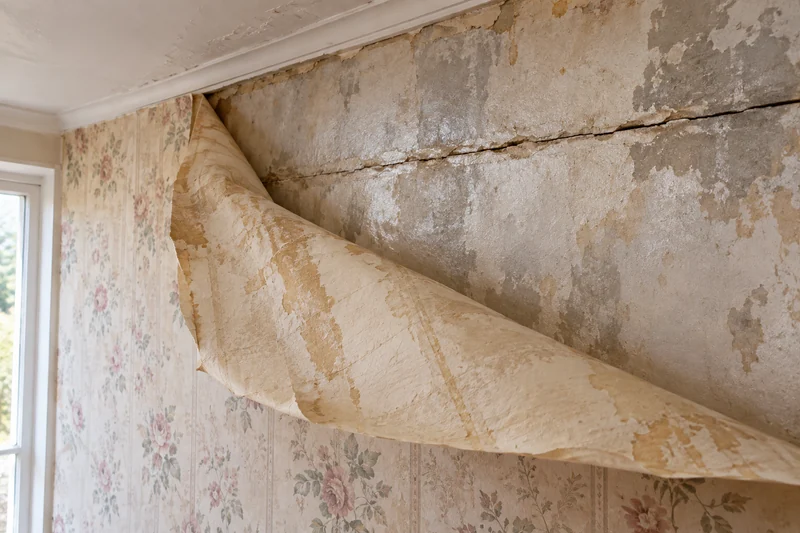
Where a vapor-tight covering holds it there, mold can grow behind paper that looks sound from the room. If we uncover established mold growth, we stop, document it, and refer you to a licensed mold professional before the rebuild continues. We do not identify or assess what we find, and a stain is not a diagnosis.
Free Quote FormAccess, Safety, and Protecting the Room During Wallpaper Removal
You do not have to move out of your house while the wallpaper is being removed. Staying put works because we protect each room before any water reaches the walls and schedule the work in an order that leaves you with a usable kitchen at the end of the day and a bed to sleep in at night.
Water, Power, and What Gets Covered
The main hazard on this job is water reaching live wiring, not dust, so safety starts at your breaker panel. We shut off every circuit feeding an outlet or switch on the wall we are about to wet, and one wall often uses more than one circuit because receptacles and lighting are usually split. We then remove the cover plates and tape the openings shut so water cannot run inside them.
We protect the room next, covering the floor with drop cloths and taping plastic sheeting along the baseboards, because water that slips behind a baseboard is what damages a floor, not the wallpaper coming off. Your furniture either leaves the room or is gathered under sheeting where the wet walls cannot reach it. We also open the windows and keep air moving, whichever removal method the walls require.
Rooms That Take Longer: Height, Ceilings, and Grease
A powder room or single feature wall is a short job. A two-story entry hall or stairwell is an access job measured by height and reach, which is why a small stairwell can take longer than a large bedroom. Ladders or a rolling scaffold, along with the ceiling line above a landing, affect how much wall we can complete in a day. Kitchen and bathroom walls also carry cooking grease or soap film over the paper, so we wash those walls twice. We finish one room before opening the next, allowing the rest of the house to stay in use around us.

Wallpaper Removal Across Montgomery and Harris Counties
About 28 miles north of Houston, The Woodlands spans a county line, with most of the community in Montgomery County and the rest in Harris County. Many neighborhoods here are old enough that we are still removing first-generation wallpaper from walls that have never been stripped before. The humid subtropical climate also keeps moisture in a wall longer than a dry climate does.
One crew serves our entire service area of twenty-one communities, so the same team handles your wallpaper removal whether you are inside a village or in one of the surrounding towns.
The Woodlands Drywall Co. Removes Wallpaper in These Communities
Villages of The Woodlands:
- Alden Bridge
- Cochran’s Crossing
- College Park
- Creekside Park
- Grogan’s Mill
- Indian Springs
- Panther Creek
- Sterling Ridge
And the surrounding communities:
- Conroe
- Atascocita
- Spring
- Porter
- New Caney
- Humble
- Kingwood
- Tomball
- Willis
- Pinehurst
- Shenandoah
- Oak Ridge North
- Magnolia
Wallpaper Removal Questions
How much does it cost to have wallpaper removed professionally?
No single rate fits every room, so we do not publish one. Your price depends on the number of wallpaper layers, whether the paper has been painted over, and how high the walls are. We pull a test patch during a free on-site visit, and your quote is based on what that patch reveals.
Should you hire a professional to remove wallpaper?
One small room with strippable wallpaper that is still firmly bonded is a reasonable weekend job to tackle yourself. Multiple layers, paint over the paper, a papered ceiling, or drywall whose face paper tears during removal change that calculation. The expensive part of doing it yourself is the wall repair afterward, not getting the wallpaper off.
What is the fastest way to remove wallpaper from a wall?
Scoring a sealed face, wetting the paper, letting it soak, and then scraping is the fastest approach because skipping the wait tears the wall and creates repair work that takes longer than the soaking would have. A steamer is quickest on thick, layered wallpaper but is the wrong choice when the wall underneath is soft. We always try pulling a corner dry first because it costs nothing.
Will removing wallpaper damage my drywall?
It can. The white face paper of the drywall sometimes comes off with the wallpaper, most often where the board was never sealed first. We seal any torn face paper before applying compound, because a patch placed directly over it bubbles as it dries.
Can you remove wallpaper that has been painted over?
Yes, and two things change. Scoring becomes mandatory because the paint forms a waterproof layer over the paper, and the room takes longer than the same room with unpainted wallpaper. Faint floor-to-ceiling ridges showing through the paint are the easiest way to spot a papered wall.
How soon can the wall be painted after the wallpaper comes off?
That is a condition, not a set number of days. The wall has to be free of adhesive and dry through, which we confirm by hand with the wet test: a ready wall feels matte, not slick. A closed-up humid house slows the drying process, while the air conditioning helps move it along.
Book Your Removal Estimate with The Woodlands Drywall Co.
When the work is finished you are left with a clean, dry wall that is ready for paint. We visit your room in The Woodlands, pull a test patch to settle what the job actually involves, and price it on the spot at no charge; the written, itemized version reaches you within 24 hours. Call The Woodlands Drywall Co. at (346) 248-4075 or use our quote form to request your free on-site estimate.