
Water Damage Drywall Repair in The Woodlands, Texas: Moisture Readings, Dry Framing and a Rebuilt Wall from The Woodlands Drywall Co.
The Woodlands Drywall Co. has provided water damage drywall repair to residential and commercial property owners in The Woodlands, Texas, for 20 years. By the time a brown ring appears on your ceiling, water has already been inside the wall for a while, and the visible stain is the smallest part of the damage.
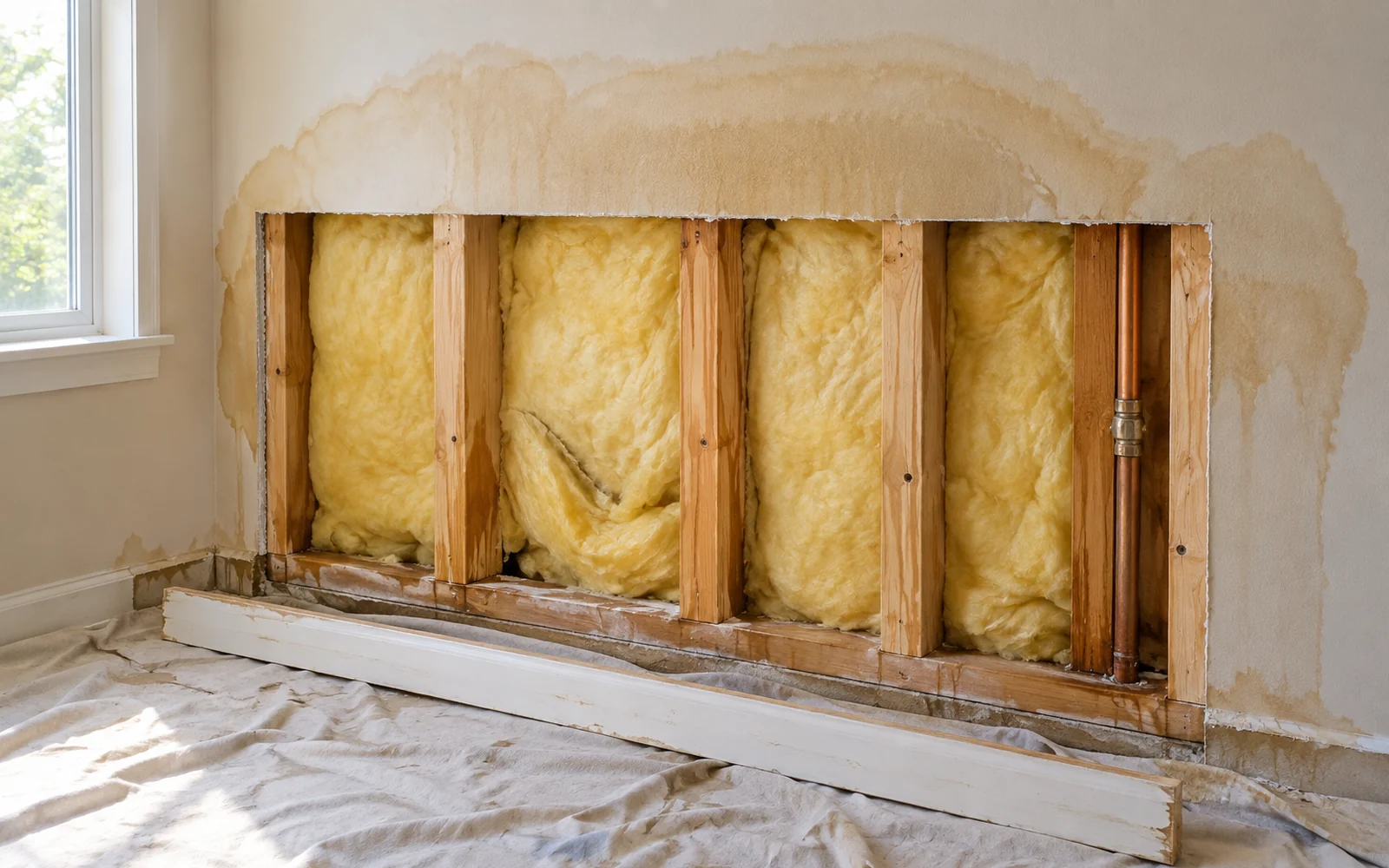
For water damage drywall repair, we handle water-stained ceilings and wet drywall on walls. We mark the wet line, the boundary where moisture ends and dry, solid board begins. Above the waterline, a flood cut removes a band of water damaged drywall in one straight run. Behind the board, wall cavity drying draws moisture from the hollow space between the studs, and we check the framing with a moisture meter before anything is closed. The rebuild then restores the wall with new gypsum board, tape, three coats of joint compound, texture and PVA primer, the sealing coat that prepares bare board for paint.
The leak itself is stopped first by your plumber, roofer or HVAC contractor. Mold and asbestos are licensed trades in Texas, so we refer that work out. We are fully insured, and on-site estimates are free, in The Woodlands, Shenandoah and Oak Ridge North, and across Montgomery County. Call The Woodlands Drywall Co. at (346) 248-4075 or use our quote form to request your free on-site estimate.
Get A Free Quote
What Water Does Behind a Wall
A brown mark appears on a wall only after the gypsum board behind it has been wet for a while. Inside the wall cavity, water soaks the board, the insulation packed behind it and the wooden frame at the same time, and each one dries at a different speed. The slowest material determines when the wall can be closed again, which is why water damaged sheetrock repair starts by finding exactly how far the water traveled.
Why the Wet Patch Is Bigger Than the Stain
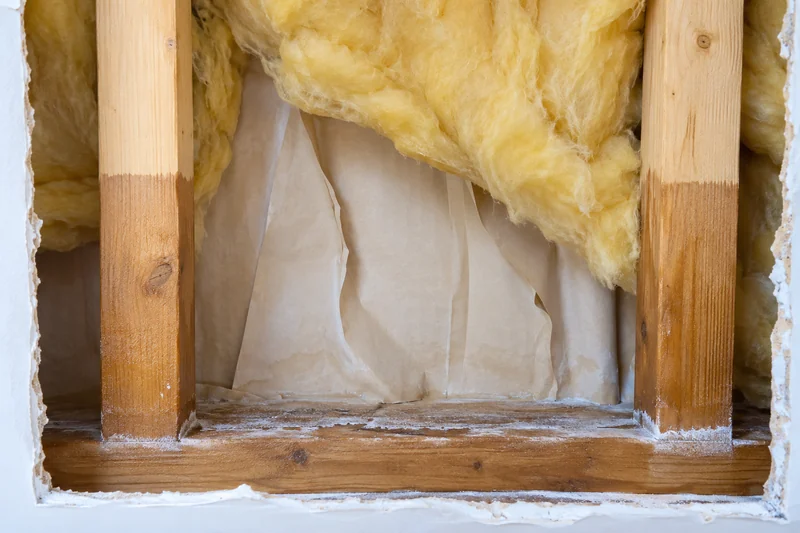
Gypsum, the chalky core inside a sheet of drywall, acts like a stiff sponge. It draws water sideways through the sheet and upward against gravity, so wet drywall extends well beyond the edge of the mark you can see. That movement is called capillary wicking. A stain the size of a dinner plate can sit within a wet area several times wider. Paint and face paper dry faster than the core behind them, so a wall can feel sound while the board is still holding water, and the cut is determined by a meter reading, not by the outline of the stain.
What Wet Insulation and Wet Framing Do
Fiberglass insulation works by trapping still air, which is slow to carry heat. Water pushes that air out, and the wet batts, the blanket lengths of insulation between the studs, sag and mat down until they no longer slow heat loss; wet insulation comes out with the board and goes back afterward. Wood framing takes longer to dry. A stud, or the bottom plate the studs stand on, holds water long after the board surface feels dry, and wood kept wet develops rot and a stale odor that carries into the room. Framing that is still wet delays the rebuild.
One Soaking Against Months of Slow Leaking
Water enters a wall in two patterns, and each one leaves a different repair behind. A sudden soaking wets a wide area at once and is usually discovered the same day. A slow leak adds a little water to the same spot every day for months and is normally discovered late, through a stain or a musty smell. Time spent wet does more damage to water damaged drywall than the volume of water does, so the small mark from a slow leak often requires a wider cut than an obvious flood.
The Texas Department of Insurance states that most homeowner policies cover a sudden and accidental release of water, while most do not cover a leak that has been running over time, so read your own policy and have a suspect wall inspected early.
The Jobs Water Damage Drywall Repair Covers
Water damage drywall repair takes out the wall or ceiling board that water has reached and puts new board back, taped and coated with joint compound to match the surrounding surface. We repair stained ceilings, perform wet drywall replacement on walls, and open walls that have stood in water. Your wall or ceiling is ready for us only after the plumber, roofer, or HVAC contractor has stopped the leak, because the leak source is repaired before any board goes back. We do not pump out water, dry an entire house, deodorize, or perform restoration work, and mold assessment and remediation and asbestos abatement are licensed trades that we hand off to the appropriate specialists.
Ceilings Stained by a Roof or an AC Leak
Ceiling water damage repair starts above the panel you can see. Water from a roof or an air conditioner reaches the top face of the board and soaks in for days before the first brown ring appears underneath, which is why water stain ceiling repair often starts weeks after the leak.
A bowed or soft panel is carrying weight it was never built to support, so a sagging ceiling is a safety concern before it is a cosmetic one. Ceiling board is thicker than wall board and is fastened upward into the joists, and a panel in that condition comes down before anything else. A ceiling that is cracked or sagging for a reason other than water belongs to our ceiling repair service.
Walls Wet From a Supply Line, a Shower or an Appliance
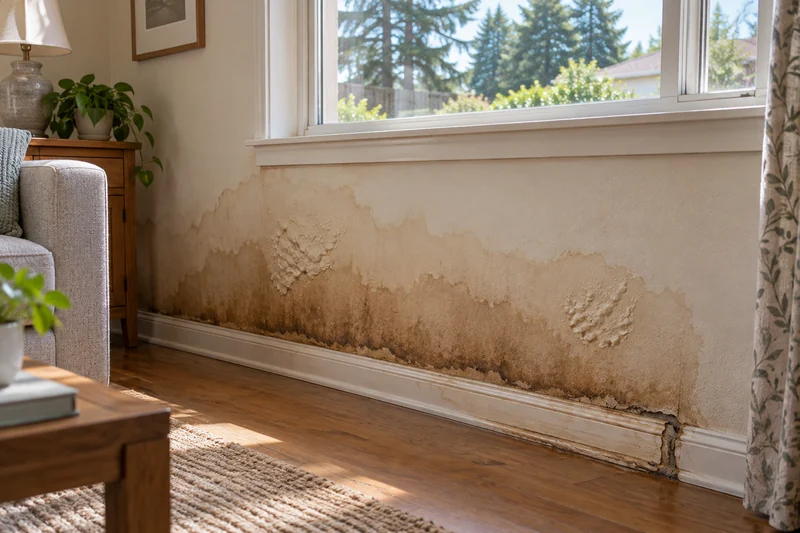
Water damaged sheetrock repair on a wall is usually discovered low and discovered late. A supply line leak behind a shower or appliance runs down inside the cavity to the bottom plate, leaving the baseboard and the lowest foot of board as wet drywall before anything higher up looks wrong. Houses here sit on a slab with plumbing beneath it, and a slab leak wets the bottom of a wall from below in the same way. Without opening the wall, you can look for bubbling paint, a taped seam that has lifted, and a soft spot behind the baseboard, all signs that the board has been damp for a while.
Walls Opened After Standing Water
Flood damage drywall repair begins with a flood cut, a straight cut across the board above the waterline that opens the cavity so the framing and insulation inside are accessible. The cut lands on a stud so the new board has something solid to fasten to, and the soaked batts come out with it. Standing water does not stay clean for long because organisms breed in it, and where it reaches house wiring it can cause a shock. Have the water removed and the power handled by the trades that do that work before we cut into your wall. Water rising from outside is not usually covered by a homeowner policy, and separate flood cover is what carries that loss.
Finding the Wet Line and Cutting to It
The wet line is the boundary between board that stays in your wall and board that comes out, and we find it with an instrument rather than judging it by eye. In water damage drywall repair, that line determines how far we check and open the wall. What gets replaced is decided panel by panel after we read both the board and the wall studs behind it.
What a Moisture Meter Actually Reads
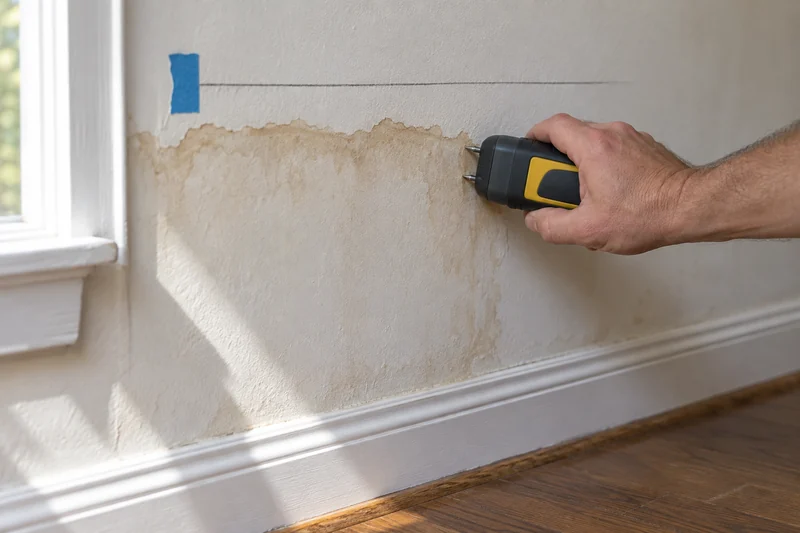
A pin-type moisture meter uses two small probes pressed into the material to measure how easily an electrical current passes between them. Wet material conducts more readily than dry material, so wetter gypsum board produces a higher moisture reading. A pin meter has separate scales for wood and gypsum, and because we read the wood framing as well as the board, a reading means nothing unless the scale matches the material being tested. A meter left on its wood scale reads high on board and condemns panels that are sound, which is one common reason a wall loses more board than necessary.
Mapping the Wet Line Above the Stain
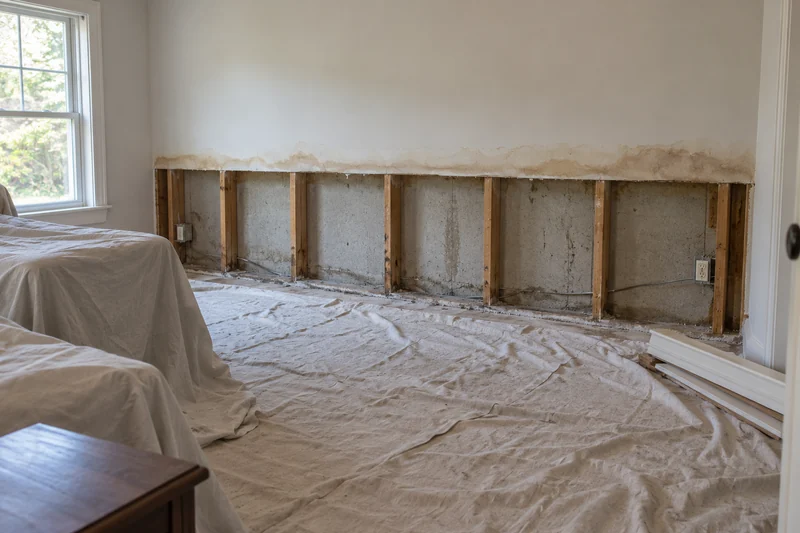
We take readings in a grid outward and upward from the visible damage, because we are looking for where the water stopped, not where the stain appeared. Walls in the same room that were never wet give us a baseline, since one reading alone does not show whether the moisture level is high. We continue outward until the readings return to that baseline, and that ring becomes the wet line. We mark it on your wall before anything is cut, so you can see the edge of the water damaged drywall. On a ceiling, the readings continue along the joist bays.
Board That Can Be Saved, and Board That Comes Out
Three tests determine whether water damaged drywall can dry and stay or is finished once it gets wet, and together they set the size of your wet drywall replacement. The first is the face paper, the layer bonded to each side of a panel that gives it strength; once that paper lifts or peels, nothing is left to keep the board stiff. The second is the core, which is finished if it crumbles under thumb pressure. The third is the framing behind it, which has to read dry.
We often square the cut beyond the wet area and land it on the wall studs, because a straight edge on solid framing lets the patched surface finish flat, and that extra board is not ruined board. Water that stood long enough to go bad condemns the board no matter how firm and dry it reads.
Drying the Cavity Before Water Damage Drywall Repair Begins
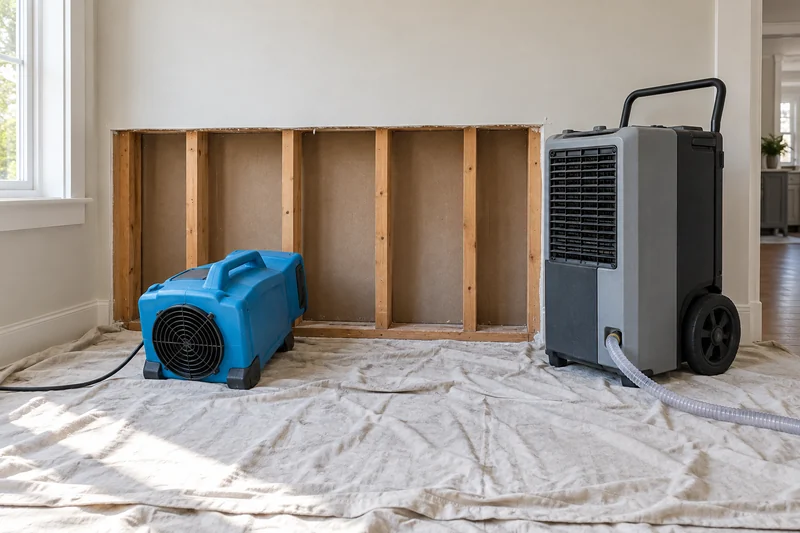
Once the wet board is removed, wall cavity drying is the part of water damage drywall repair that comes before new board goes up. An open cavity releases its water into the room; a closed cavity holds it in. The wood framing is the slowest part of the wall to dry, so it sets your rebuild date. We dry the cavity we open as part of your repair. Drying out an entire building belongs to a different trade, and we do not sell that service.
Why Opening the Windows Does Not Dry a Wall Here
Anything wet dries by releasing its water into drier air around it. On a humid Gulf Coast day, the outdoor air carries more water than the wall does, so an open window pushes moisture into the cavity rather than drawing it out. Thick pine forest, lakes and waterways keep humidity high around The Woodlands, and wet building materials here will not dry adequately without active climate control. A wall that would dry out in a week in a dry climate can stay wet here. The house is kept closed and conditioned while a cavity dries, which is what you can do for the wall while you wait.
The Framing Readings That Set Your Rebuild Date
The readings we work to come from the wood itself, not the board. Your wall studs most likely carry a grade stamp reading S-DRY, which means the mill shipped that lumber at 19 percent moisture content or below. That is a mill ceiling, not the moisture level at which a wet cavity is closed. Above roughly 20 percent, the margin against fungal growth is gone, which is why nobody closes a wall at that reading.
Decay proper, meaning rot that costs the wood its strength, requires the wood to reach near 30 percent moisture, its fiber saturation point. We want the wood framing between 10 and 15 percent before the cavity is closed, and you can ask what the moisture meter read before the first new panel went up.
Drying the Framing to Prevent Rot and Odor
Wood kept wet feeds rot and holds a smell that paint will not cover. Both problems end up sealed behind the finished wall where you cannot reach them, which is why dry framing is worth waiting for. Wet fiberglass insulation comes out rather than being dried in place, because a soaked batt holds water against the studs long after the cavity air has cleared. New insulation goes back, and no stained wall is closed until the framing behind it reads dry.
Free Quote FormWhy Choose The Woodlands Drywall Co. for Water Damage Drywall Repair
Drywall is our entire trade, not a sideline, so water damage drywall repair is not a line added to a restoration contract or handed to a remodeler between other jobs. A pin-type moisture meter rides on every truck, so the wood behind your wall is measured before any new gypsum board goes up. We do not close a wall on a wet reading. Where the work is regulated, we hand it to the licensed trade that handles it.
The free estimate, the insurance we carry and the way we schedule are all settled before the first panel comes off your wall, so you know what to expect and can hold us to each one.
- The Woodlands Drywall Co. has served The Woodlands, Texas, for 20 years.
- Fully insured: we carry full insurance for both residential and commercial projects.
- We inspect the site in The Woodlands at no charge and deliver an itemized written quote within 24 hours of the visit.
- We offer same-day and next-day drywall repair when openings permit, with scheduling based on the size and urgency of the damage.
- Financing is available for qualifying work.
Call us at (346) 248-4075, and we will come out to read the wet wall for you.
What Water Damage Repair Costs
Three drivers set the price of this work, and each one depends on what the wall actually holds, not what shows on the surface. The amount of material that comes out, how difficult the opening is to reach, and how long the cavity needs to dry are what move a water damage drywall repair cost up or down. Nobody can price that from a photograph, so we read the wall first. That inspection costs you nothing, and the quote it produces is broken out line by line within 24 hours.
How Much Wall Has to Come Out
The quantity you pay for follows the marked wet line, not the stain, so the opening is usually wider than the mark that first brought you to us. A cut that stays between two wall studs is a smaller job than one that crosses several, because each additional gap adds board, tape and finishing time. Wet fiberglass batts in the opened zone are part of that quantity, along with the new ones that go back. A full sheet of gypsum board sometimes costs less than an awkward patch because a clean panel finishes faster than a small repair surrounded by sound wall. You are told how far the opening will run before we cut.
Ceilings, Height and Getting at the Work
We move more slowly overhead than over the same area of wall, because ceiling water damage repair requires protecting everything underneath before the first cut is made. Drop cloths cover flooring and furniture, while light fixtures are protected or removed. A two-story entry or vaulted ceiling puts the surface beyond ladder reach and requires scaffolding or a lift. If you are still living in the room, we stage the work around you rather than emptying it. Where the work is difficult to reach, that access alone can add a day to the job.
Drying Days, Finish Coats and Where Painting Sits
The drying days fall in the middle of the job. Nobody is working during them, but they still count on your calendar. Once the cavity reads dry, a typical 12 by 12 room takes 3 to 5 days, including the drying time each finish coat needs before the next one goes on.
We include the repair and PVA primer, the white sealing coat brushed or rolled onto new board so paint takes evenly, in our price. PVA seals fresh board but does not hold back a water stain, so any surviving stain is spot-primed first with a shellac or oil-based stain blocker, or the ring will show through the new paint. We leave texture matching to our finishing and texture service, while finish painting is quoted as a separate line item rather than folded into this one. Call us at (346) 248-4075, and we will come out and read the wall.
Free Quote FormDry the Wall First, Then Rebuild
At The Woodlands Drywall Co., water damage drywall repair follows five stages, in order, and each one completes something you can see before the next begins. The process runs from the first look at the wall through the final coat.
-
You Call and We Come and Look
We inspect the wall and give you a price.
The first visit puts someone in front of the damage at no cost to you. That inspection is free, and the priced scope reaches you within a day. We take readings with a pin-type moisture meter during the visit, so the written quote is based on what the wall is actually holding, not the size of the mark. Your free estimate also sets the schedule according to how much wall is wet.
-
The Leak Is Confirmed Stopped
We confirm that the leak has been stopped.
Your leak damage drywall repair waits on whoever is responsible for fixing the source of the water. We confirm that repair is complete and take a second reading to make sure the water has stopped. Closing a wall over a live leak means opening it again, so this is the one stage that can hold up your schedule. Once that reading is clear, we book the opening.
-
We Open It Up and Take the Wet Material Out
We open the wall and remove the wet material.
Drop cloths cover the floor and anything left in the room before a cut is made. We cut to the marked line and remove the wet drywall in sections, along with any wet fiberglass insulation behind it. Before anything goes back, we show you the open cavity.
-
It Dries and We Read It Again
The cavity dries, and we read the framing again.
The cavity stays open while it dries, and the house stays closed with the air conditioning running. Wall cavity drying is the stage that requires a wait, so you should plan for that time. Nothing closes until we read the framing again and it comes back dry. That dry framing is what releases the rebuild.
-
New Board, Finish and the Walk at the End
New board goes up, the finish is matched, and we walk the completed repair with you.
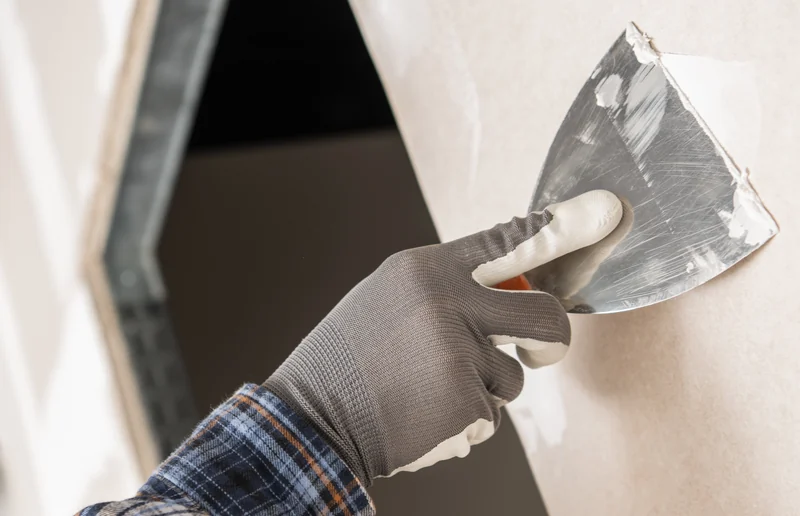
We fasten new gypsum board into the dry framing, then tape it and apply joint compound, allowing each coat to dry before the next goes on. Our finishing and texture service then matches the texture to the surrounding wall. PVA primer is standard in our price, while finish painting is quoted separately. We remove the drop cloths and debris, then walk the repaired wall with you.
Reach us on (346) 248-4075 to have a wet wall inspected.
When We Have to Bring In Other Professionals: Mold and Asbestos
Three points in a water damage drywall repair belong to someone else, and we hand each one over. Texas licenses mold assessment and remediation, and it licenses asbestos abatement, but it licenses no drywall trade, so there is no drywall license for anyone in our trade to hold. Our role is knowing where that line falls. Closing gypsum board over a regulated problem only hides it instead of fixing it, leaving you with a finished wall and the trouble still behind it. At each of those three points, we tell you what we found and who should look at it next.
Mold: What Texas Licenses, and Where We Stop
The state issues two separate mold licenses through the Texas Department of Licensing and Regulation, one for assessing what is there and one for removing it, and it bars the same party from doing both on one project. Owners and tenants may clean up their own property without either license, and that exemption stops at 25 contiguous square feet. It is permission for you on your own home, not a size below which a contractor you hire may work. Our line sits earlier than that and does not move with the size of the patch. If we uncover established mold growth, we stop, document it, and refer you to a licensed mold professional before the rebuild continues.
A Water-Stained Popcorn Ceiling in an Older Home
A popcorn ceiling is the sprayed, bumpy coating used on ceilings for decades, and in a house built before 1990 that texture was often mixed with asbestos, a mineral fiber that stays harmless in place but becomes hazardous once it is broken up into the air. Ceiling water damage repair in a house of that age begins with testing the stained texture. We wait for the result before opening your ceiling, and if the test comes back positive, a licensed abatement contractor handles that material before we return. Cutting first would spread those fibers into rooms the water never touched.
Framing That Has Gone Beyond Drywall
Wood framing held wet for weeks softens as decay fungi feed on it, and a stud or joist that has lost part of its thickness no longer carries the load it was sized for. Water damaged drywall comes off and goes back on, but framing in that condition is a structural question. Where we find framing in that condition, we show it to you and say plainly that it warrants evaluation by another qualified professional before any new board goes on. We stop the rebuild there rather than fasten new board to wood that cannot hold it.
What Leaves Water in a Woodlands Wall
Water that appears in a wall or ceiling here comes from a short list of sources, with cooling equipment, roofs and plumbing inside the house accounting for nearly all of them. The cooling season here runs most of the year, so an air conditioning fault is not just a summer problem. Identifying the source tells you whether to call an air conditioning contractor, a roofer or a plumber before you book leak damage drywall repair with us.
The Air Handler in the Attic
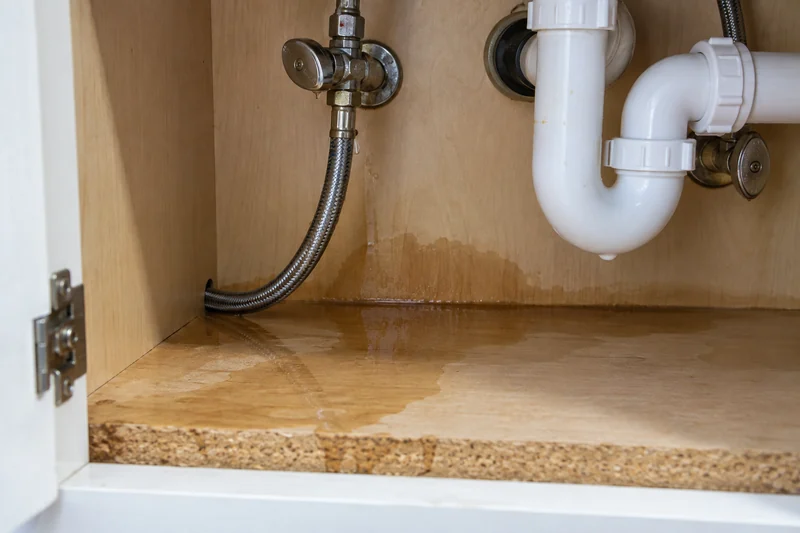
An air conditioner cools by pulling moisture from the air, and that water has to go somewhere. It collects in a shallow pan beneath the air handler, the boxed unit that moves cooled air through the house, then drains away through a PVC condensate drain line. When dirt or algae blocks that line, the pan fills and AC condensate spills over the rim. In most houses here, the air handler sits in the attic, so that water lands on the ceiling board below instead of on a floor.
A second pan and a float switch, a small sensor that shuts the system off as water rises, are normally fitted underneath, and a stain below an attic unit usually means that safeguard failed. Your air conditioning contractor clears the line and fits the switch; we handle the ceiling water damage repair underneath.
Roofs Under a Pine Canopy, and the Plumbing Inside
The Woodlands pine canopy puts heavy limbs over most roofs, and a storm that brings down a branch also lifts shingles. Water enters at the break and runs along a rafter, one of the sloping timbers that support the roof, before it drops through, so the stain you can see is rarely directly below the opening that let the water in. Inside the house, supply lines, shower pans and appliance hoses sit out of sight, and an appliance leak can run for months before anyone notices it. A roof leak belongs to a roofer to stop and a plumbing leak to a plumber; the leak damage drywall repair afterward is ours.
Free Quote Form
Water Damage Drywall Repair Across The Woodlands, Montgomery and Harris Counties
Humidity is the local condition that keeps this trade busy, and the long cooling season keeps it high here for most of the year. Damp air slows the release of moisture from anything that has been soaked, so a wet wall in Montgomery County stays wet longer than the same wall would in a dry climate. Water damage drywall repair is steady work for us in every month of the year, and whenever your wall gets wet, there is already a crew working on walls like it.
We work from one base in The Woodlands, Texas. Much of the list below covers The Woodlands itself, village by village, while the rest includes surrounding communities in Montgomery County.
Where The Woodlands Drywall Co. Takes Water Damage Work
Villages of The Woodlands:
- Alden Bridge
- Cochran’s Crossing
- College Park
- Creekside Park
- Grogan’s Mill
- Indian Springs
- Panther Creek
- Sterling Ridge
And the surrounding communities:
- Conroe
- Atascocita
- Spring
- Porter
- New Caney
- Humble
- Kingwood
- Tomball
- Willis
- Pinehurst
- Shenandoah
- Oak Ridge North
- Magnolia
Water Damage Questions
Can water damaged drywall be repaired?
Often it can. Whether a panel stays is decided by the condition of the board itself, not the size of the stain. We look at the paper face and the chalky core beneath it. Board that has dried with the paper still bonded, the core still firm and the panel still flat can stay in the wall.
Will drywall be ruined if it gets wet?
Wet drywall is not automatically ruined, and the time it stays wet matters more than the amount of water. A short soaking that dries completely often leaves the board unharmed. Board left damp for days swells in the core and the paper face pulls away. That damage is permanent; drying the board afterward does not reverse it.
How to fix water damage behind drywall?
Repairing water behind a wall follows a clear order you can use to check a contractor’s work. First, the trade responsible for the leak repairs it. Then the wall is opened back to the marked wet line, and the wet board and insulation are removed. The cavity is allowed to dry and is read before it is closed, with new board, finish and texture going on last.
What does water damage look like on drywall?
Water damage shows on drywall as brown rings and marks, often long after the leak has started. Nail heads show through the paint, a patch feels soft under your hand, and a ceiling panel bows out of line. In a closed room, a musty smell often appears before any visible mark.
How long does it take for drywall to dry after water damage?
The board surface dries long before the cavity behind it, so the answer comes from a moisture reading rather than a set number of days. The wood is the last material in the cavity to release its water, and the humidity here stretches that drying time further. A typical 12 by 12 room takes 3 to 5 days, but that covers the rebuild, not the cavity drying period.
Will drywall grow mold if it gets wet?
Damp conditions support mold growth, which is why the cavity is dried and the framing is read before anything closes. Prevention here comes from drying, not treatment. In Texas, mold assessment and remediation are licensed work, so established growth belongs to a different trade rather than becoming a larger invoice from us.
What happens if you don't fix drywall damage?
Leaving a wet wall alone costs you inside the cavity, not on the surface. The wet area keeps spreading while the visible mark stays about the same size. Wood behind the board begins to rot, an odor develops, and wet insulation stops holding heat. That leaves you with a larger cut and a longer drying period. A small repair handled early is the cheapest version of this job.
Get the Wet Wall Looked At by The Woodlands Drywall Co.
A wet wall is easier to price once someone has inspected it in person. We come out anywhere in The Woodlands, Texas, see exactly what the water reached, and price the water damage drywall repair from the wall itself. That visit is free, and it shows you how far the damage extends. Call us at (346) 248-4075 or start with the quote form.