
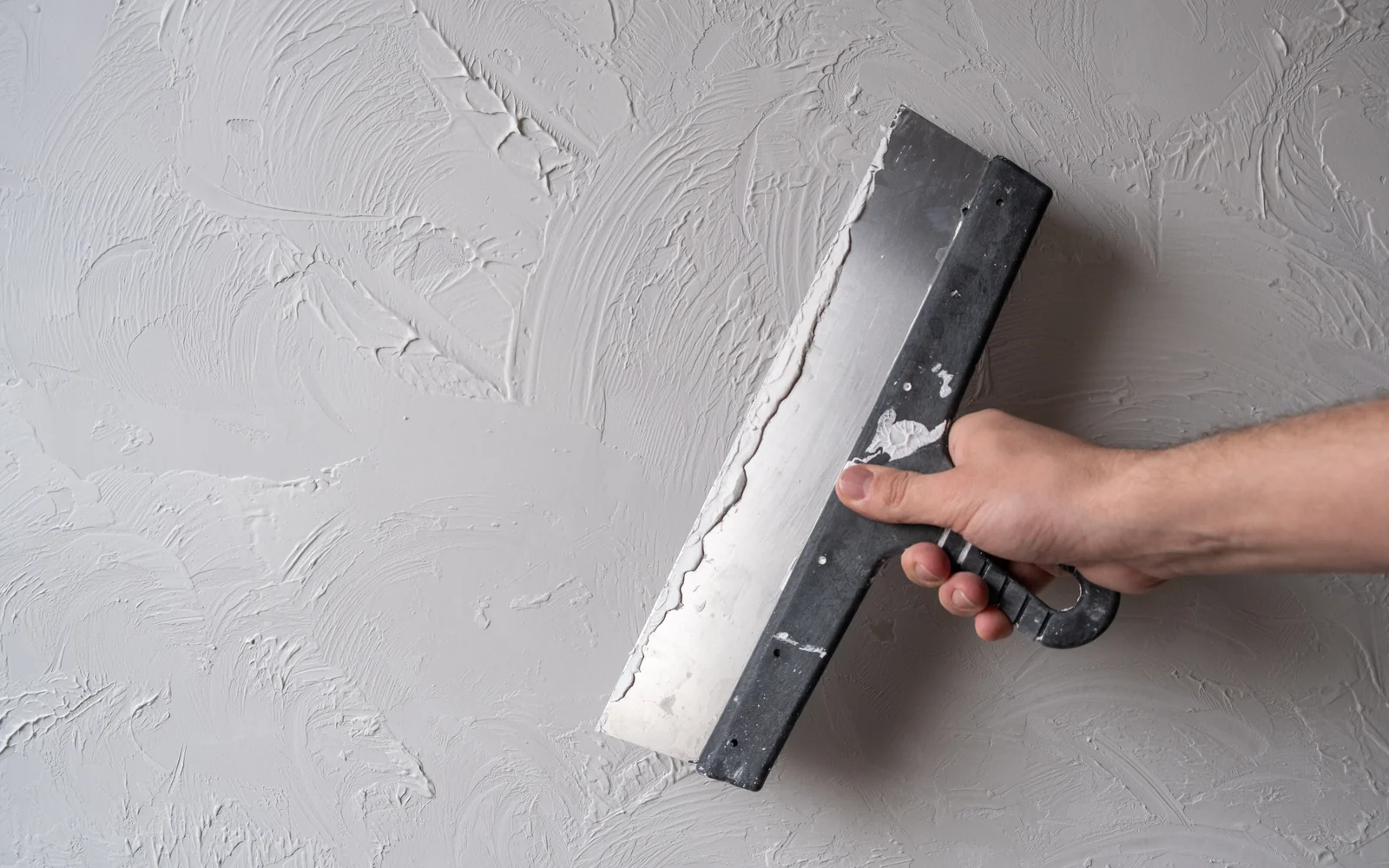
Drywall Finishing & Texture in The Woodlands, TX: Texture Matching, Retexturing and Level 5 Finishes | The Woodlands Drywall Co.
The Woodlands Drywall Co. has provided drywall finishing & texture for homes and businesses in The Woodlands, Texas for 20 years, covering three types of work: matching texture around a repair, retexturing an entire wall or ceiling, and finish-only taping and floating, the coating work that turns board another crew has already hung into a wall ready for paint. We also cut out and patch the damage; this page focuses on the finish applied over it.
Drywall texture here is applied in one of two ways: sprayed on or spread on by hand. Knockdown and orange peel are the sprayed textures, while skip trowel and the older hand-troweled patterns are applied by hand, and we handle all four. When matching an existing texture, we work from a sample rather than a guess. If you want a smooth finish instead, we quote the finish level against GA-214, the published scale that grades how far the coating work was carried, at Level 4 or Level 5.
We check our work under raking light, meaning light that crosses the wall from the side and makes a poor patch easy to spot. Our part ends at a primed surface. Our crews cover Montgomery and Harris Counties, including Shenandoah and Oak Ridge North, so you end up with a finish that was specified and matched rather than improvised.
Call (346) 248-4075 or fill out our quote form to schedule your free on-site estimate.
Get A Free Quote
Drywall Finishing & Texture: The Textures on Texas Walls and Ceilings
Whatever pattern is already on your walls and ceilings becomes the specification for anything we add. A patch, repaired joint or new stretch of board has to blend with the surrounding surface, so we start by identifying the finish already in your house. That is easier than it sounds because homes here were built in waves, and each wave brought a small group of finishes with it. Newer builds across the area mostly use a sprayed finish, applied with a spray gun and then worked, while the older villages carry hand-troweled texture spread across the wall with a flat steel blade. A short list of named patterns covers most of what we find.
Popcorn is the other texture family you may have, a heavy sprayed ceiling finish with its own service page on this site. The four finishes described below cover almost every wall or ceiling we are called out to repair or change.
Knockdown, and Why It Is on Most Newer Woodlands Walls
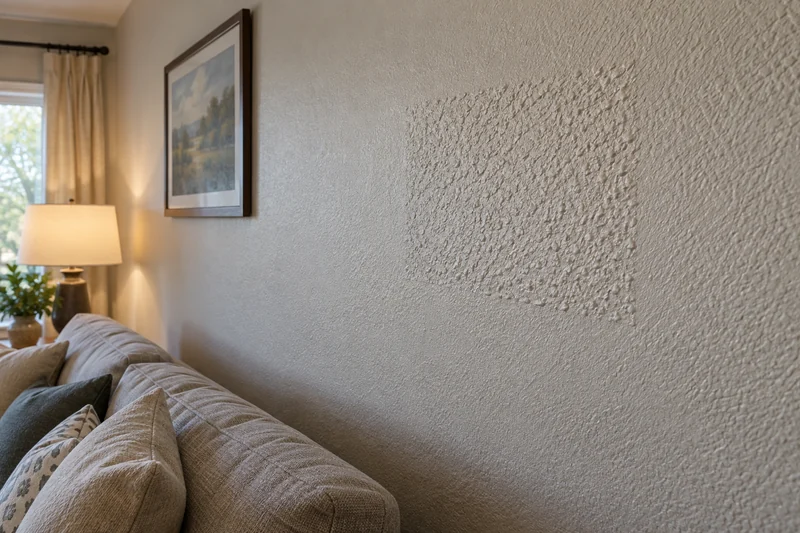
Knockdown texture has broad, flattened islands scattered across the surface, with each one forming a low mound, a flat top and a soft edge. It is the sprayed texture most common on newer builds, so if your house is in one of the newer subdivisions, this is probably the finish you are seeing. We create it by spraying all-purpose joint compound through a hopper gun, a hand-held cup that throws wet compound onto the wall, then flattening the wet spatter with a wide blade called a knockdown knife. The weight of the pattern depends on how much compound was applied and how soon it was flattened, which is why two walls with the same texture name can still look different.
Orange Peel and Its Fine, Medium and Heavy Grades
Orange peel texture is finer and more even than knockdown, with a pebbled surface of small raised specks and much less depth. It comes in three grades, and grade here refers to just two things: the size of the specks and how far they stand off the wall. Fine is the smallest and flattest, heavy the largest and most raised, with medium between them. That difference is what determines whether a repair disappears. Patch a fine orange peel wall at medium and your eye reads the repaired area as a different wall, even though both have the same drywall texture by name.
Free Quote Form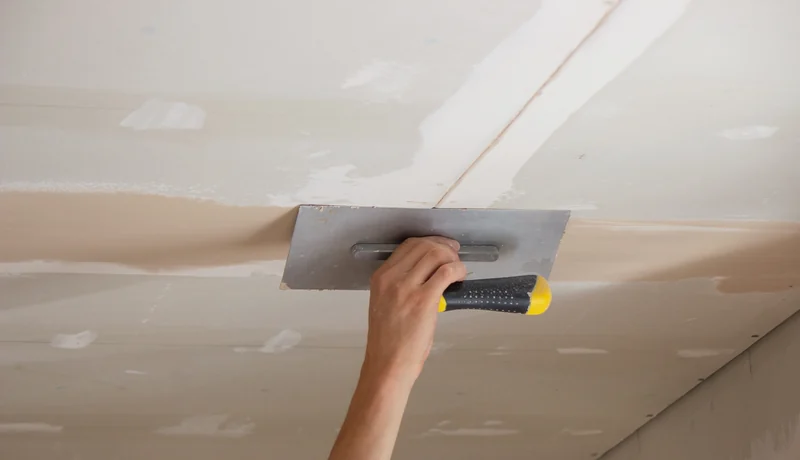
Skip Trowel and Hand-Troweled Walls in the Older Villages
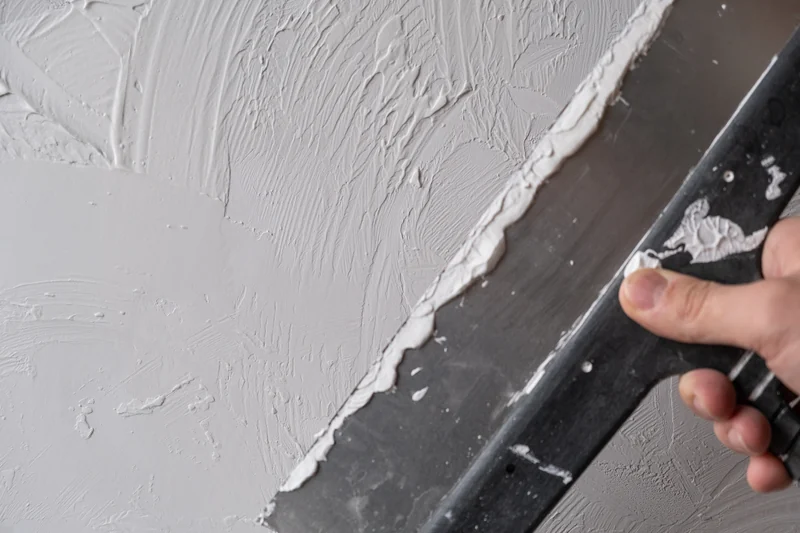
Skip trowel is a hand-applied finish, made by spreading thinned joint compound with a curved trowel rather than spraying it, which leaves sweeping, irregular marks with bare wall showing between them. It appears on 1970s-80s houses in the older villages and suits Mediterranean-style interiors. Because every mark was made by hand, the pattern shifts from room to room within the same house in a way a sprayed finish does not, so two of your rooms may already look different. Any repair has to be matched by hand as well, which is worth knowing before you choose between matching one room and retexturing the house.
Smooth Walls, and Where Texture Stops and Finish Level Begins
A smooth wall has no pattern at all, so there is nothing to hide behind and every ridge, dent and seam remains visible. That makes smooth the more demanding finish rather than the absence of one, and it is specified by a finish level instead of a texture name. Level 4 and Level 5 are the two grades that matter in a finished room. Local remodels increasingly call for a smooth wall or a lighter knockdown in place of heavier patterns, so if you are opening up a room, a level 5 finish is worth considering early.
Patch Blending, Whole-Room Retexturing and Finish-Only Work
Drywall texturing comes to us in three different forms, and the word "texture" covers all of them. We blend new work into the surrounding wall, bring an entire ceiling or wall back to one consistent pattern, and finish board that another crew has already hung. Which one you need follows from how much of the surface has been disturbed, whether by a repair, water damage, wallpaper removal or popcorn removal, each of which has its own page here. A single fresh patch calls for a different approach than a ceiling carrying six of them, because scattered patches leave the surface without one consistent finish even when each repair was matched well.
Blending New Work Into an Existing Wall
Once a repair is made, the new material has to disappear into the surrounding wall, so the finished area extends well beyond the patch itself. Feathering is how we make that happen: our crews thin the joint compound out to nothing so there is no hard edge where the new work meets the old. The distance surprises most owners, because a fist-sized hole is commonly finished across two or three feet of wall. A hard boundary still shows under raking light even when the pattern matches, so the surrounding surface determines the pattern, scale and depth we apply.
Texture matching has one honest limit, and drywall texture contractors who leave it unexplained are setting up a complaint. New joint compound and aged painted texture absorb coating at different rates, so a blended area can still flash, meaning it appears duller or shinier than the surrounding surface. PVA primer over the new work corrects that by sealing fresh drywall and giving the color coat an even base, after which the color is carried to a corner rather than stopped at the patch.
Retexturing a Whole Wall or Ceiling
Retexturing brings the entire surface to one consistent finish instead of trying to match what is already there. It is the right choice when a wall has been patched too many times, when a remodel has left part of the ceiling new and the rest old, or when you want to replace a dated pattern with something lighter or with a smooth surface. We prepare the surface first, because a new coat only holds to what has been cleaned and made sound. Ceiling texture installed before 1990 is tested before anything is disturbed, and that testing is covered with our popcorn ceiling work rather than here.
Taping and Floating on Board Someone Else Hung
Taping and floating is the tape-and-coat work that turns hung board into a finished wall. Joint tape and successive coats of joint compound cover the seams, fastener heads and corner bead, the metal or plastic strip that protects an outside corner, until the entire surface sits flat. You buy drywall finishing on its own when the board is already in place or when an existing wall needs to be brought up to a higher finish level. Hanging and fastening the board is a separate service of ours. We hand the surface back at the level quoted, ready for primer.
How a Texture Match Is Actually Made
We reproduce the pattern already on your wall closely enough that the repair disappears into the surrounding surface. We do that by reading the existing pattern first, recreating it away from the wall until it is right, and only then applying it where you can see it. Our standard for texture matching is simple: a finished repair cannot be found by looking, and if you can still pick out the match, the job is not finished. Each stage below has one purpose, and the wall is the last place we try anything.
Reading the Existing Pattern Before Anything Is Mixed
Three properties determine whether a patch will disappear, and we compare all three before mixing anything. Scale is the size of each individual mark in the drywall texture. The spacing is how closely those marks sit together and how much flat wall shows between them. The profile is how far each mark stands out from the wall and whether its edges are sharp or rounded. One house often gives two readings because a hallway and a bedroom were sprayed on different days by different hands, so we read the surface immediately around the repair rather than the house as a whole. Layers of paint soften a pattern over the years, and we assess your wall as it stands today.
The Sample Patch, and Why It Is Made Off the Wall
The sample patch is built on scrap drywall held beside the repair, never on your finished surface. We compare that sample board directly with the wall for scale, spacing and profile, then adjust the thickness of the joint compound, the tool and the timing until they match. A wrong attempt made on the wall itself has to be scraped back to flat board and rebuilt, leaving that scar beneath the paint. Hand-troweled patterns are sampled the same way by the person who will finish the wall, because the rhythm of one person's hand is part of the pattern.
Spraying, Knocking Down and the Timing in Between
Sprayed drywall texturing puts thinned joint compound on the wall through a hopper gun, which throws it onto the surface in wet droplets. How heavily that spatter lands depends on the thickness of the mix, the width of the nozzle opening and the air pressure behind it. For knockdown texture, we let those droplets begin to stiffen, then flatten the peaks with an 18-inch knockdown knife. Flatten too early and the droplets smear; wait too long and they will not flatten at all. Humidity and temperature shift that window, and high humidity here extends drying between coats, so we judge the set on the day rather than by the clock.
Raking Light: The Test That Decides the Job
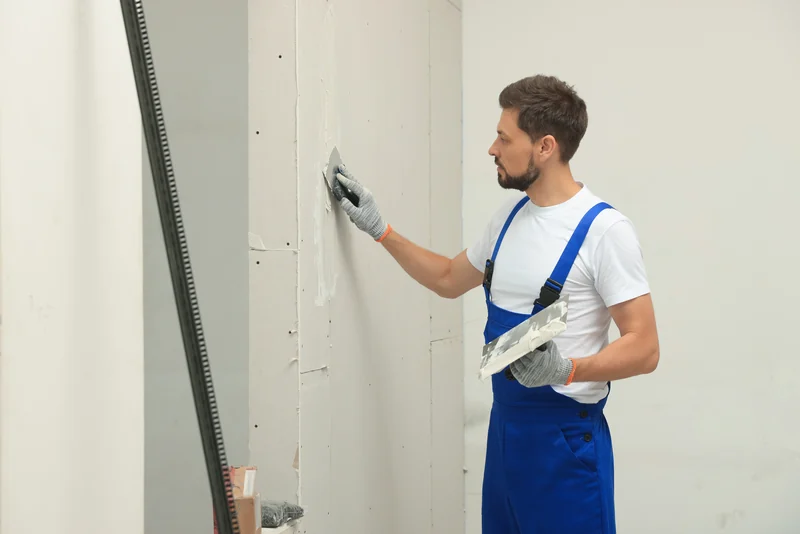
Raking light is light cast almost parallel to a surface, so anything standing proud of it throws a visible shadow. On a specification, that condition is called critical lighting. We run that test before asking you to sign off, not afterward, and you can check it yourself with a work lamp held flat against the wall. It reveals ridges, the edges of old patches and feathering that stops too abruptly instead of thinning out. A surface that passes under raking light will hold up under every softer light in the room, which is why wall texture contractors treat it as the final test alongside your own walkthrough.
Free Quote FormDrywall Finish Levels, and When Level 5 Is Worth Paying For
You are making two separate decisions here, though only one usually gets discussed. The pattern is what you see from across the room, while the finish level tells you how much of the board was coated before that pattern went on, or before the paint if the wall stays smooth. Those numbers come from GA-214, so the number on our estimate means the same thing as the number on anyone else's. In practice, only two finish levels are quoted on real houses, and your estimate should state clearly which one you are buying.
Level 4, the Working Baseline Under Ordinary Paint
At Level 4, we cover the seams between boards, the inside and outside corners, and every fastener head with joint compound over joint tape, then sand those areas flat. The field between them remains bare board, and that uncoated surface is what separates Level 4 from the grade above. For ordinary rooms finished with flat or matte paint, that is enough because the non-reflective paint film sits evenly enough across both surfaces that you cannot tell them apart. Texture, when you want it, goes on top of a finish level rather than replacing one, so most walls in most houses are correctly and honestly finished at Level 4.
Level 5, a Skim Over the Whole Surface
A Level 5 finish adds a thin skim coat of compound across the entire wall, including the bare field, so the paint sees one material everywhere. That uniform surface is the whole point. Drywall is faced with paper, and the paper absorbs paint differently from the compound covering the seams, which can leave the wider coated bands showing through as faint stripes after the paint dries. That is the flashing described in the blending section. A full skim removes that difference before painting begins, and because it requires coating, sanding and cleaning the entire room rather than only part of it, it costs more than the baseline.
Free Quote Form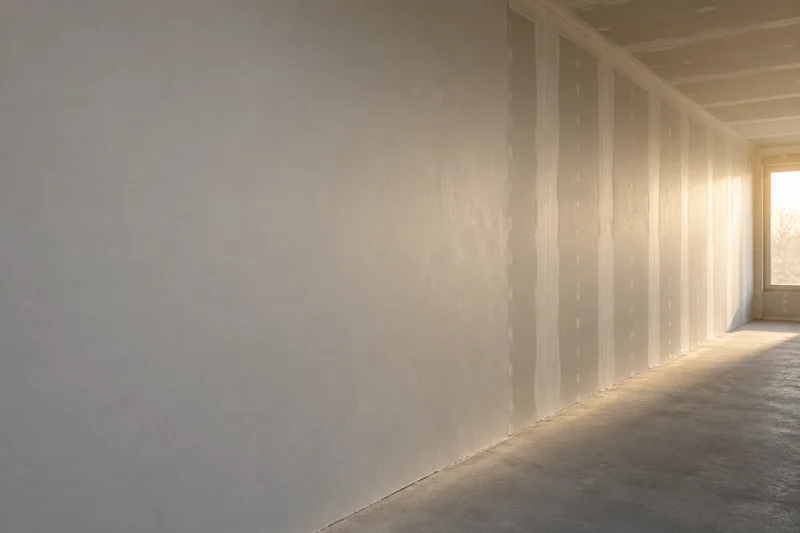
How the Light in Your Rooms Decides Between Level 4 and Level 5
The tall windows and two-story rooms common here send daylight down the wall instead of straight at it, while wall-washing fixtures and undercabinet strips create the same effect after dark. That raking light can reveal the joints even on a sound Level 4 wall. Flat and matte paints hide them, while increasing sheen makes the surface less forgiving. A textured surface conceals this far better than a smooth one, which is part of the reason texture remained popular in houses here. Match the finish level to the light the room receives and the sheen of the paint, not simply to the name of the room.
Why Choose The Woodlands Drywall Co. for Drywall Finishing & Texture
The test we apply to our own drywall finishing & texture is one you can run yourself. Stand in the room under its normal lighting and look for the repair. If you can still find it, the work is not finished and we keep going. Every practice below follows from that standard, and each one affects how the wall is coated rather than how a company presents itself.
- We settle the question under raking light before anyone signs off, not under a ceiling fixture that makes every surface look more forgiving.
- Texture matching begins on a sample board held against the surrounding wall, and we work both sprayed and hand-troweled patterns in joint compound.
- Level 4 or Level 5 appears as its own priced line on your estimate, so you choose the finish level rather than having us assume one.
- The estimator who walks your rooms also runs the crew that shows up, and the visit used to price your job costs you nothing.
- We sand with vacuum-assisted equipment and include cleanup in the scope instead of adding it to the bill afterward.
We are fully insured, carrying full insurance for both residential and commercial projects. We have served The Woodlands, Texas, for 20 years, most of it spent on the same walls other wall texture contractors are asked to match. Financing is available for qualifying work. Call (346) 248-4075 or use our quote form to get started.
What Texture and Finish Work Costs in The Woodlands
Two different types of work are priced in two different ways here. New board is priced by the square foot, so once we know the area and the finish level you want, the drywall finishing cost becomes straightforward arithmetic you can budget from. A texture match on an existing wall has no equivalent table because the price depends on the condition and pattern of that specific wall, and we determine it after seeing the room. Every rate below applies to board that has been hung, taped and finished, never to the cost of blending a single patch.
The Finish Level Gets Its Own Price on the Estimate
We quote board hung, taped and finished to Level 4 at $1.50 to $3.50 per square foot, and a Level 5 finish at $3.00 to $4.50. Those ranges overlap because access, height and room shape affect both, so do not compare the low end of one with the high end of the other. On the same wall, the skim coat that brings the finish to Level 5 adds roughly a dollar to a dollar fifty per square foot over the price of finishing that wall to Level 4.
The extra cost covers labor and material across the entire wall instead of just the joints. Whichever finish you choose appears on your estimate as a named line with its own price, so you can see exactly what the upgrade costs instead of finding it buried in a lump sum.
What Moves the Price on a Texture Match
A blend is priced by the area we finish, not the area that was damaged, so the first question is how far the feathering has to extend before the new drywall texture disappears into the surrounding surface. Hand-troweled work takes longer to match than a sprayed finish. Several small repairs scattered through a house cost more than the same square footage concentrated in one place, ceilings take longer to reach and protect than walls, and a finish that varies from room to room requires more than one sample board before anything is applied. Each of those factors comes from the condition of your particular wall.
Free Quote Form
What Changes the Price of Retexturing a Whole Room
Retexturing starts with the surface area of the walls and ceilings, then the price adjusts for what is underneath and how easily we can reach it. Old patches, paste residue left from wallpaper and heavy existing texture all require surface preparation before any drywall texturing begins. An empty room moves faster than one where we have to work around furniture, and high ceilings add time. Our quote includes drywall primer, which is worth checking line by line when you compare two estimates.
For a firm price on a texture matching job rather than a range, send us the room through the quote form, or call (346) 248-4075 and we will come out to look at it free of charge.
Matching, Blending and Retexturing Drywall, Step by Step
Every job The Woodlands Drywall Co. runs follows the same five stages, and you either see each one completed or approve it before we move to the next. Drywall texture contractors differ in how much they explain, so here is our sequence in plain order, along with what you receive at each stage.
-
Call or send a photo
Reach us on (346) 248-4075 or send the room through our quote form, Monday to Saturday between 8am and 6pm. A photograph lets us identify the texture family already on your wall before anyone drives out, so the person who arrives knows what the texture matching will involve. We then schedule the visit.
-
The on-site look and the written quote
We inspect your wall in the light the room actually has, because that is the same light the repair will be judged under later. The site visit is free, and you receive an itemized written quote within 24 hours. That quote names the texture family and the finish level you are buying.
-
Protecting the room
Before anything is mixed, we move or mask your furniture, cover the floors and openings, and seal the doorways leading into the rest of the house. Our sanding tools draw dust directly into a vacuum while they run, so dust control happens at the tool instead of after the fact. Cleanup is included in the job, not added as an extra.
-
The sample, then the wall
We build the sample to match your finish and show it to you while your wall is still untouched. Nothing goes on the wall until you approve that board. The coats then follow in order, with drying time already built into the schedule.
-
Raking-light walkthrough, then primer
We walk the room with you, checking the surface under raking light and from the places you normally stand. Anything we find is corrected before you sign off. The specified drywall primer is then applied as part of the work, and you decide separately whether we carry the wall through to color.
Whether your job is a single patch or retexturing an entire ceiling, that sequence stays the same. Reach us on (346) 248-4075 or send your room details through the quote form, and we will schedule your free visit.
When a Texture Match Is Not the Right Answer
A texture match restores the same pattern over a repair so the mended area disappears into the surrounding wall. That is all it does. The new coating stays on the surface, and a finish coat does not correct movement behind it, so the pattern over a repair is only as stable as the wall beneath it. We would rather explain that before you pay for drywall texture work than after. There are two situations where matching now means paying for the same room twice, and each has a shape you can recognize yourself.
A Wall That Is Still Moving
Some cracks come back. A hairline crack that has already reopened will reopen through a new skim coat because joint compound is a thin layer that follows whatever the surface beneath it does. The shape to watch for is a line along the corner where the ceiling meets the wall that opens and closes across one season, wider in some months and nearly closed in others. We do not determine why your wall is moving that way, and we will not guess. Wider, recurring or displaced cracks should be evaluated first by another qualified professional, and we will tell you that during the visit. A crack that has never reopened is a different case, and we match it normally.
Too Many Old Patches Under One New Coat
Past a certain number of repairs, matching each one stops being the cheaper option. Every blend requires its own setup, sample board and finishing, so the cost rises with the number of repairs rather than the square footage alone. Many small repairs also never settle into one surface, however close each match is on its own. Count the patched areas in the room and look at how far apart they are. When they are numerous or scattered across one wall or ceiling, retexturing the entire surface costs less overall and gives you a better result. The same applies after wallpaper removal or a scraped ceiling.
Free Quote FormThe Published Scale Behind a Drywall Finish Level
Finish levels are not something we invented in-house. The Gypsum Association publishes them in GA-214, which defines what each level requires, and the drywall finishing trade uses that standard across the country. So when you compare two quotes that both specify Level 4, you are comparing the same amount of work, and the level is yours to choose rather than something you simply have to take our word for.
What Each Drywall Finish Level Actually Describes
People often ask about five levels, but the scale actually runs from Level 0 to Level 5, which makes six steps. At Level 0, the board is hung and nothing more is done. Level 1 sets joint tape into joint compound along the seams, which is enough for spaces nobody sees. Level 2 adds a thin coat over that tape and the fastener heads, and tile goes over it.
Level 3 adds another coat, and GA-214 specifies it for walls that will receive a medium or heavy texture, which is where most textured walls in this area fall. Level 4 adds one more coat over the same seams and fasteners, then sands the surface. A Level 5 finish covers the entire surface with a skim coat.
Texture and Finish Work Across The Woodlands, Montgomery and Harris Counties
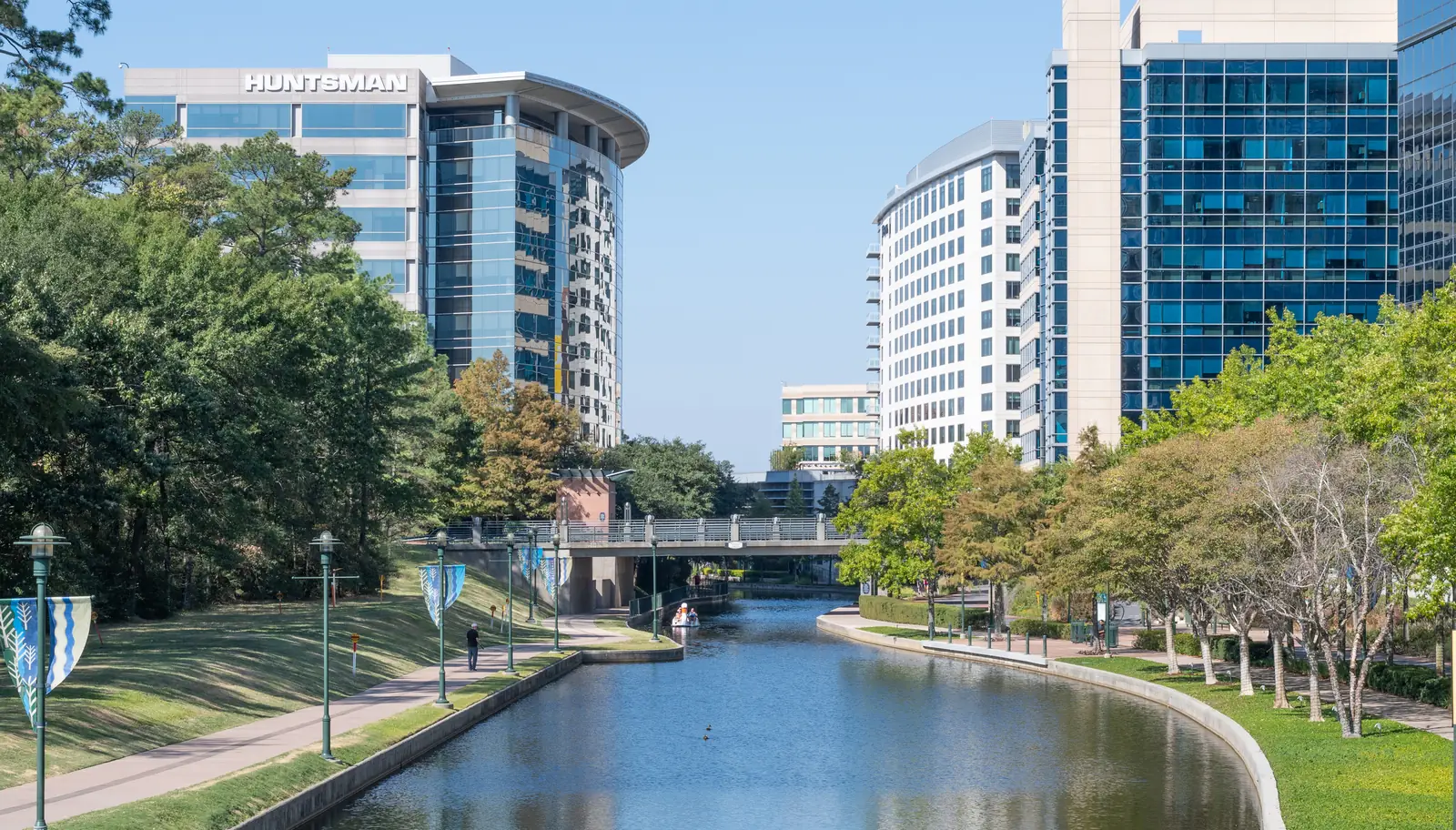
Homes across this master-planned community sit in Montgomery and Harris Counties rather than within an incorporated city, and because they were finished over several decades, one crew can encounter a sprayed finish in one house and hand-troweled texture in the next during the same week. Our humid subtropical climate affects the work as well, because in the damp air behind summer highs near 94°F, a fresh coat stays workable longer and needs more time before the next layer goes on. We build that timing into the schedule rather than rushing it.
You can call The Woodlands Drywall Co. for texture matching or retexturing anywhere across the twenty-one communities we serve in the two counties.
Where The Woodlands Drywall Co. Matches Texture
Villages of The Woodlands:
- Alden Bridge
- Cochran’s Crossing
- College Park
- Creekside Park
- Grogan’s Mill
- Indian Springs
- Panther Creek
- Sterling Ridge
And the surrounding communities:
- Conroe
- Atascocita
- Spring
- Porter
- New Caney
- Humble
- Kingwood
- Tomball
- Willis
- Pinehurst
- Shenandoah
- Oak Ridge North
- Magnolia
Texture Matching Questions
What is texture matching in drywall repair?
In our trade, the phrase means the finishing stage that recreates your existing pattern over a completed repair until nothing gives away where the work was done. It comes last: we fit the new board, fasten it, tape it and coat it first, and only after that surface is dry and flat do we apply the pattern.
How do you match an existing wall texture?
We read the pattern already on your surface, recreate it on a loose piece of board held beside the repair, and adjust it until the two match. One detail is worth knowing: the person who makes the sample board also finishes your wall. Hand pressure and spray habits differ from one person to another, so passing the work to someone else would undo the match.
Is it hard to match drywall texture?
Sprayed finishes are repeatable once we have the settings right. Hand-applied finishes are harder to match because they carry the marks of the person who spread them. The challenge is rarely the material, which is ordinary joint compound thinned to suit the pattern. It is the timing: compound changes as it stiffens, so the same mix worked even a minute later produces a different result.
How long does texture matching take?
The texture itself takes one visit on most blends. What determines your schedule is the drying time between coats, not how long anyone spends applying the pattern. Summer highs near 94°F here come with humidity, and that damp air slows the compound as it dries. We judge the wait on the day by touch and color rather than promising a fixed number of hours.
What types of textured walls and ceilings can you repair?
We match sprayed finishes, including knockdown and orange peel, along with hand-applied textures such as skip trowel and older hand-troweled work. Smooth walls are quoted at a stated finish level instead of by pattern, while popcorn ceilings are handled as a separate service. A pattern does not need a name for us to match it, because we copy the wall in front of us rather than a catalogue entry.
Is knockdown wall texture outdated?
Knockdown remains the most common finish on newer builds around here, so a house with it is not behind the times. Taste has shifted toward lighter knockdown and smooth walls, which is a change within texture rather than a move away from it. Changing yours is a separate decision because retexturing has to cover the whole surface; one refinished wall beside three original ones will stand out.
What are the 5 levels of drywall?
There are six levels, numbered from Level 0 upward, and GA-214 is the published document those numbers come from. Two are quoted on ordinary work, Level 4 and Level 5. Ask to have the level written into any estimate you collect, because the definitions are published and a Level 5 from us describes the same finished wall as a Level 5 from anyone else.
Get Your Texture Matched by The Woodlands Drywall Co.
We provide texture matching, retexturing and blending of new work into existing surfaces for owners across The Woodlands and the surrounding communities. To arrange your free on-site estimate for drywall finishing & texture, call The Woodlands Drywall Co. on (346) 248-4075 or complete our quote form.